

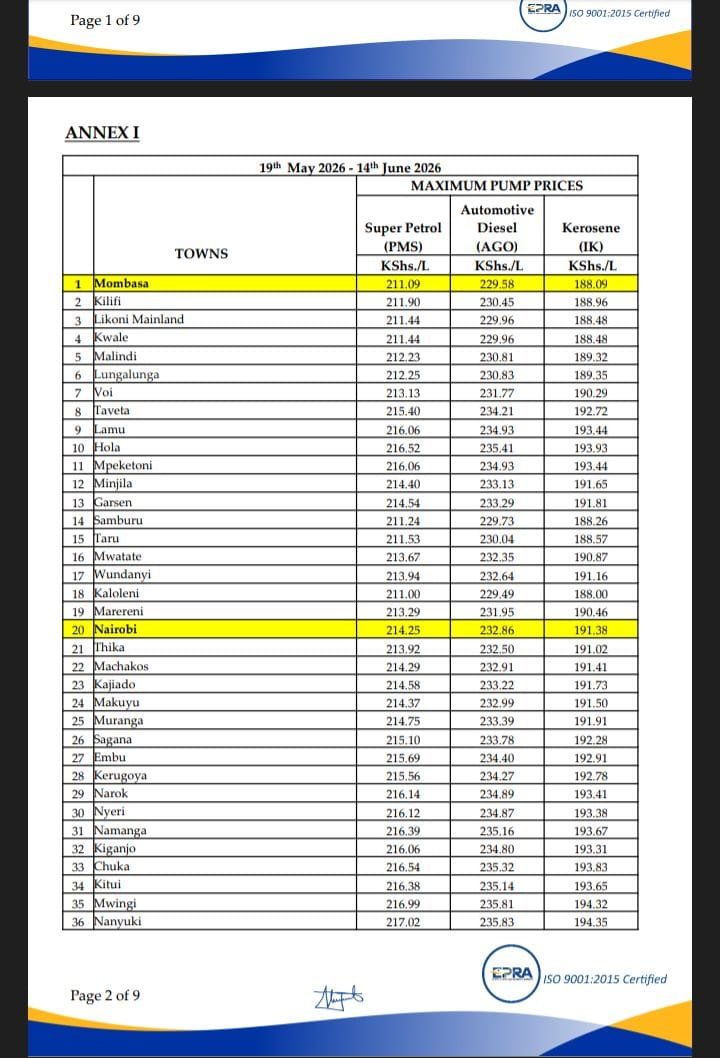
The Energy and Petroleum Regulatory Authority (EPRA) has recalculated maximum retail pump prices effective from midnight on May 19, 2026, to June 14, 2026. The move responds to a petition by public transport operators concerned about fuel adulteration caused by wide price gaps between diesel and kerosene.
Diesel prices in Nairobi drop by KSh10.06 per litre to KSh232.86. Kerosene rises by KSh38.60 per litre to KSh191.38. Super Petrol remains unchanged at KSh214.25 per litre. The new prices apply nationwide with variations by location.
The adjustment aims to narrow the differential that encourages mixing of cheaper kerosene into diesel. Despite the revision, matatu operators have maintained their strike, saying the KSh10 reduction does not meet their call for a KSh46 cut.
Nationwide adjustments
Negotiations between the government and matatu sector broke down late Monday. Energy Cabinet Secretary Opiyo Wandayi had signalled the diesel reduction and kerosene increase during the talks, but no full agreement was reached.
Matatu Owners Association President Albert Karagacha directed vehicles to stay off the roads for Tuesday. The first day of the strike already caused major disruption, leaving commuters stranded and affecting businesses across the country.
In urban centres like Nairobi, matatus form the primary mode of public transport. Their continued absence forces workers, including those in construction, to seek costly alternatives or miss shifts. Material deliveries to building sites have also slowed.
The price changes take effect immediately after midnight. EPRA published the updated schedule for major towns following the petition from the transport sector.
Operators had argued that the previous diesel price surge made operations unviable under current fare structures. While the new diesel price offers some relief, the sector insists deeper cuts are needed for sustainability.
Commuters face another day of uncertainty. Many reported long waits, higher fares on limited services, or walking long distances on Monday. Similar challenges are expected Tuesday unless operators call off the action.
The developments highlight ongoing friction over fuel costs and their direct impact on small-scale transport businesses. Matatus often run on narrow margins where fuel represents a significant daily expense.
Government officials indicated further reviews could follow if needed. For now, the EPRA announcement stands as the official pricing for the coming month.
Transport Cabinet Secretary Davis Chirchir had been part of the late-night talks. The failure to secure a comprehensive deal has prolonged the standoff.
As the strike enters its second day, pressure mounts on both sides. Daily economic activity, from informal trade to infrastructure projects, depends on reliable public transport. Prolonged disruption risks wider effects across Kenya.
Comments (0)
Leave a Comment
No comments yet. Be the first to share your thoughts!