
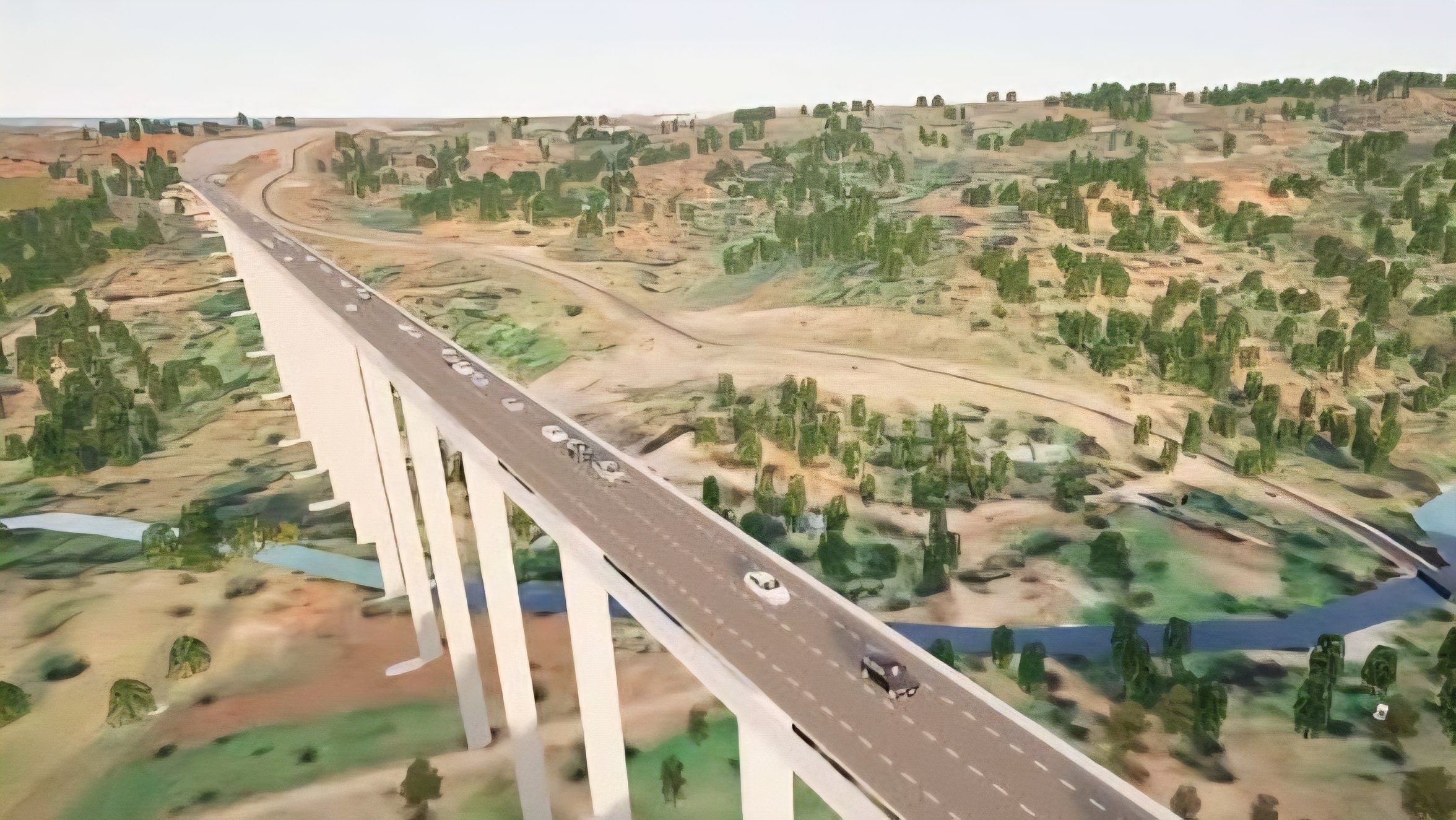

The Kenya National Highways Authority has officially awarded the contract for the reconstruction of the Nithi Bridge to China Railway Seventh Group. The deal, valued at Sh7.5 billion, involves a total redesign of the section of the highway that has claimed hundreds of lives over decades.
The project aims to eliminate the sharp, steep descent and the narrow crossing that have made the bridge one of the most feared stretches of road in the country.
Government officials confirmed that the new design will feature a modern, high-level bridge. This structure is intended to bypass the existing killer curves that define the current landscape of the Nithi River valley.
Engineering plans released by KeNHA show a long-span bridge that will straighten the approach from both the Meru and Nairobi sides. This shift in alignment is expected to significantly reduce the gradient for heavy-duty vehicles.
Construction is expected to begin immediately following the formal signing of the contract. The move comes after sustained public pressure on the government to provide a permanent solution to the carnage at the site.
President Ruto had previously signaled that his administration would prioritize the fix for the Nithi Black Spot. The bridge serves as a critical artery for the transport of agricultural produce and passengers between the Mount Kenya region and the capital.
China Railway Seventh Group emerged as the successful bidder after a competitive procurement process. The firm has previously handled several large-scale road projects within the East African region.
Residents of Tharaka Nithi and Meru counties have long advocated for a viaduct-style bridge. They argue that the current bridge, built in the 1980s, is no longer fit for the volume and weight of modern traffic.
The Sh7.5 billion price tag reflects the complexity of the terrain. Engineers must navigate deep valleys and unstable soil conditions to ensure the new pillars are anchored securely.
Beyond the bridge itself, the contract includes the reconstruction of several kilometers of the approach roads. This is meant to ensure that the transition into the new bridge does not create new hazards for motorists.
Local leaders have welcomed the news, noting that the delays in addressing the bridge had become a point of political friction. The frequent accidents often lead to total closures of the highway, paralyzing trade for hours.
Safety experts suggest that while the new bridge will solve the structural issues, it must be paired with strict speed enforcement. The long, straight stretch of the new design could potentially encourage speeding if not monitored.
The timeline for completion remains a focal point for the Ministry of Roads. Given the strategic importance of the route, KeNHA is expected to maintain a strict supervisory role to ensure the project meets the scheduled deadlines.
Funding for the project is being drawn from the national development budget. It represents one of the largest single infrastructure investments in the region in recent years.
Comments (0)
Leave a Comment
No comments yet. Be the first to share your thoughts!