

A version of this article appeared on Hivisasa News.
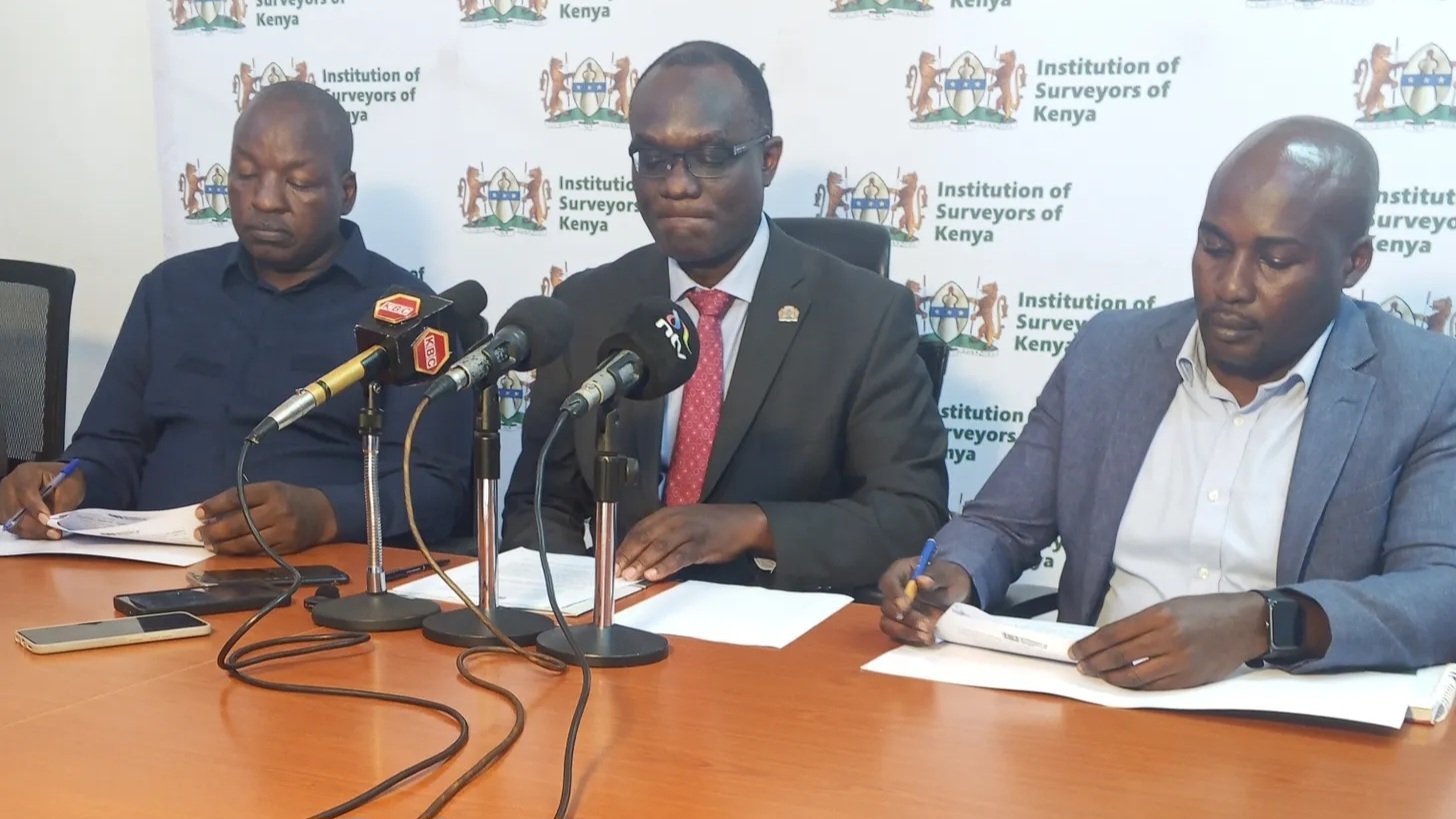
The Institution of Surveyors of Kenya (ISK) has raised concerns over the legal framework guiding ongoing demolitions along Nairobi’s riverbanks. While the professional body supports the Nairobi Rivers Regeneration Project, it warns that the current approach could trigger extensive litigation against the state.
Led by President Eric Nyadimo, the institution noted that the government risks violating constitutional property rights. The surveyors argue that while restoring water bodies is necessary, the process must adhere strictly to the law to avoid unconstitutional deprivation of land.
A primary issue cited is the inconsistent definition of what constitutes a riparian reserve. Multiple statutes currently govern these areas, leading to conflicting interpretations of measurement standards. These variations often leave developers and surveyors unsure of the legal boundaries.
ISK pointed out that some affected properties were surveyed and registered decades ago under different legal regimes. Applying modern riparian definitions retroactively to these titles without compensation could be viewed as illegal compulsory acquisition under Article 40 of the Constitution.
The institution clarified that while fraudulent titles deserve no protection, lawful owners must be treated differently. For validly held land, the government is expected to conduct professional valuations and provide prompt, full compensation before any demolition occurs.
Current enforcement has intensified following directives from Governor Johnson Sakaja. The county government has targeted various high-end estates and commercial zones, citing the need to curb persistent flooding caused by blocked waterways.
However, the surveyors maintain that the lack of a harmonized policy has contributed significantly to the current encroachment crisis. They highlighted that certain areas, such as Parklands, were registered before independence when specific riparian reserve limits were not clearly established.
To mitigate these risks, the ISK is calling for an urgent harmonization of laws and clearer technical guidelines. They emphasized that public participation and administrative fairness must remain central to the reclamation efforts.
The surveyors also recommended that the government issue formal statutory notices and gazette intended acquisitions. By following these established procedures, the state could avoid the economic losses and legal disputes that arise from abrupt enforcement actions.
As the multi-agency team continues mapping and marking structures for removal, the professional body insists that demolition should remain a last resort. Proper legal and compensatory processes are essential to maintain the sanctity of title deeds in the construction sector.
Comments (0)
Leave a Comment
No comments yet. Be the first to share your thoughts!