
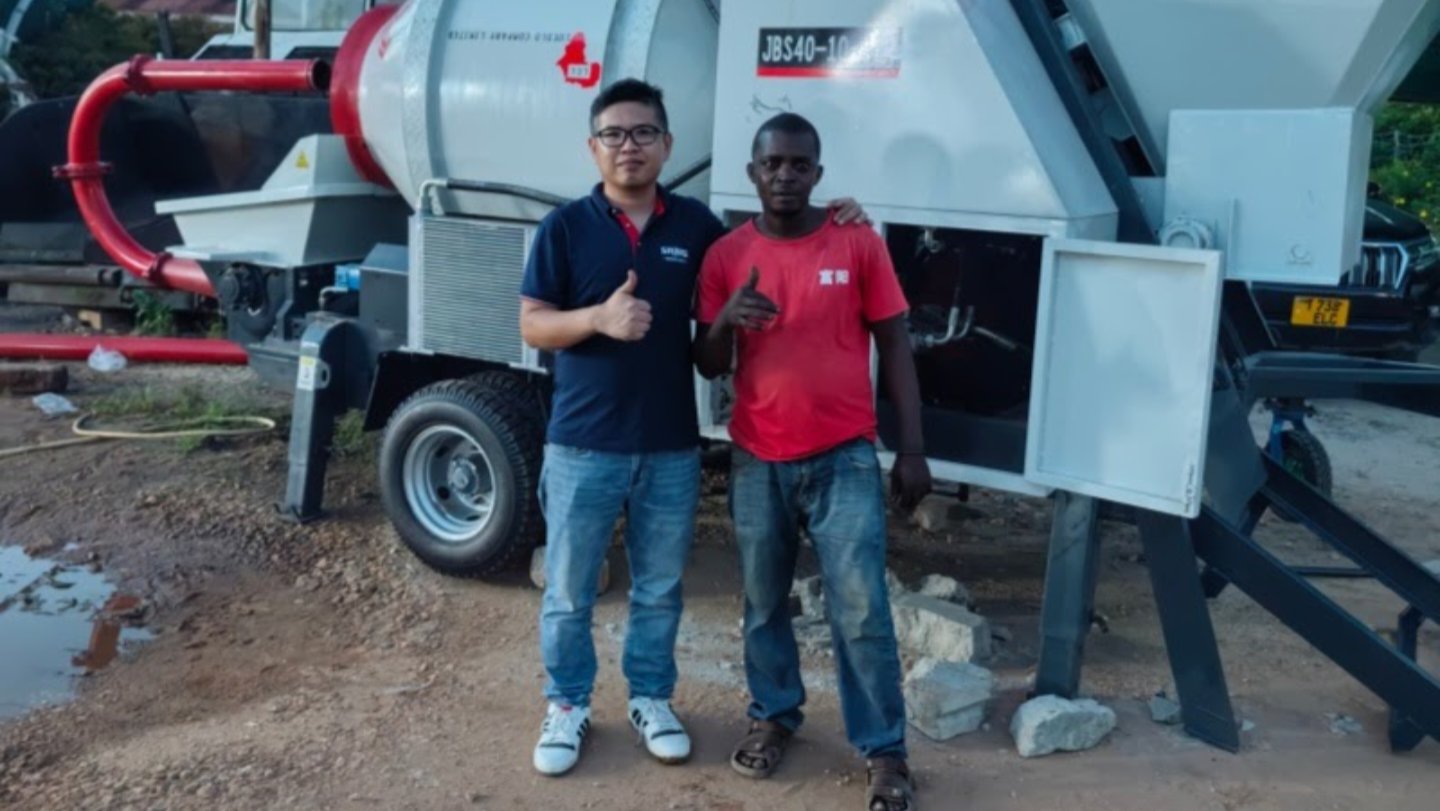

The construction landscape in Kenya continues to shift toward more automated solutions as contractors look to bypass the logistical difficulties of traditional concrete pouring. Recent deliveries of specialized machinery, including the JBS40-10 diesel concrete mixer pump, highlight a trend where local firms prioritize equipment that can operate within the tight confines of urban residential developments.
Small and medium-sized projects, particularly low-rise apartments and commercial blocks in densely populated areas, often lack the space required for large truck-mounted boom pumps or separate mixing and pumping stations. The JBS40-10 addresses this by integrating a drum mixer with a high-pressure pumping system on a single towed chassis.
This specific model offers a theoretical output of 40 cubic meters per hour, a capacity that suits the typical workflow of Kenyan building sites where steady, controlled pours are preferred over high-volume bulk delivery. The use of a diesel engine remains a practical choice for many sites where grid power is either unavailable or subject to fluctuations that could stall an electric motor during a critical pour.
Vertical delivery capabilities are a primary concern for contractors working on four to five-story structures. Technical specifications for the JBS40 series indicate a vertical pumping height of up to 120 meters and a horizontal reach of approximately 500 meters. These distances allow the machine to remain stationed at a single access point while delivering concrete directly to the required floor via a pipeline.
Labor dynamics on-site are also changing as a result of such technology. A standard manual mixing setup often requires a large team to transport materials and move the wet mix. By using a combined unit, the number of workers needed to manage the pour is reduced, as the machine handles the transition from aggregate to finished placement in a continuous loop.
Local distributors have noted that the S-valve distribution system used in these pumps is particularly resilient against the abrasive nature of various aggregate types found in the region. Maintenance remains a focal point for owners, who must ensure that the automatic lubrication systems and wear plates are monitored to avoid downtime.
As more developers move toward mid-rise housing to meet urban demand, the demand for portable, dual-function machinery is expected to grow. The ability to tow these units behind a standard utility vehicle allows for rapid deployment between sites, providing a level of mobility that larger, stationary mixing plants cannot match.
While the initial investment for such machinery represents a significant capital outlay, many contractors view the move as a way to improve consistency in the concrete mix. Precise control over the water-to-cement ratio within the drum mixer helps ensure that the final structure meets local building standards, reducing the risk of structural issues associated with manual mixing.
Comments (0)
Leave a Comment
No comments yet. Be the first to share your thoughts!