
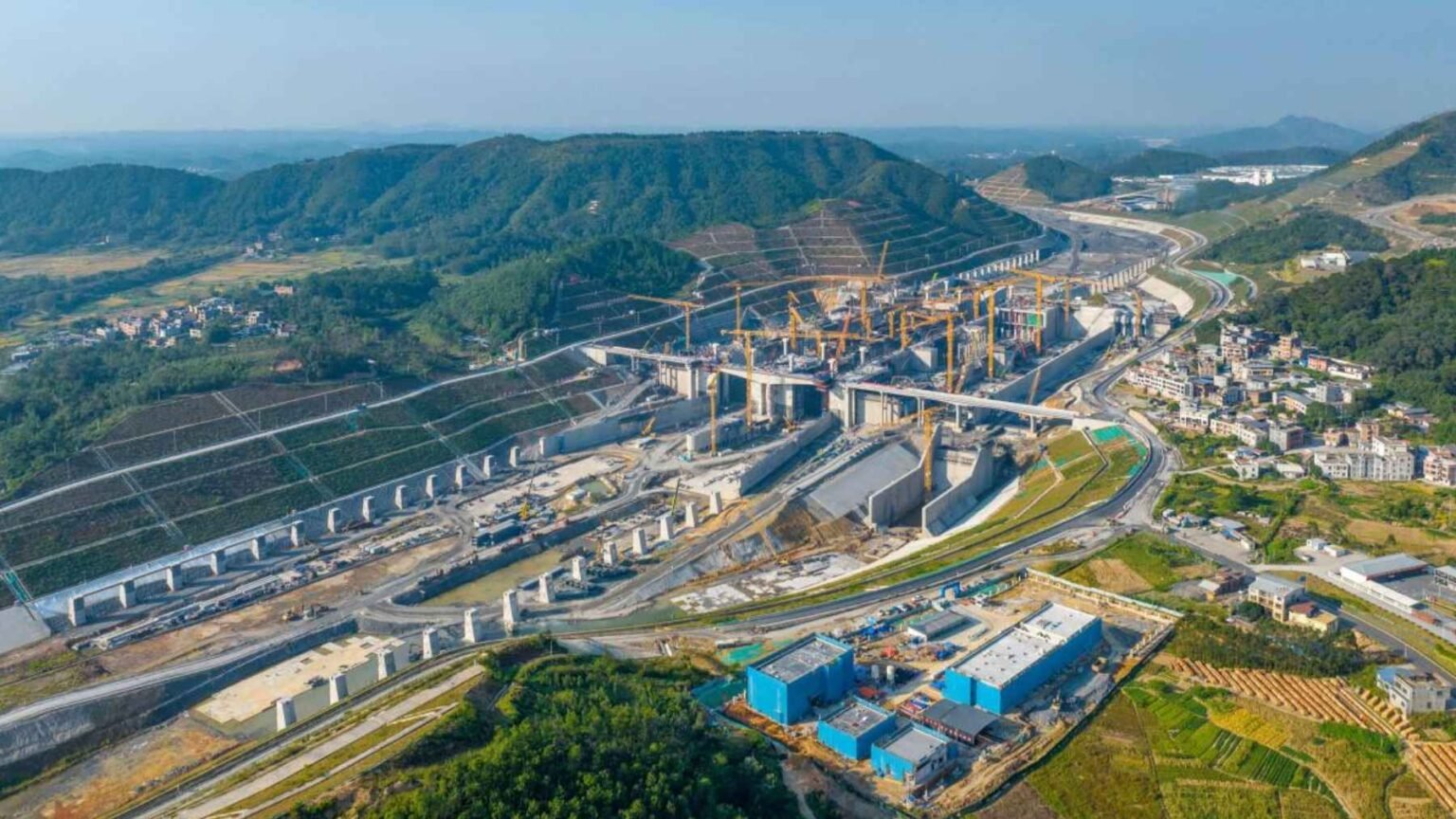

Construction teams in southern China are entering the final phases of a massive infrastructure project that effectively redraws the maritime geography of the region. The Pinglu Canal, stretching 134 kilometers, is designed to provide a direct link between the inland river networks of the southwest and the international shipping lanes of the Beibu Gulf.
The scale of the undertaking is reflected in its technical requirements. Engineers are carving a path through the landscape of Guangxi province to accommodate vessels of up to 5,000 tons. This involves not only the excavation of millions of cubic meters of earth but also the construction of a series of complex locks, bridges, and a high-capacity ship elevator to manage significant elevation changes along the route.
Recent updates from the construction sites indicate that the project has consumed nearly 90% of its planned 72.7 billion yuan budget, approximately $10.5 billion. This suggests that the primary structural work is largely completed, with the focus now shifting toward the specialized systems required for water management and navigation.
The strategic intent behind the canal is rooted in logistics efficiency. For decades, goods moving from the interior of China toward international markets have been forced to take a lengthy detour through the Pearl River Delta in Guangdong province. By cutting through the terrain to create a shorter path, the Pinglu Canal is expected to reduce inland-to-sea shipping distances by approximately 560 kilometers.
Officials overseeing the project anticipate that this shortcut will save more than 5.2 billion yuan annually in logistics costs. These savings are expected to benefit a wide range of industries, from bulk materials and manufacturing to the shipping of fresh agricultural products, which currently face high loss rates due to long transit times.
Beyond the immediate cost reductions, the canal serves as a central component of the New International Land-Sea Trade Corridor. This initiative aims to deepen trade ties between China and ASEAN member states. By creating a more direct waterway, Beijing intends to make its inland regions more competitive in the global market, reducing the reliance on established coastal hubs that often face congestion.
Environmental considerations have also been integrated into the design. The project includes specialized wildlife crossings and fish passages, including a pioneering dual-channel system for eels and other migratory species. These features are monitored by AI and sonar systems to track the impact of the canal on local ecosystems.
The project is currently on schedule for completion in late 2026. Once operational, it will stand as one of the most significant river-sea intermodal transport links built in the country in several centuries. The canal is expected to handle between 95 million and 120 million tons of cargo annually, fundamentally changing how the southwest region interacts with the global economy.
While the engineering challenges of such a 134-kilometer cut are immense, the steady progression toward a 2026 opening indicates that the most difficult phases of excavation and structural assembly are now in the past. The focus remains on the final integration of the navigation hubs at Madao, Qishi, and Qingnian.
Comments (0)
Leave a Comment
No comments yet. Be the first to share your thoughts!