
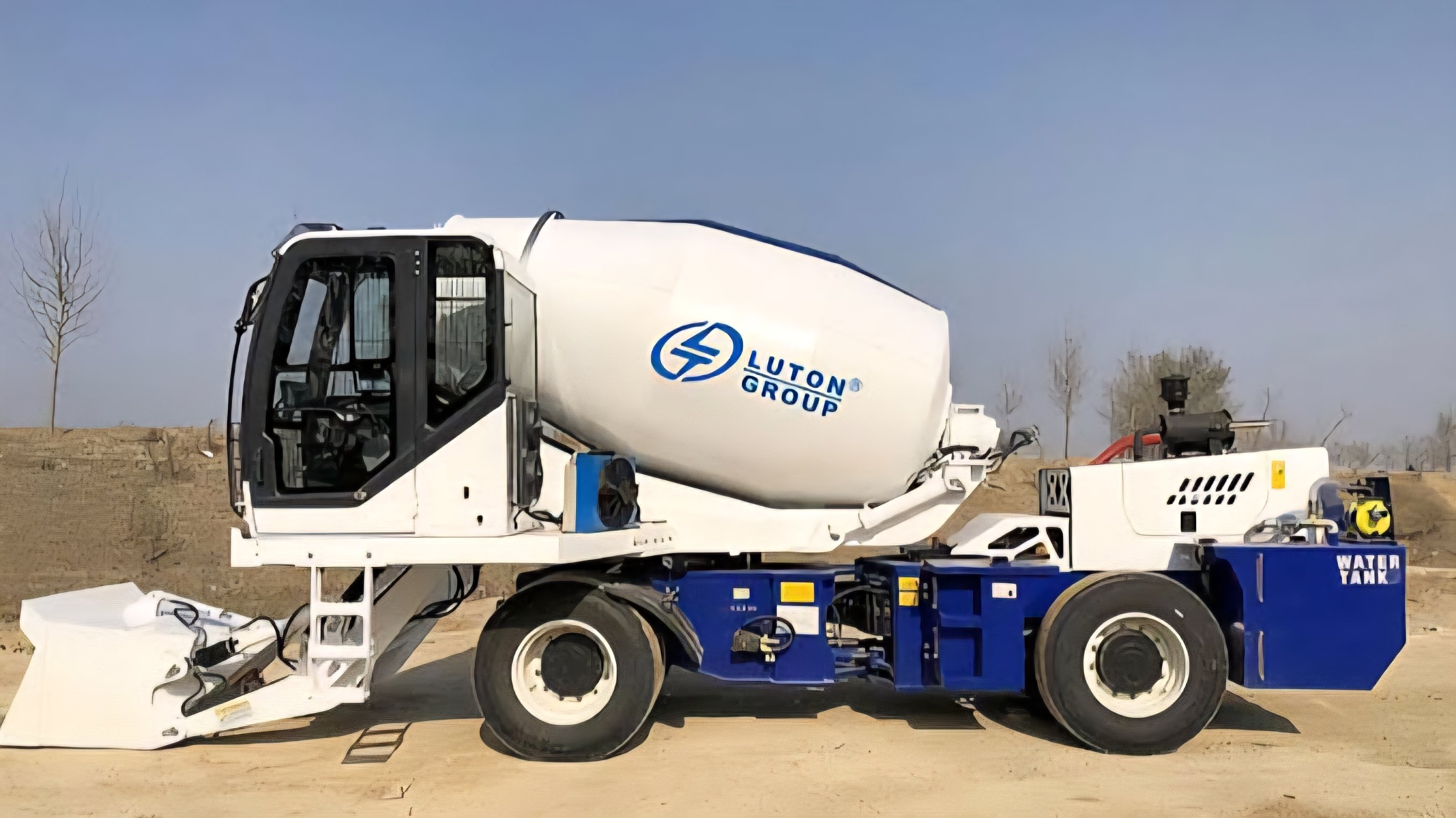

A version of this article appeared on Luton Machinery. The global construction sector is witnessing a marked transition in how concrete is produced and delivered on-site. As infrastructure projects across developing regions become more complex, the reliance on traditional, stationary batching plants is being challenged by mobile, autonomous alternatives.
Industry data suggests the worldwide ready-mix concrete market is on a path to reach a valuation of $2201 million by 2026. This is a significant jump from the $1242.4 million recorded in 2020. This growth is primarily concentrated in emerging markets where the speed of urbanization is outstripping the existing supply chain capabilities of centralized concrete suppliers.
Luton Group, a prominent manufacturer in the construction machinery space, is positioning its self-loading concrete mixers as a primary solution for this gap. These machines function as stand-alone units capable of loading aggregates, weighing batches, mixing, and transporting concrete directly to the point of application.
The demand for these units is particularly high in countries like India, the Philippines, Pakistan, South Africa, and Sri Lanka. Analysts indicate that as concrete processing plants in these regions raise their prices, contractors are increasingly looking at the higher investment value offered by owning on-site mixing equipment.
A single operator can control the entire cycle of a self-loading mixer, which significantly reduces the labor requirements typically associated with small to medium-scale concrete work. For many contractors, the ability to produce high-grade concrete without a dedicated fleet of transit mixers or a stationary plant provides a necessary edge in a tightening market.
The technology is now being deployed across various terrains and project types. These units are commonly utilized in the construction of canals, industrial facilities, and commercial structures. Their all-terrain capabilities allow them to operate in environments where traditional delivery trucks might struggle to gain access.
Luton offers a range of models to suit different scales of work, with the LT-1.2 being a popular choice for smaller sites. This specific model features a discharge capacity of 1.2 cubic meters per batch and is powered by a 55kW engine. Despite its compact size, it integrates the weighing and mixing functions of a full-scale plant.
For larger requirements, the product line extends to the LT-6.5, which provides a maximum capacity of 6.5 cubic meters. This versatility allows the equipment to meet the needs of both rural road projects and large-scale urban developments. The design focus remains on a fast return on investment, which the manufacturer claims can be achieved within a year under standard operating conditions.
As the cost of raw materials and logistics continues to fluctuate, the shift toward self-contained production units appears to be more than a temporary trend. For the construction industry in Kenya and beyond, the adoption of such technology represents a move toward greater autonomy and cost-efficiency on the job site.
Comments (0)
Leave a Comment
No comments yet. Be the first to share your thoughts!