

A version of this article appeared on The Business Daily.
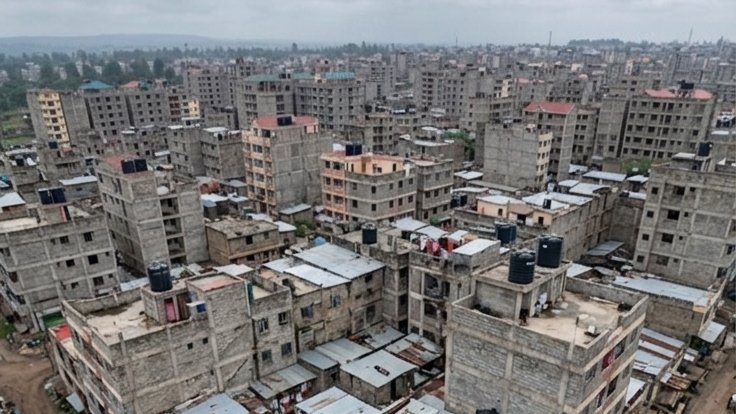
Githunguri in Utawala does not try to impress, especially on a rainy day. The entrance feels like a descent into a chaotic construction zone where the pace of private investment has significantly outrun the provision of public utilities.
The transformation of this corner of Machakos County is staggering. What were once plots sold for as little as Sh6,000 are now fetching millions of shillings. This meteoric rise in valuation reflects a broader shift in Nairobi's outskirts, where middle-income earners have flocked in search of affordable homeownership.
While the financial returns for early land buyers are impressive, the physical reality on the ground tells a different story. The area is currently a dense thicket of high-rise apartments and standalone maisonettes, many of which are being occupied before essential services are fully integrated.
The imbalance between the built environment and supporting infrastructure is most visible in the local road network. Narrow access ways, often unpaved and poorly drained, struggle to handle the influx of heavy construction vehicles and the growing number of private cars owned by new residents.
Water scarcity remains a primary concern for the community. The County Government of Machakos has recently initiated the Utawala-Githunguri last-mile water pipeline extension through the Mavoko Water and Sewerage Company. This project, supported by the Athi Water Works Development Agency, targets over 10,000 residents.
For many households in estates like Kincar, Zebra, and Airways, this pipeline represents a long-overdue solution to years of relying on expensive water bowsers or erratic borehole supplies. However, the sheer density of new developments continues to put immense pressure on existing resources.
The rapid urbanization of Githunguri is a case study in market-driven growth. Landowners who held onto their parcels for two decades have seen their net worth explode, but the lack of coordinated zoning has created a fragmented landscape of residential blocks squeezed into tight spaces.
During recent public participation forums for the Machakos County fiscal strategy, residents voiced urgent needs for more than just water. Demands for street lighting, bridge rehabilitation, and the tarmacking of secondary roads dominated the discussion as the community seek to match its infrastructure to its high property values.
Construction remains the dominant economic activity here. Scaffolding and bags of cement are more common sights than finished storefronts. Developers are rushing to complete units to meet a tenant population that is increasingly moving away from the CBD toward the Eastern Bypass corridor.
The trend is unlikely to slow down. With land in the closer Nairobi suburbs becoming prohibitively expensive, Utawala provides a relief valve. The challenge for President Ruto and the county leadership remains ensuring that these emerging urban hubs do not become "concrete jungles" without the necessary breadth of planning.
As Githunguri matures, the focus must shift from the novelty of high property prices to the sustainability of the neighborhood. Without a significant surge in infrastructure spending to match the private sector's speed, the very boom that put this area on the map could be undermined by its own density.
Comments (0)
Leave a Comment
No comments yet. Be the first to share your thoughts!