
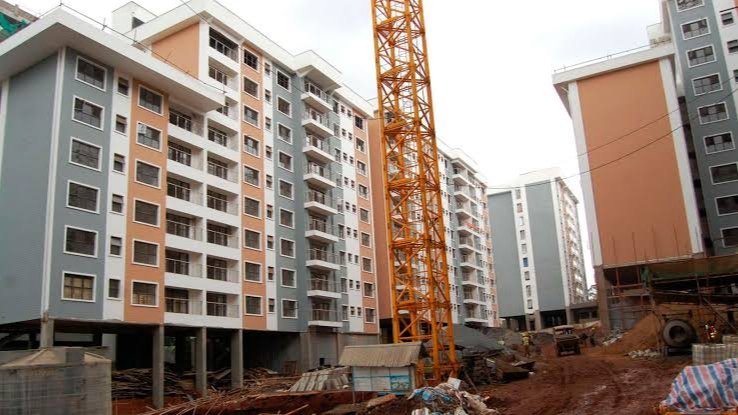

Cytonn Integrated Project LLP has lost its latest court bid to prevent SBM Bank from auctioning a key property in Ruaka, Kiambu County. The decision by the Court of Appeal removes a major obstacle to the lender exercising its statutory power of sale over the asset used as security for loans exceeding Sh1 billion.
The real estate firm had asked the appellate court to stop any sale or transfer of the property and to bar the bank from collecting rent or interfering with the development's management. Judges rejected the application, ruling that Cytonn was seeking to re-litigate matters already settled in prior proceedings.
The court noted that the company did not dispute the debt or the fact that the Ruaka land had been charged as collateral. Any potential losses from the sale could be addressed through damages, the judges added.
The case centres on The Alma project, a residential development in Ruaka. In 2019, Cytonn secured a Sh650 million construction loan from SBM Bank, secured by a first-ranking legal charge over the property. Additional facilities followed, including a Sh129 million further charge and a Sh779 million fixed and floating debenture.
This dispute forms part of a larger collapse involving Cytonn High Yield Solutions and related special purpose vehicles. Funds raised from investors were channelled through these entities to finance projects like The Alma. Cytonn High Yield Solutions went into administration in 2019, with the special purpose vehicles later placed under liquidation.
The High Court had previously allowed SBM Bank to proceed with the sale in 2023. Subsequent challenges by Cytonn were dismissed in late 2025. The bank has accused the firm of diverting Sh672.5 million from apartment sales proceeds that should have gone toward loan repayment.
Official receiver Mark Gakuru opposed the latest application, arguing it would harm more than 3,000 investors awaiting recovery of their funds since early 2023. The liquidation process has faced repeated delays through court applications.
From a construction industry standpoint, the ruling highlights risks in project financing structures common in Kenya's real estate sector. Developers frequently use special purpose vehicles and bank loans backed by land charges to fund mid-tier residential projects like The Alma. When repayments falter, lenders can move swiftly to realise security, often disrupting ongoing or completed developments.
Ruaka has seen rapid urban expansion in recent years, with numerous apartment blocks rising to meet demand from Nairobi's growing middle class. Properties in this area typically feature multi-storey residential units with basic to mid-range finishes. Construction loans for such projects usually cover site preparation, structural works, and finishing, with lenders taking charges over both land and improvements.
The Alma project's status remains unclear amid the liquidation. Assets under preservation orders include the Ruaka property, yet the bank's successful defence of its security interest could lead to a public auction in coming weeks.
This episode adds to broader concerns about financial stability in Kenya's property development market. Many developers rely on investor funds and bank facilities structured through layered entities. When these arrangements unravel, as seen with Cytonn, it affects not only lenders and investors but also contractors, suppliers, and buyers who committed to off-plan purchases.
The Court of Appeal's decision reinforces the enforceability of loan securities in construction financing. For industry players, it serves as a reminder of the importance of clear repayment mechanisms and adherence to charge agreements. Delays in project delivery or diversion of sales proceeds can quickly trigger enforcement actions.
SBM Bank maintained that its pursuit of recovery was lawful and that Cytonn's moves amounted to tactics aimed at delaying the inevitable. The appellate court agreed, prioritising the bank's established rights over the borrower's latest objections.
As the auction process moves forward, attention in construction circles may shift to who acquires the Ruaka asset and what becomes of any incomplete works on The Alma development. Kenya's real estate sector continues to grapple with such high-profile cases, where ambitious projects collide with financing shortfalls.
The ruling comes as the wider Cytonn liquidation seeks to realise assets to compensate affected investors. For now, the Ruaka property stands as prime collateral that SBM Bank can legally dispose of to recoup its exposure.
Comments (0)
Leave a Comment
No comments yet. Be the first to share your thoughts!