
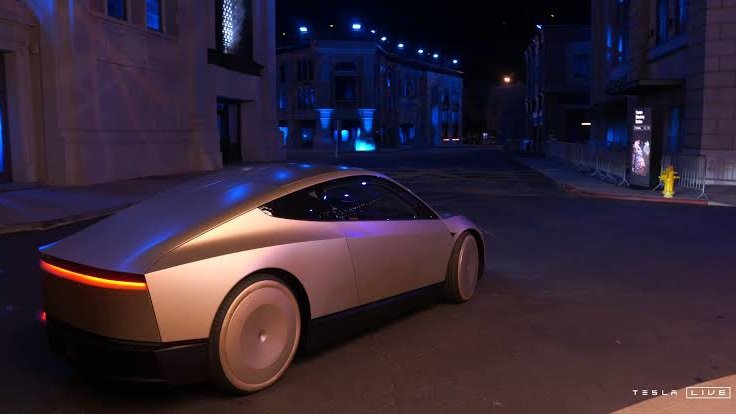

Automaker Tesla has commenced automated logistics operations at its manufacturing plant in Austin, Texas, using its proprietary autonomous software to move newly built vehicles off the assembly lines.
Tesla Chief Executive Officer (CEO) Elon Musk published video footage on the social media platform X showing several Cybercab units navigating the factory grounds without human drivers. The vehicles, which are purpose-built for autonomous transport without steering wheels or pedals, are moving directly from production areas to outbound shipping lots.
The internal deployment utilizes Full Self-Driving (FSD) technology in an unsupervised capacity to manage vehicle logistics within the plant boundaries. According to company data, the system handles complex routing, including navigating internal transit roads and tight sorting lanes, alongside active construction machinery and factory personnel.
The manufacturer has integrated this driverless logistics system across its production lines at the Texas facility. Freshly assembled vehicles, including the Model Y and the Cybertruck, now routinely use the software to complete the trip to logistics areas, which spans up to two miles depending on the specific line.
Data released by the carmaker indicates that its vehicles have logged more than 50,000 miles of autonomous operation within its factory gates in Texas and California. The internal logistics routes provide a controlled environment to validate software updates, before the company attempts a wider commercial rollout on public infrastructure.
The automated movements at the plant coincide with recent regulatory shifts in the local market. The State of Texas recently enacted Senate Bill 2807, which creates a structured framework for companies to self-certify and operate automated driving systems commercially on public roads, subject to registration and insurance mandates.
Tesla previously shifted its broader manufacturing and product strategy to focus heavily on autonomous transport platforms, expecting the specialized vehicles to eventually form the core of a commercial ride-hailing network. The company stated during its recent financial updates that it anticipates volume production of the vehicle model to continue accelerating through the year.
The Austin facility, which is a massive industrial construction footprint covering several million square feet, handles full-scale manufacturing for the electric vehicle line. The factory grounds also house active construction zones for adjacent industrial projects, including a new robotics assembly facility and an advanced semiconductor fabrication plant.
As production volumes scale, drone surveillance of the outbound staging yards indicates that the sorting lanes near the end-of-line facility are filling with new inventory. Logistics teams are currently using the autonomous driving software to position vehicles for immediate loading onto regional transport trucks.
Comments (0)
Leave a Comment
No comments yet. Be the first to share your thoughts!