

A version of this article appeared on SAP News Center.
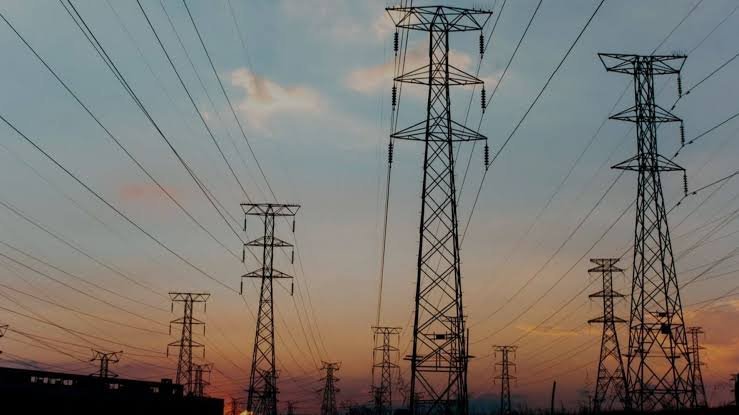
Building high-voltage transmission lines across volcanic ground, steep escarpments, earthquake-prone zones, and geothermal hotspots is difficult enough.
Do it through protected wildlife corridors and politically sensitive community land, and the engineering challenge becomes something else entirely. That is the operating reality for the Kenya Electricity Transmission Company (KETRACO).
The utility sits at the centre of a fundamental shift in how power moves across East Africa. Kenya's grid is no longer fed from a handful of centralised plants. It now draws from geothermal fields in the Great Rift Valley, wind turbines at Lake Turkana, and a fast-expanding solar sector.
Geothermal alone accounts for roughly 40% of regional electricity generation, making Kenya the continent's largest geothermal producer. Hydropower from rivers contributes about 24%, with wind and solar covering the rest.
Managing that diversity is where things get complicated. Renewables (REN) fluctuate with weather patterns, making real-time balancing a constant operational requirement rather than an occasional one.
"Renewable energy is abundant. The real challenge is how to manage, integrate, and stabilise it," said Dr. Njogu Kimando, an energy expert at KETRACO, speaking at the TAC Insights conference for SAP for Energy and Utilities in Toulouse. "The energy transition is not constrained by capacity, but by our ability to manage complexity in real time."
The company's problem is not a shortage of data. It is the absence of unified, real-time visibility across systems that do not naturally talk to each other. Generation sources, transmission assets, and demand patterns have historically operated in silos, leaving operators with limited situational awareness when they need it most.
To close that gap, KETRACO has built an integrated smart grid infrastructure designed to function as a digital twin foundation for the entire network.
Data is captured through Supervisory Control and Data Acquisition (SCADA), an industrial control system for infrastructure and utility networks, and routed through SAP Business Technology Platform middleware into SAP S/4HANA, which handles enterprise-level processing. It is at that layer where raw operational data is converted into structured business intelligence.
"We're relying on SAP technology to transform that raw data into predictive, actionable intelligence," Kimando said. The outcomes he cited include asset lifecycle management and outage reduction, representing a deliberate move from reactive maintenance toward predictive grid reliability.
Artificial intelligence (AI) features prominently in KETRACO's longer-term strategy. The company frames it not as a workforce replacement but as a capacity multiplier, one that enables engineers to spend more time on forecasting and decision-making rather than manual monitoring.
"AI is helping us achieve more with the same workforce. We're enabling engineers, not replacing them," Kimando noted.
The stakes are clear. Without a reliable transmission backbone, Kenya's renewable capacity cannot reach consumers or flow efficiently to neighbouring countries through the wider East African power market.
Inaction, as Kimando outlined it, means grid instability, underutilised energy assets, rising costs, and mounting regulatory exposure. The alternative is data-driven decision-making that improves capital expenditure (CAPEX) planning and cuts recovery times when faults occur.
"The future grid will not be defined by how much power we generate, but by how intelligently we manage it," he concluded.
Comments (0)
Leave a Comment
No comments yet. Be the first to share your thoughts!