
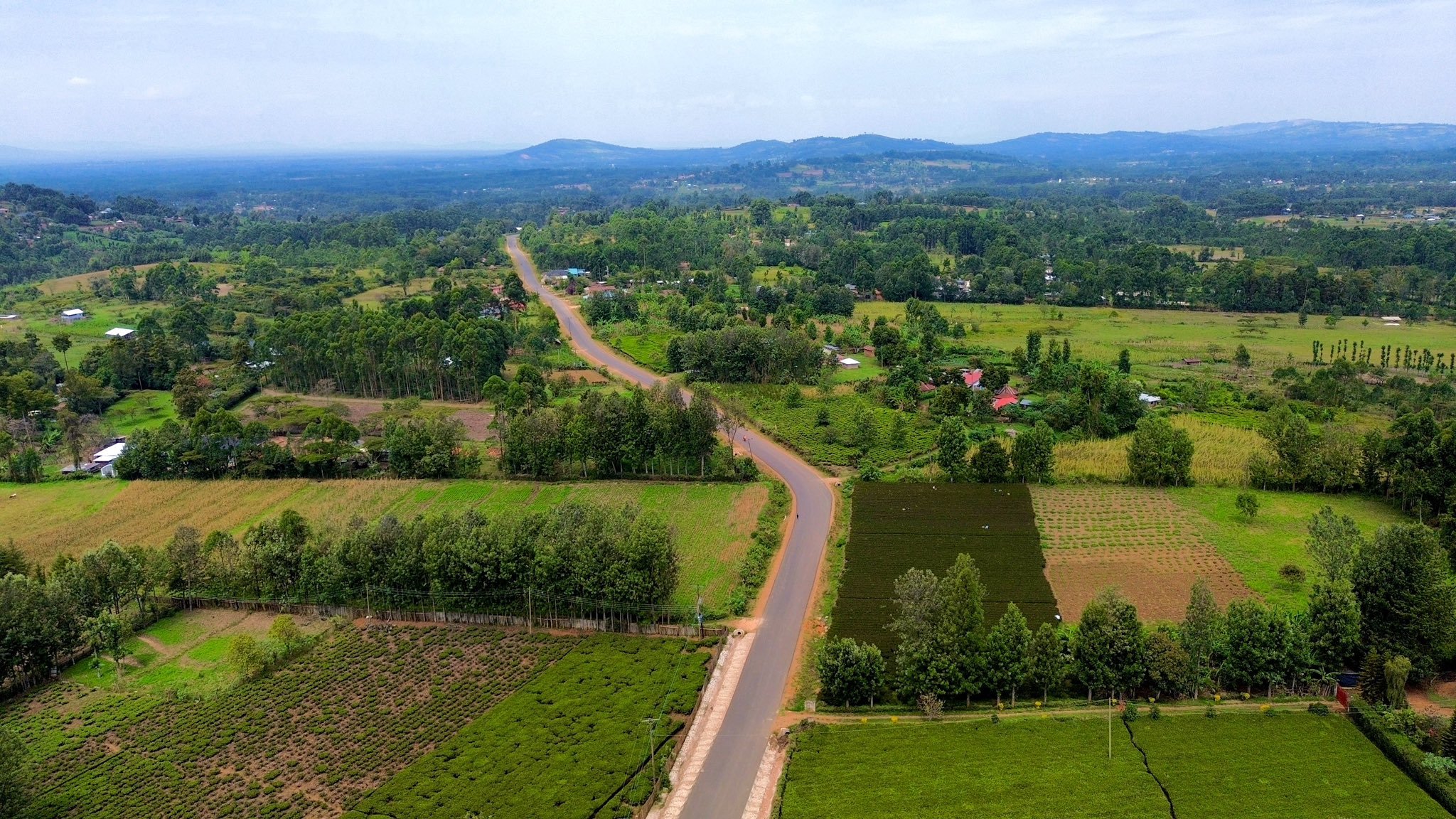

Government inspection teams from the State Department for Roads (SDR) have conducted thorough field evaluations along the newly bituminised Eronge-Kebuse-Border to Borabu Technical Training Institute (TTI) corridor in Nyamira County.
The engineering works were executed by the Kenya Rural Roads Authority (KeRRA), which oversaw the complete transformation of the former earth track into a standard paved blacktop route.
Prior to this infrastructure upgrading project, motorists endured persistent mud traps during heavy rainfall, which frequently brought local transit to a complete standstill.
Transport between border market points and learning institutions encountered severe delays, which elevated operational vehicle costs for daily commercial transporters, public service operators, and local produce traders.
Civil engineering works along the high-moisture alignment included sub-base compaction, base formation, extensive earthworks, and asphalt overlay applications.
Contractors also installed dedicated roadside drainage channels to manage torrential rainwater runoff, which effectively protects structural pavement layers against early seasonal erosion.
The newly paved highway alignment now facilitates smooth movement for public service vehicles, heavy freight trucks, and institutional buses serving surrounding communities.
Regional transport officials confirmed that completed infrastructure meets national safety and structural standards, which will ensure long-term serviceability and improved driving comfort for regional motorists.
Local tea farmers, who previously faced severe logistical bottlenecks carrying fresh green leaf to processing factories, have reported significantly shorter travel times.
Reduced transit duration prevents post-harvest crop loss, which directly supports rural agricultural household incomes and strengthens regional agricultural supply chains across the Borabu constituency.
Infrastructure improvements also enhance physical connectivity to major local educational centers, including Borabu TTI and neighboring primary schools.
Students and instructional staff now access campus facilities without navigating seasonal muddy tracks, which previously disrupted daily learning schedules during heavy rainy periods.
The KeRRA confirmed that similar tarmac construction and routine maintenance projects will continue across under-serviced rural constituencies, which strengthens regional links to primary national highways.
State monitors verified that contract milestones were achieved on schedule, which reflects focused project execution by civil engineering teams.
Government financial records indicate that broader infrastructure rehabilitation initiatives for the Eronge to Borabu corridor involve multi-year state budget allocations aimed at expanding bitumen coverage across connecting feeder roads.
Local civic leaders have welcomed these sustained infrastructure investments, which foster broader economic integration within Nyamira County.
With civil construction completed, local transport operators have established regular passenger routes servicing rural agricultural villages and neighboring commercial trading centers.
Enhanced road safety features, such as high-visibility pavement markings, stabilized shoulders, and reinforced drainage culverts, provide dependable transit conditions throughout all weather conditions.
State officials emphasized that maintaining rural feeder networks remains central to the policy framework of President Ruto, which prioritizes rural connectivity.
Continued monitoring of new blacktop surfaces ensures immediate identification of maintenance requirements, which protects public capital investments in critical transport infrastructure projects.
As agricultural haulage improves, regional trade between Nyamira County and neighboring counties continues to expand smoothly.
Residents anticipate sustained commercial activity as additional rural feeder routes undergo planned bitumen upgrades under current state infrastructure programs.
Comments (0)
Leave a Comment
No comments yet. Be the first to share your thoughts!