
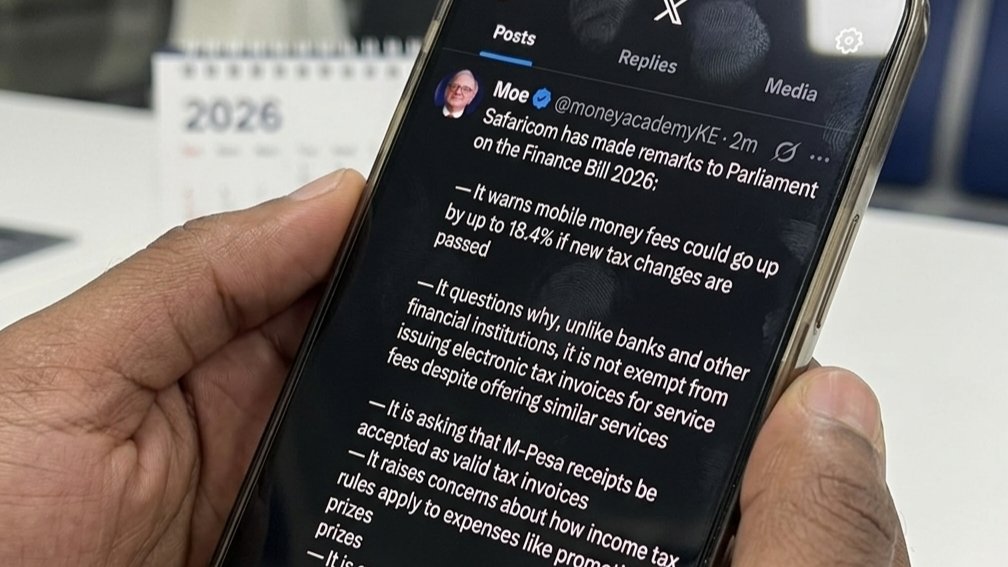

Safaricom has submitted a formal memorandum to Parliament outlining severe concerns regarding the Finance Bill 2026, warning that the proposed legal changes could escalate mobile money fees by up to 18.4 percent if passed into law.
The submission targets a series of new tax compliance measures and policy structural shifts that the telecommunications firm argues unfairly disadvantage mobile money operators relative to traditional banking institutions.
A central grievance in the memorandum questions why Safaricom is not exempt from issuing electronic tax invoices for its service fees, given that commercial banks and alternative financial institutions enjoy exemptions for similar financial services.
To resolve this imbalance, the company is demanding that regular M-Pesa receipts be legally recognized and accepted by the state as valid tax invoices for transaction processing.
Further complications arise from how corporate income tax rules are set to affect operational expenses, with Safaricom raising red flags over the treatment of expenditures related to promotional prizes.
The firm is urging legislators to clarify the boundary of the legislation, questioning whether electronic invoicing protocols should strictly apply to transaction-focused taxes rather than being intertwined with broader income tax rules.
Industry analysts note that these proposals follow recent National Treasury attempts to regularize value-added tax collection across the country's 42 licensed Payment Service Providers (PSPs), a regulatory move that players argue creates an unequal playing field between digital platforms and traditional banking infrastructure.
Comments (0)
Leave a Comment
No comments yet. Be the first to share your thoughts!