
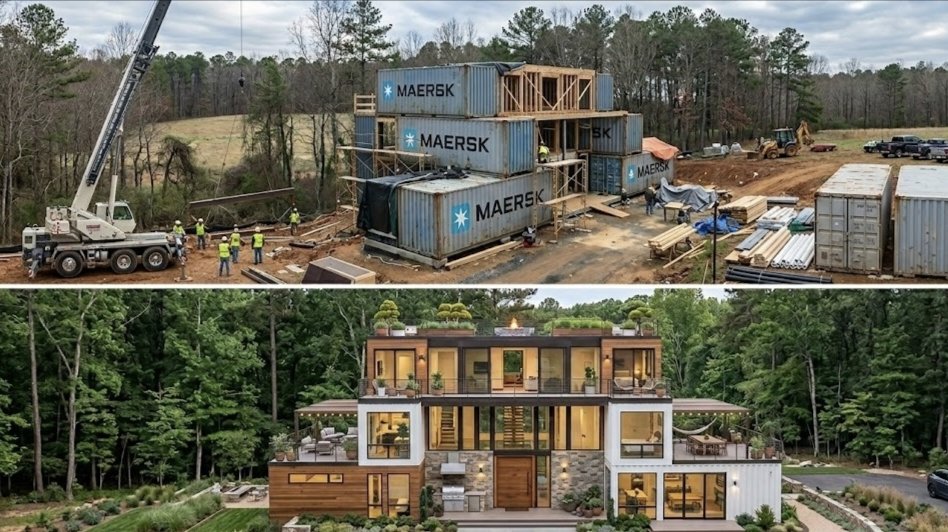

Modular and container-based construction is steadily gaining ground in Kenya’s built environment sector as developers, institutions, and private investors reassess traditional building methods in favour of faster and more controlled delivery systems.
The approach relies on manufacturing building units or structural components in off-site environments before transporting them for assembly. In the case of container construction, modified steel shipping containers are repurposed into functional spaces such as housing units, offices, classrooms, retail outlets, and temporary site facilities.
One of the main drivers behind this shift is speed. Because fabrication and site preparation can take place simultaneously, overall project timelines are significantly reduced compared to conventional construction, where most activities are sequential and exposed to weather and site inefficiencies.
Cost predictability is another factor influencing interest. Factory-controlled production allows for more standardised material usage and reduced wastage, which improves the reliability of early cost estimates. This is particularly relevant in projects where budget certainty is critical at the planning stage.
Container-based units also offer flexibility in design and application. Multiple modules can be combined, stacked, or expanded to create larger structures depending on project requirements. This adaptability makes them suitable for both temporary and semi-permanent developments across residential, commercial, and institutional sectors.
In the Kenyan market, the concept is increasingly being explored in urban expansion zones, infrastructure support projects, and rapid-deployment housing solutions. While adoption is still emerging, interest is growing among developers looking for alternatives that reduce construction risk tied to time overruns and on-site inefficiencies.
However, the model still requires careful upfront planning. Transport logistics, structural modifications, insulation, and compliance with building standards all play a role in determining the final performance and comfort of container-based structures. Early design coordination is critical to avoid costly adjustments later in the process.
Despite these considerations, modular construction continues to position itself as a practical alternative within Kenya’s evolving construction landscape, particularly in contexts where speed, scalability, and cost control are central to project delivery decisions.
If you are ready or you are exploring a potential Container project, reach out to us anytime at 0701951682 or info@mjengohub.co.ke for guidance and professional work.
Comments (0)
Leave a Comment
No comments yet. Be the first to share your thoughts!