

A version of this article appeared on social media platform X by Massimo.
Why contractors are adopting advanced paving machinery for major transport corridors comes down to efficiency, durability, and structural precision. Concrete road laying has increasingly shifted from traditional fixed-form methods toward automated continuous paving technology.
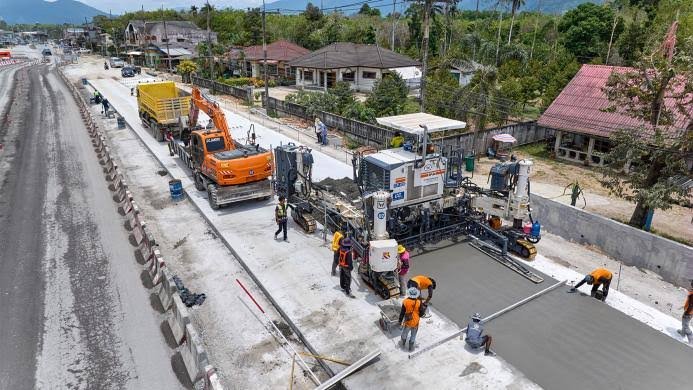
Slipform Pavers (SFP) utilize a continuous paving process where fresh concrete is poured directly in front of the machine, which then molds, compacts, and finishes the slab as it moves forward. This eliminates the need for fixed side forms, which accelerates project timelines significantly on large-scale highways.
In heavy infrastructure, concrete highways offer distinct advantages over traditional asphalt surfaces. Concrete pavements possess higher load-bearing capacities, making them ideal for heavy freight routes, and they typically require less long-term structural maintenance under heavy traffic conditions.
Modern paving operations rely on specialized equipment to ensure smooth surfaces and long-lasting durability. In advanced roadworks, heavy machinery streamlines multiple stages of paving into one coordinated pass, reducing labor requirements and potential human error during placement.
Engineers and project managers prioritize precise mix designs, accurate dowel placement for load transfer, and proper curing protocols to prevent early surface cracking. The integration of modern paving systems allows crews to maintain high daily output while meeting strict smoothness specifications.
Across Europe, highway authorities routinely utilize rigid concrete pavements for high-density transport links. These installations are designed to withstand severe weather cycles and heavy axle loads without deformation or rutting over decades of operation.
Contractors operating slipform machinery must maintain precise logistical control over concrete supply lines. A steady stream of ready-mix trucks is required to keep the paver moving at a constant speed, as sudden stops can create surface irregularities in the setting concrete.
As global agencies seek long-life infrastructure solutions, modern continuous paving techniques remain a primary standard for high-capacity expressways and critical transport links worldwide.
Comments (0)
Leave a Comment
No comments yet. Be the first to share your thoughts!