
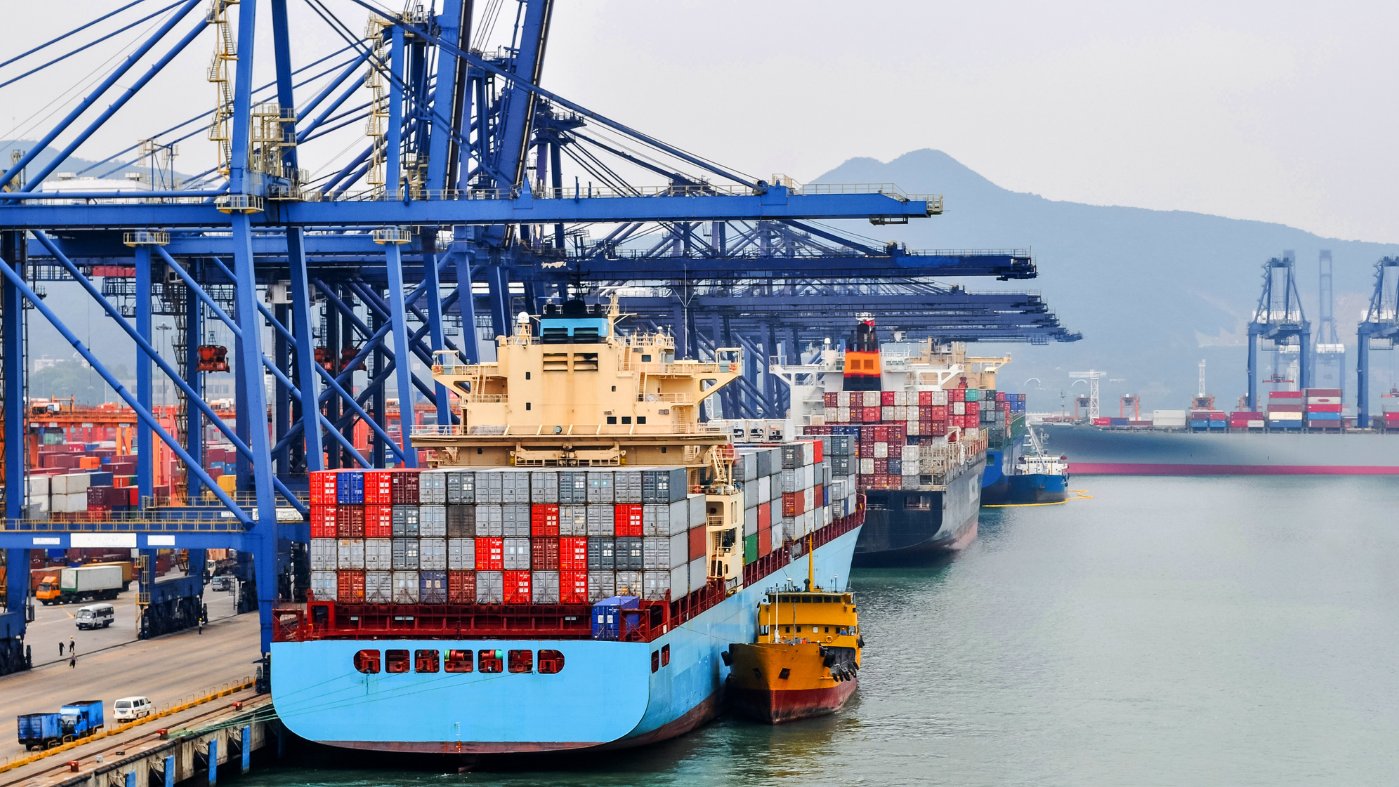

Standardized intermodal freight units remain foundational to modern international logistics and maritime supply chains.
The conceptual development of the standardized steel shipping container addressed widespread operational inefficiencies that historically bottlenecked cargo handling at major commercial seaports.
Before standardized containerization, breakbulk cargo handling required manual loading and unloading of individual items by port dockworkers. Vessels often spent more time berthed at harbor docks undergoing labor-intensive cargo transfers than navigating open maritime transport routes.
North Carolina truck driver Malcom McLean conceptualized intermodal shipping containers in 1937 while observing delayed cargo transfer processes at New Jersey docks. His design allowed goods to be loaded directly at production facilities and transferred onto ships via cranes.
The breakthrough was not simply putting cargo into steel boxes. It was creating a standardized unit that could move between trucks, trains and ships without the goods inside being repeatedly handled.
The system eventually settled around two dominant container lengths: 20 feet and 40 feet. The 20-foot container became the basic reference unit for measuring containerized cargo, known as the twenty-foot equivalent unit, or TEU.
A 40-foot container occupies the equivalent space of two TEUs. This simple standard allowed ships, ports, railway operators and trucking companies to build compatible infrastructure around predictable container dimensions.
Another reason the basic design has lasted so well is the steel used to make many shipping containers. Corten steel, also known as weathering steel, develops a protective layer of oxidation when exposed to the elements.
Instead of continuing to rust rapidly like ordinary steel, the surface layer helps protect the metal underneath, giving containers the toughness and corrosion resistance needed to survive years of handling, sea transport and exposure to harsh weather.
The floor is another important part of the container. Traditional freight containers commonly use thick hardwood plywood panels supported by steel cross-members, creating a strong floor capable of carrying heavy cargo while withstanding forklifts, moisture and repeated loading and unloading.
The flooring has also become an area for innovation. Some newer container designs use bamboo flooring as a more sustainable alternative to conventional hardwood-based panels.
The implementation of mechanized container handling reduced cargo loading expenses from approximately six dollars per ton to seventeen cents per ton. Secured enclosure systems also minimized cargo theft, unauthorized access, and illicit freight tampering across port terminals.
To ensure global infrastructure adoption, McLean released container patent rights, including corner casting and twist-lock mechanisms, royalty-free to international ports.
Standardized fittings enabled seaports worldwide to install compatible container cranes and specialized terminal handling equipment.
While releasing container hardware designs publicly, McLean retained proprietary rights to specialized container ship vessel designs. His enterprise, Sea-Land Service, expanded rapidly into the world's largest container shipping company during early commercial containerization adoption.
What makes the invention particularly remarkable is how little the fundamental concept has changed. Modern containers use more advanced materials, manufacturing methods and handling systems, but the basic idea remains the same: a standardized box that can move between trucks, trains and ships without unloading the cargo inside.
The familiar 20-foot and 40-foot boxes remain the backbone of this system. Ports have developed enormous cranes and storage yards around them, ships have been designed to carry thousands of them, while road and rail networks have evolved to move the same standardized units inland.
The container has also moved beyond freight. In recent years, retired and repurposed shipping containers have increasingly been used as modular structures for offices, shops, classrooms and homes, extending an invention designed for moving goods into the construction sector.
Economic analyses indicate that standardized containerization expanded international trade flows by nearly 790 percent over a twenty-year period.
Standardized freight handling reduced transit costs, establishing interconnected global manufacturing supply chains for consumer electronics and commodities.
Port facilities worldwide continue to adapt infrastructure to support increasingly large container vessels and automated container handling yards. Standardized intermodal shipping remains an essential structural foundation supporting international freight transport and global trade networks.
More than half a century after McLean's breakthrough entered commercial use, the underlying principle remains remarkably intact. The dimensions and technology have evolved, but the humble 20-foot and 40-foot steel boxes continue to connect factories, ports, roads, railways and, increasingly, buildings.
Comments (0)
Leave a Comment
No comments yet. Be the first to share your thoughts!