
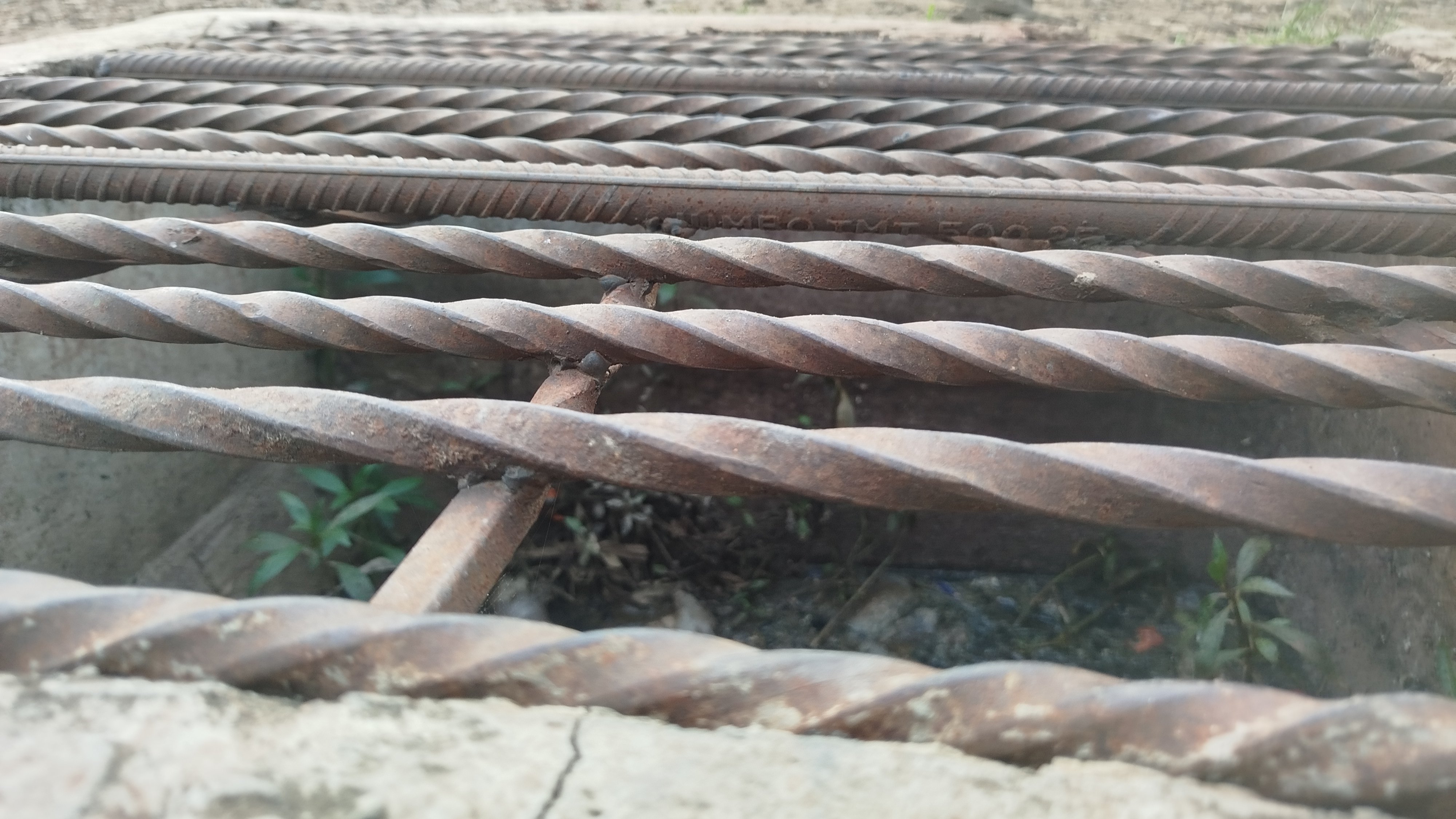

For decades, twisted reinforcement bars were a familiar sight on construction sites. Their distinctive spiral appearance made them easy to identify, and many engineers believed the twisting process improved the bond between steel and concrete.
Today, however, twisted bars have largely disappeared from new projects. They have been replaced by ribbed high-yield deformed bars, which offer better performance, greater consistency and improved compliance with modern building standards.
The history behind twisted bars
Twisted bars were originally produced by taking plain mild steel bars and mechanically twisting them after rolling. The twisting process created a helical pattern intended to improve the grip between the reinforcement and surrounding concrete.
At the time, this represented a significant improvement over smooth round bars, which could slip more easily under load.
For many years, twisted bars became the standard reinforcement in buildings, bridges and other concrete structures throughout Kenya and many other countries.
Why engineers moved away from them
The biggest drawback of twisted bars lies in how they are manufactured.
Twisting a finished bar introduces residual stresses into the steel. While this increases strength to some extent, it also reduces ductility, making the reinforcement less capable of undergoing large deformations before failure.
Modern structural design, particularly in earthquake-resistant construction, favours steel that can bend significantly while maintaining its strength.
Ribbed bars, also called deformed bars, achieve this without introducing residual torsional stresses.
Ribbed bars are manufactured differently
Unlike twisted bars, ribbed bars are not twisted after production.
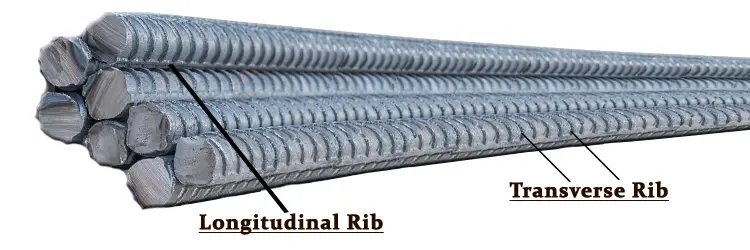
Ribbed bars. /Shyam Steel
Instead, the ribs are formed directly during the hot rolling process. This creates a uniform steel microstructure while producing raised lugs that provide excellent mechanical interlock with concrete.
Because the ribs are an integral part of the manufacturing process, the bars maintain more consistent mechanical properties along their entire length.
The result is reinforcement with predictable strength, improved ductility and better overall performance. They typically provide a high yield strength of 415–500 MPa (or up to 500 N/mm²)
Better bond with concrete
One common misconception is that twisted bars grip concrete better because of their spiral shape.
In reality, modern ribbed bars generally develop a stronger bond.
Their carefully designed transverse ribs resist both slipping and pull-out more effectively than the continuous spiral surface of twisted bars.
A stronger bond allows forces to transfer more efficiently between steel and concrete, reducing crack widths and improving structural performance.
Easier quality control
Another reason for the transition is manufacturing consistency.
Because ribbed bars are produced directly in rolling mills, manufacturers can control dimensions, rib geometry and mechanical properties with greater precision.
Twisted bars depended heavily on the quality of the twisting operation, which could introduce variations between batches.
Modern construction increasingly relies on standardized materials that consistently meet national and international specifications.
Compatible with modern design codes
Current structural design standards, including Eurocodes and other international reinforced concrete design codes, are primarily based on high-yield ribbed reinforcement.
These standards assume predictable yield strength, ductility and bond characteristics that ribbed bars are specifically designed to achieve.
Although existing structures containing twisted bars can continue to perform safely if properly designed and maintained, engineers rarely specify them for new projects.
Why twisted bars are still seen
Twisted reinforcement has not disappeared entirely.
Older buildings undergoing renovation often contain twisted bars, and some stock may still be found in storage yards or small fabrication workshops.
However, virtually all major commercial, residential and infrastructure projects now specify ribbed high-yield reinforcement as the standard reinforcing steel.
The bottom line
The industry's shift from twisted bars to ribbed reinforcement was not simply a change in appearance.
It reflected advances in metallurgy, manufacturing technology and structural engineering.
Ribbed bars provide stronger bond performance, better ductility, more consistent quality and greater compliance with modern engineering standards. These advantages have made them the preferred reinforcement for today's buildings, bridges and other concrete structures.
Comments (1)
Leave a Comment
Joseph Ngunjiri ✓
18 minutes ago