
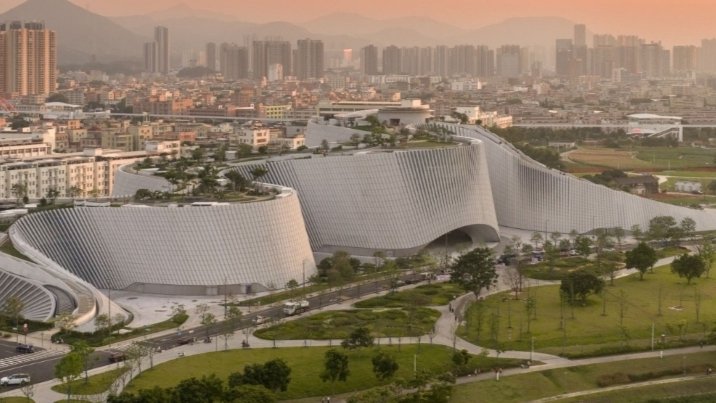

China has opened Shenzhen Natural History Museum, a vast science and cultural facility whose architecture is designed to merge with the surrounding landscape rather than stand apart from it. The new museum features a publicly accessible rooftop, eight permanent exhibition halls and spaces that trace 4.6 billion years of Earth history.
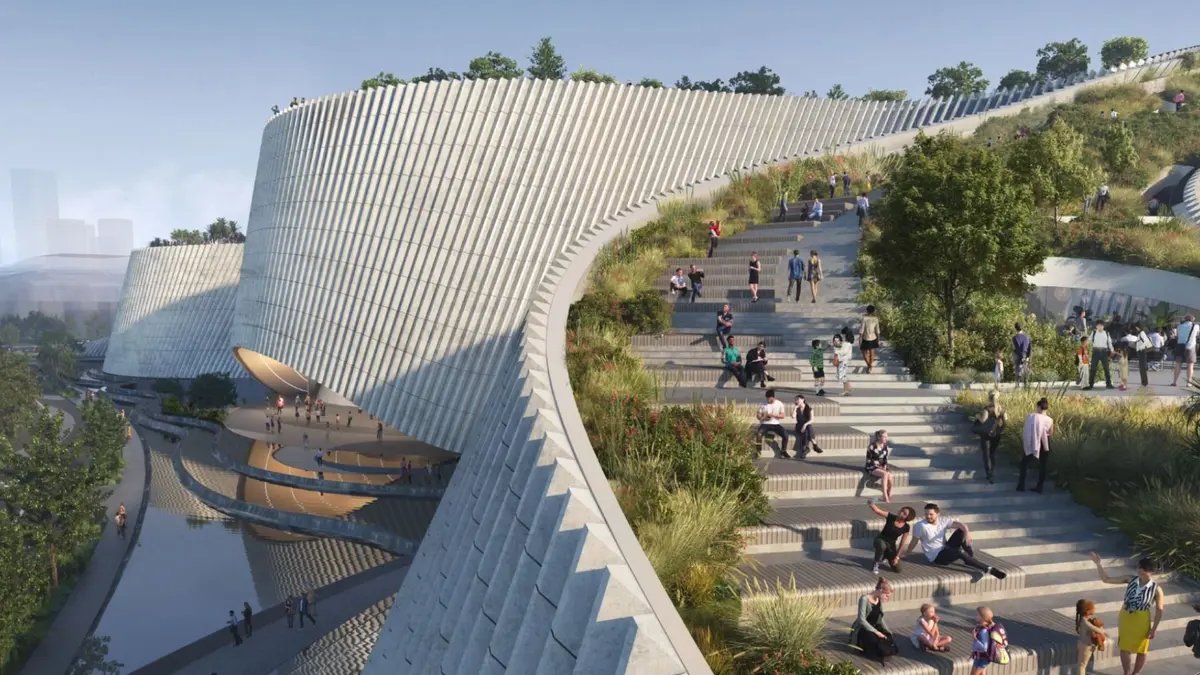
A true masterpiece. /IE
Located in Shenzhen's Pingshan District near Yanzi Lake, the building covers about 105,300 square metres, or roughly 1.13 million square feet. It is the largest comprehensive natural history museum in southern China and forms part of Shenzhen's broader programme to expand major public cultural facilities.
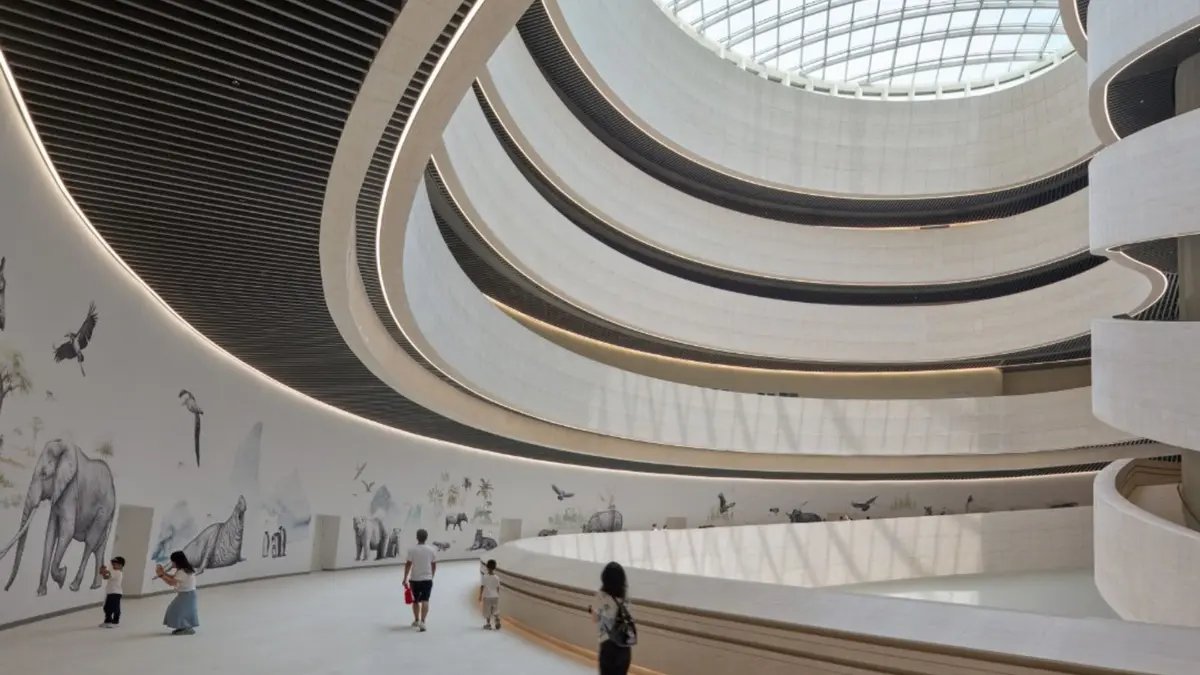
Inside the museum. /IE
The museum was designed by an international team comprising Danish architecture firm 3XN, Canadian practice B+H Architects and China's Zhubo Design. Their proposal was selected through an international competition that attracted dozens of entries from around the world.
Its flowing form takes inspiration from river deltas, with curved surfaces intended to resemble natural landforms shaped over time. Instead of ending at the building's walls, the roof rises into a landscaped public park that visitors can walk across, creating a direct connection with neighbouring green spaces.
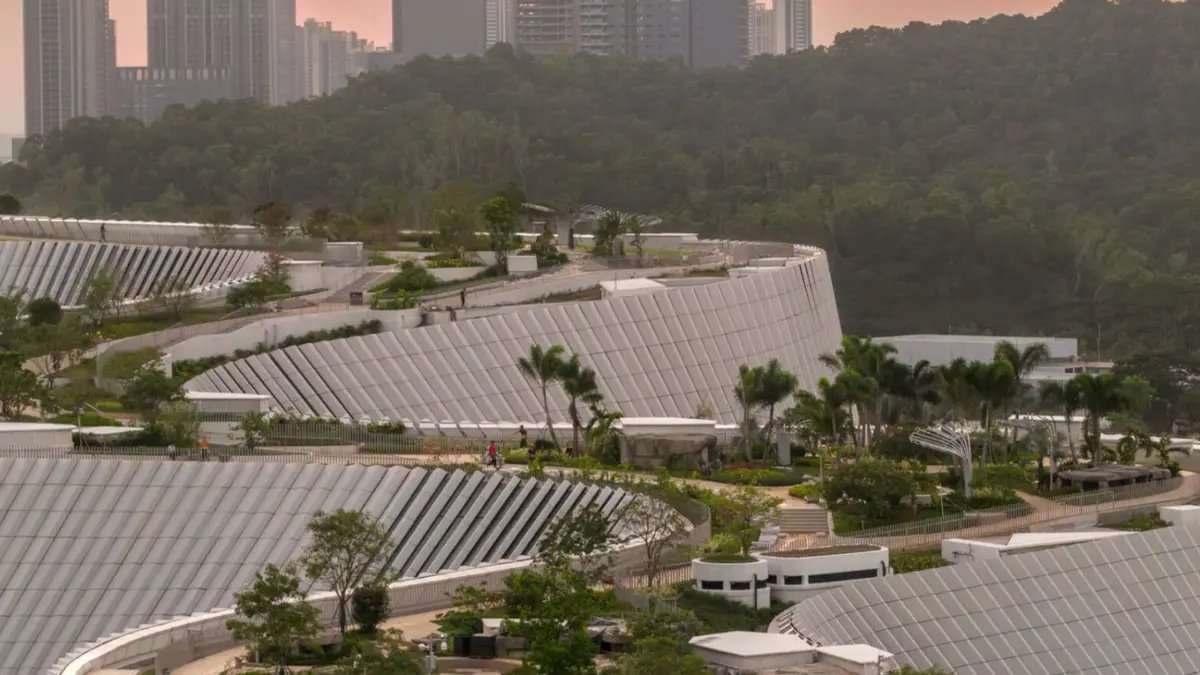
Walkway views. /IE
A rooftop botanical garden stretches for more than 600 metres, linking the museum with Yanziling Park and nearby wetland trails. The approach blurs the boundary between architecture and nature while allowing parts of the landscape to remain accessible even outside normal museum opening hours.
Inside, visitors move through eight themed exhibition halls that begin with the formation of Earth and continue through geological change, biodiversity, evolution and the natural environment. The displays connect global natural history with the mountains, rivers and coastal ecosystems found around Shenzhen.
The museum also includes temporary exhibition galleries, research laboratories, educational facilities, cinemas and an approximately 1,100-seat nature theatre. These spaces allow the building to function as both a public attraction and a centre for scientific research and learning.
Among the exhibits are dinosaur fossils, meteorites, wildlife specimens and interactive displays that explain Earths changing environments across billions of years. Collections previously displayed elsewhere in Shenzhen have also been transferred to the new museum to expand its permanent exhibitions.
Beyond its exhibitions, the project reflects a growing trend in museum design where public buildings double as open civic landscapes. Rather than separating visitors from the surrounding environment, the architecture encourages movement between indoor galleries, rooftop gardens and nearby parks in a continuous experience.
The opening adds another landmark to Shenzhen's expanding network of cultural institutions. Alongside its scientific collections, the museum demonstrates how architecture, landscape design and public space can be combined in a single project while making the building itself part of the visitor experience.
Comments (0)
Leave a Comment
No comments yet. Be the first to share your thoughts!