
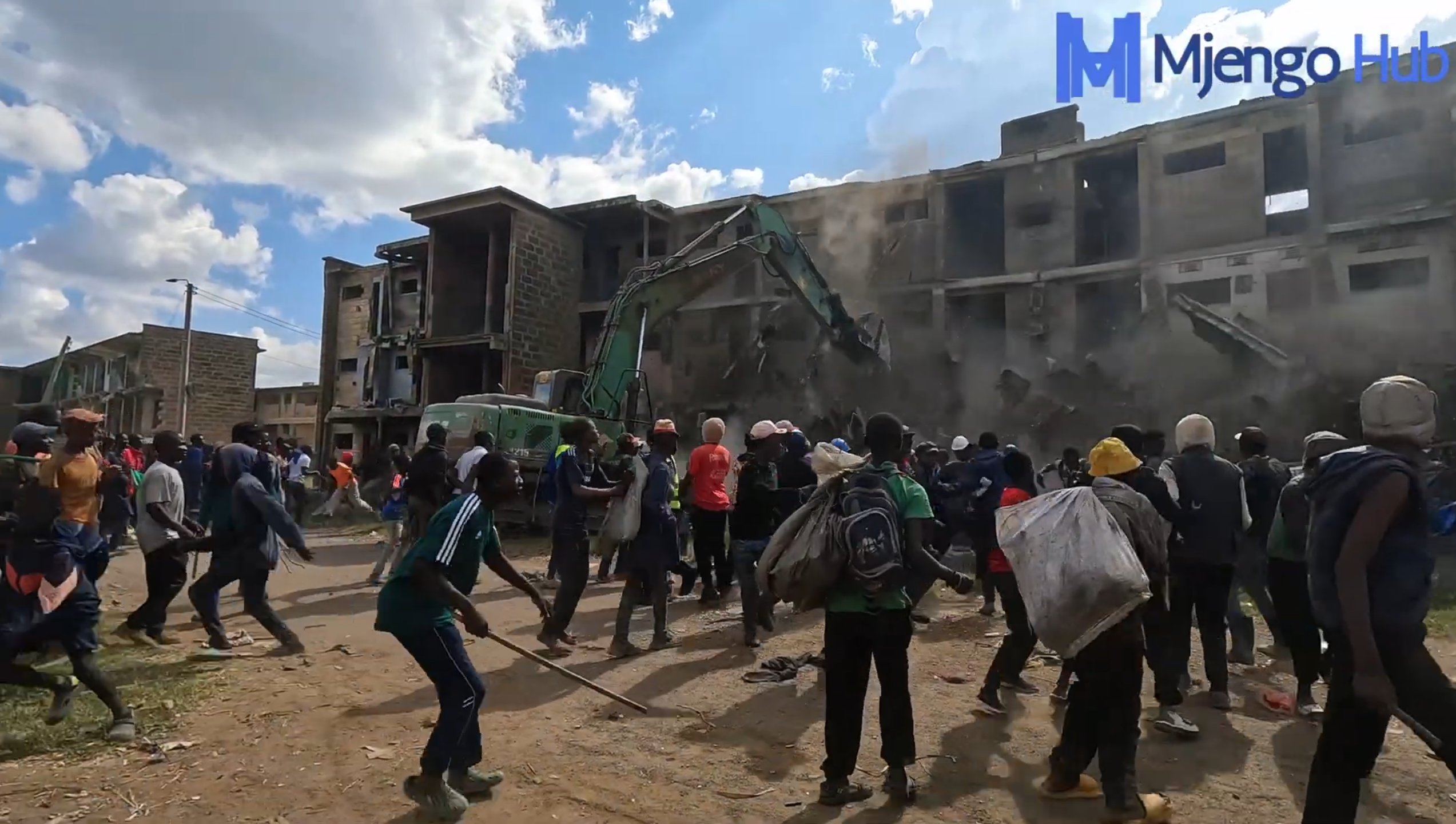

The landscape of Nairobi’s Eastlands is undergoing a radical shift following the demolition of the historic Makongeni Estate to pave the way for a massive government affordable housing project. On Saturday November 22 2025, excavators rolled into the 139 acre estate marking the end of an era for a community that had stood for decades, and the beginning of the government’s ambitious Nairobi Eastlands Regeneration Plan.
The project aims to replace the original 3,600 low density dwelling units with a high density modern district comprising approximately 30,000 new housing units.This redevelopment is a central pillar of the state’s housing agenda designed to address the chronic housing deficit in the capital.
The land which was previously transferred to the Kenya Railway Pension Scheme in 2006 was acquired by the government after the scheme faced liquidity challenges.
While the vision promises a modernized urban future, the transition has been fraught with contention. Residents reported that the demolitions commenced ten days prior to the issued notice deadline of December 2, which sparked confusion and distress among the estimated 40,000 affected individuals.
In a bid to mitigate the impact of the displacement, the government initiated a Relocation Facilitation Fund providing 150,000 Kenya Shillings to each household. This support was also extended to approximately 1,000 sub tenants on humanitarian grounds.

Officials have stated that residents were issued cards guaranteeing them the first right of purchase for the new units upon completion. Furthermore, the state has promised that one member from each affected household will be nominated for employment opportunities during the construction phase, acknowledging the massive labor requirements of the project. The redevelopment is set to proceed in five phases with the first phase targeting 5,000 units.
Beyond residential blocks, the master plan for the new Makongeni district includes a mix of social and commercial amenities. The design features retail and office hubs, a community health center, a vocational institute, and new schools. Green spaces and utility infrastructure including a solar field are also part of the integrated urban design.
As construction begins on this colossal project, questions remain regarding the capacity of existing infrastructure such as Jogoo Road, to handle the anticipated tenfold increase in population density.
Comments (0)
Leave a Comment
No comments yet. Be the first to share your thoughts!