
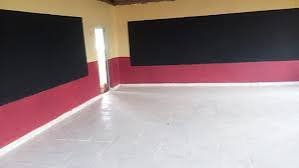

The transformation of school infrastructure within Kiharu Constituency has moved from local achievement to a subject of intense parliamentary interest. Central to this development is the systematic renovation of learning institutions, where standard earth and cement floors have been replaced with ceramic tiles, and dilapidated structures have undergone comprehensive structural repairs. In the most recent phase of these works, 85 distinct projects were executed, focusing on tiling hundreds of classrooms and ensuring that labor was sourced directly from the local community to sustain the local construction economy.
Beyond classrooms, the constituency recently saw the completion of new administrative offices in the Mjini area. Funded through the National Government Constituency Development Fund (NG-CDF), these facilities were designed to house the Assistant County Commissioner and local chiefs. However, the handover of these buildings occurred under a cloud of political friction, with some local government officials absent from the commissioning. This tension mirrors a growing discomfort among lawmakers who are facing pressure from their own constituents to replicate the Kiharu construction model.
Records from the 2022/23 financial year show that Kiharu was allocated Ksh 151.96 million, a figure lower than the Ksh 166.59 million received by Suna East in the 2023/24 cycle. Despite the lower allocation, the volume of visible infrastructure in Kiharu, including the carpeting of school pathways with cabro paving and the renovation of secondary school laboratories, has led to public questioning of how funds are utilized elsewhere. At institutions like Theri Secondary School and Gituri Mixed Secondary, works included floor screeding, plastering, and the construction of multi-purpose halls with capacities for up to 500 students.
Road infrastructure has also seen activity, though often through broader state agencies. Recent projects include the periodic maintenance of the Kayahwe-Muchungucha-Gacharu road and the upgrading of the Ndikwe-Kiria route. These works, while separate from the direct NG-CDF primary school renovations, contribute to a broader environment of high-density infrastructure delivery that has become synonymous with the region's current leadership.
The scale of these projects has prompted the National Assembly to demand greater transparency in geographical reporting. Legislative requirements now mandate that the National Treasury submit detailed geographical information on all development projects per county and constituency. This move aims to address allegations of unfair resource allocation and to establish whether the Kiharu model is a result of superior project management or disparate funding. As 2026 approaches, the focus remains on whether this intensive renovation strategy can be maintained and if other constituencies will be forced to adopt similar construction standards to satisfy an increasingly observant public.

Comments (0)
Leave a Comment
No comments yet. Be the first to share your thoughts!