
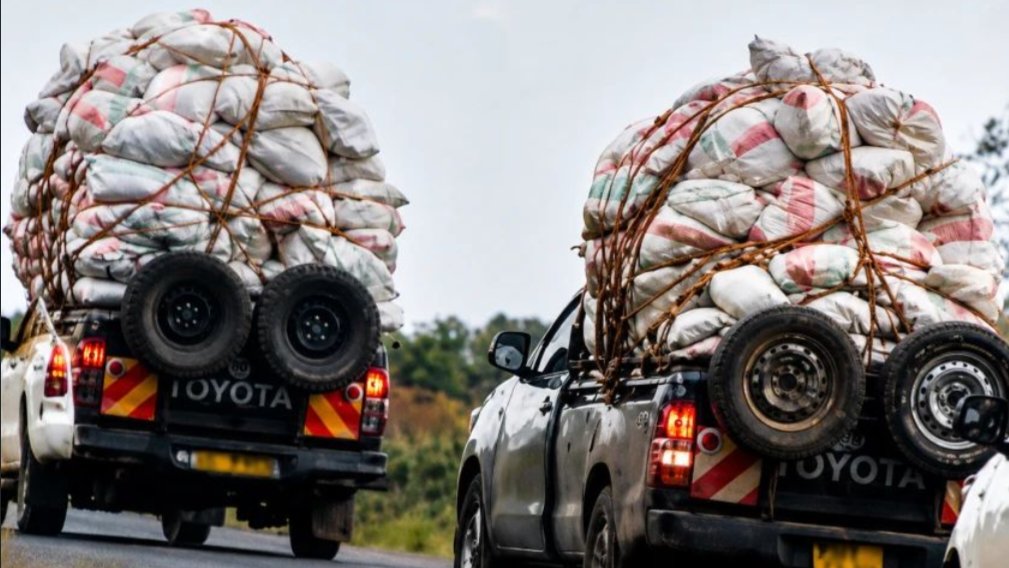

Residents and traders in Kirinyaga County have raised a fresh alarm over the return of speeding stimulant transporters who are flouting traffic regulations on major public roads. The local communities in Ngurubani and Kagio towns report that reckless driving has escalated along the critical transport corridors.
According to local reports, the commercial pickups transporting miraa and muguka are causing widespread anxiety among road users. The vehicles have returned to the busy Mwea–Embu Highway, where they frequently speed through densely populated trading centres during the day and late into the night.
The transporters had previously been pushed off this specific highway following intense local protests. The public outrage followed a series of deadly crashes, including a prominent incident where a local motorcycle operator was struck and killed, forcing the high-speed transit vehicles to seek alternative paths.
While diverted, the delivery vehicles utilized the alternative Samson Corner–Kutus–Kagio–Sagana route. However, market traders in Kagio reported that the drivers merely transferred their dangerous habits there, continuously overspeeding and hooting aggressively right through the active market areas despite the highway location.
Now, residents state that the pickups have reassumed their old patterns on the Mwea–Embu Highway. Gudson Muchina, a resident of Ngurubani, explained that the drivers are actively endangering roadside traders and other motorists, openly ignoring a prior mutual agreement to strictly observe designated speed limits.
The growing tension has prompted warnings from local transport operators who share the infrastructure. Michael Kamau, the chairman of the local boda boda riders, stated that the operators are prepared to take action by physically blocking the pickups from utilizing both the primary highway and the alternative county routes.
Community leaders have previously attempted to mitigate the dangers through localized infrastructure interventions. Peter Karinga, the Tebere Ward Member of County Assembly (MCA), had previously erected a temporary traffic sign at Murubara warning motorists to maintain a maximum speed of 50 kilometres per hour, though it was subsequently vandalized.
The anxieties of the Kirinyaga residents are rooted in a history of painful traffic fatalities. Previous accidents along these transit routes have claimed the lives of numerous vulnerable road users, including school-going children, with a notable tragedy occurring near Ngurubani Primary School in recent years.
The locals are now appealing to state authorities to restore order before more lives are lost. They want the traffic department of the Kenya Police Service to actively enforce existing speed limits and compel the commercial delivery drivers to strictly comply with all national road safety regulations.
With the regional economy heavily dependent on both agriculture and open-air markets, the conflict highlights the ongoing struggle between fast-paced logistical transport and community safety. Local actors maintain that if official enforcement remains absent, community-led blockades could disrupt transport networks across the entire county.
The local delivery networks operate under immense time pressure to deliver the perishable agricultural commodities to distant consumer markets before the leaves wilt. This economic pressure often drives operators to maximize speeds, frequently transforming standard transport pickups into high-speed hazards on public infrastructure.
Traders emphasize that while they respect the business of the transporters, public safety on common infrastructure must take precedence. They remain hopeful that swift administrative action will address the reckless behavior before residents take matters into their own hands to secure their towns.
Comments (0)
Leave a Comment
No comments yet. Be the first to share your thoughts!