
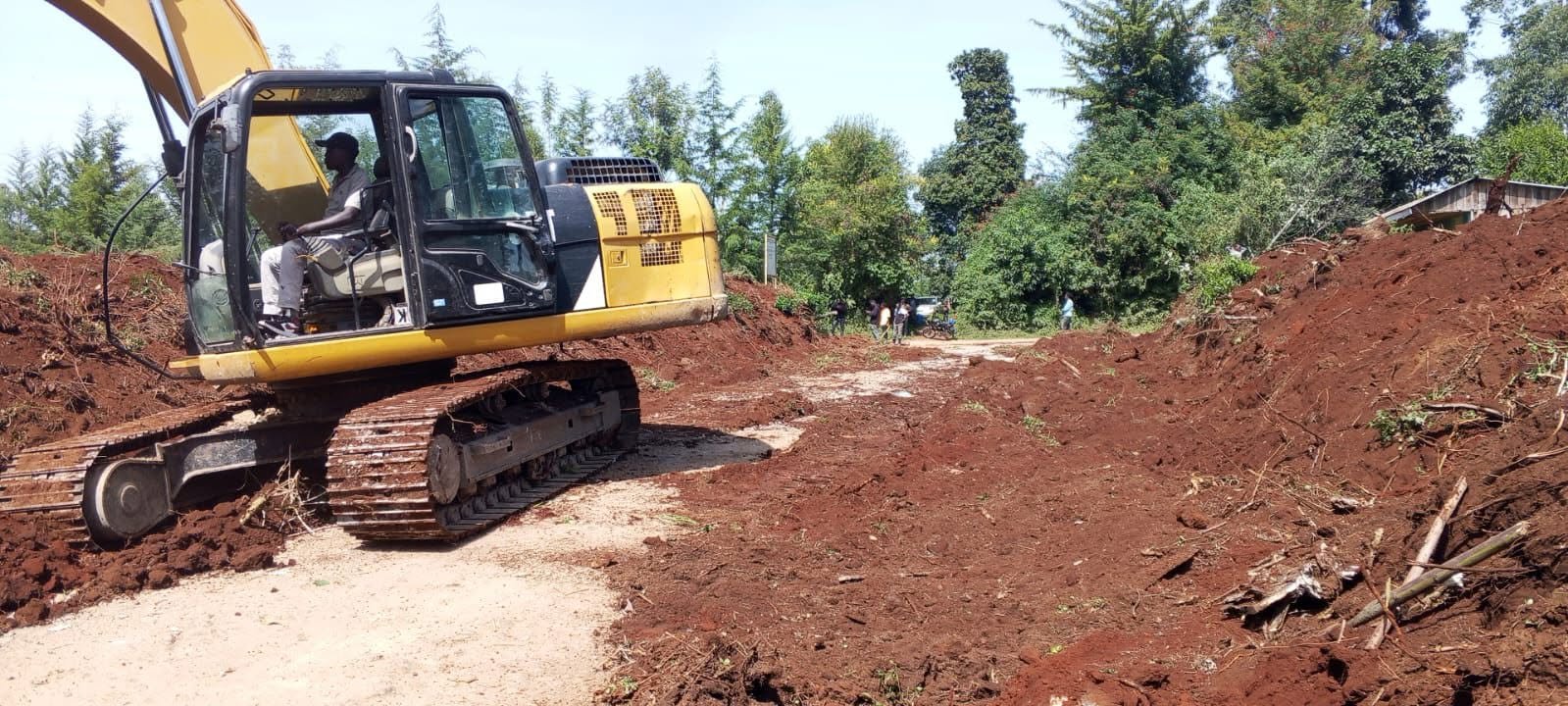

State Department for Roads officials confirmed ongoing progress on the Panda Pilis-Kampala-Bakoyot-Mabasi road network upgrade. The project targets a key agrarian corridor in Bomet County. Heavy machinery, including yellow excavators, has been active on sections of the dirt track, clearing and shaping the alignment.
Images shared by the department show tracked excavators working through reddish soil alongside partially graded sections. One machine sits on a freshly cut embankment while another operates near what appears to be an existing path. Vegetation lines the background, typical of the region’s farmland.
The initiative involves upgrading the route to bitumen standards. Once finished, it should improve connections between local farms and larger markets. Shorter travel times for agricultural produce are expected as a direct result. The corridor serves areas in Bureti Constituency, including stretches toward Kampala, Bakoyot and Mabasi.
Tender documents for the work, numbered RWC 766, were handled by the Kenya Rural Roads Authority. Bidding closed in December 2025. The project falls under efforts to enhance rural connectivity across the country.
Residents in the area rely heavily on agriculture. Poor road conditions have long complicated the movement of tea, maize and other crops to collection points or urban centres. Upgrading the network aims to address those bottlenecks without overpromising broader economic miracles.
Recent updates from local leaders in Bureti highlighted readiness for launch on specific segments, such as Panda Pilis to Kipwastuyo-Kampala and links toward Mabasi. This suggests coordinated planning across multiple lots or phases.
Excavation visible in the latest photos indicates early civil works are underway. Contractors appear focused on earth-moving and drainage preparation, standard first steps before base layers and surfacing can begin. No detailed completion timelines have been released publicly yet.
Kenya’s rural road programme has prioritised similar upgrades in recent years. Bitumen surfacing offers durability against weather and heavier traffic compared to murram surfaces that degrade quickly during rains. For farming communities, reliable all-weather access translates into reduced post-harvest losses and better prices.
The Panda Pilis-Kampala-Bakoyot-Mabasi corridor forms part of wider efforts to open up interior regions. Bomet County sits within the Rift Valley, known for its productive soils and dairy and crop production. Improved infrastructure here supports national goals around food security and rural development.
Site conditions shown in the images reflect typical challenges: uneven terrain, loose soil and the need for careful grading. Operators must balance cut and fill operations to minimise environmental impact while achieving required standards for the final pavement.
Officials have not disclosed the exact length of the full network or current contract value in the latest post. Earlier tender notices pointed to a multi-lot approach, allowing targeted implementation. Progress remains on track according to the State Department.
For communities along the route, the works represent tangible government presence. Daily movement of people and goods should become easier once sections reach bitumen stage. School buses, market lorries and emergency vehicles stand to benefit most immediately.
As earthworks continue, monitoring by KeRRA engineers will focus on quality of compaction and alignment. Subsequent layers will include approved sub-base materials before the wearing course is applied. Weather in the region can influence pace, particularly during heavy downpours common in Bomet.
This project joins other ongoing rural road initiatives across Kenya. The emphasis stays on practical connectivity rather than flagship status. Steady advancement on the Panda Pilis-Kampala-Bakoyot-Mabasi route offers another example of incremental infrastructure gains in agricultural heartlands.
Comments (0)
Leave a Comment
No comments yet. Be the first to share your thoughts!