
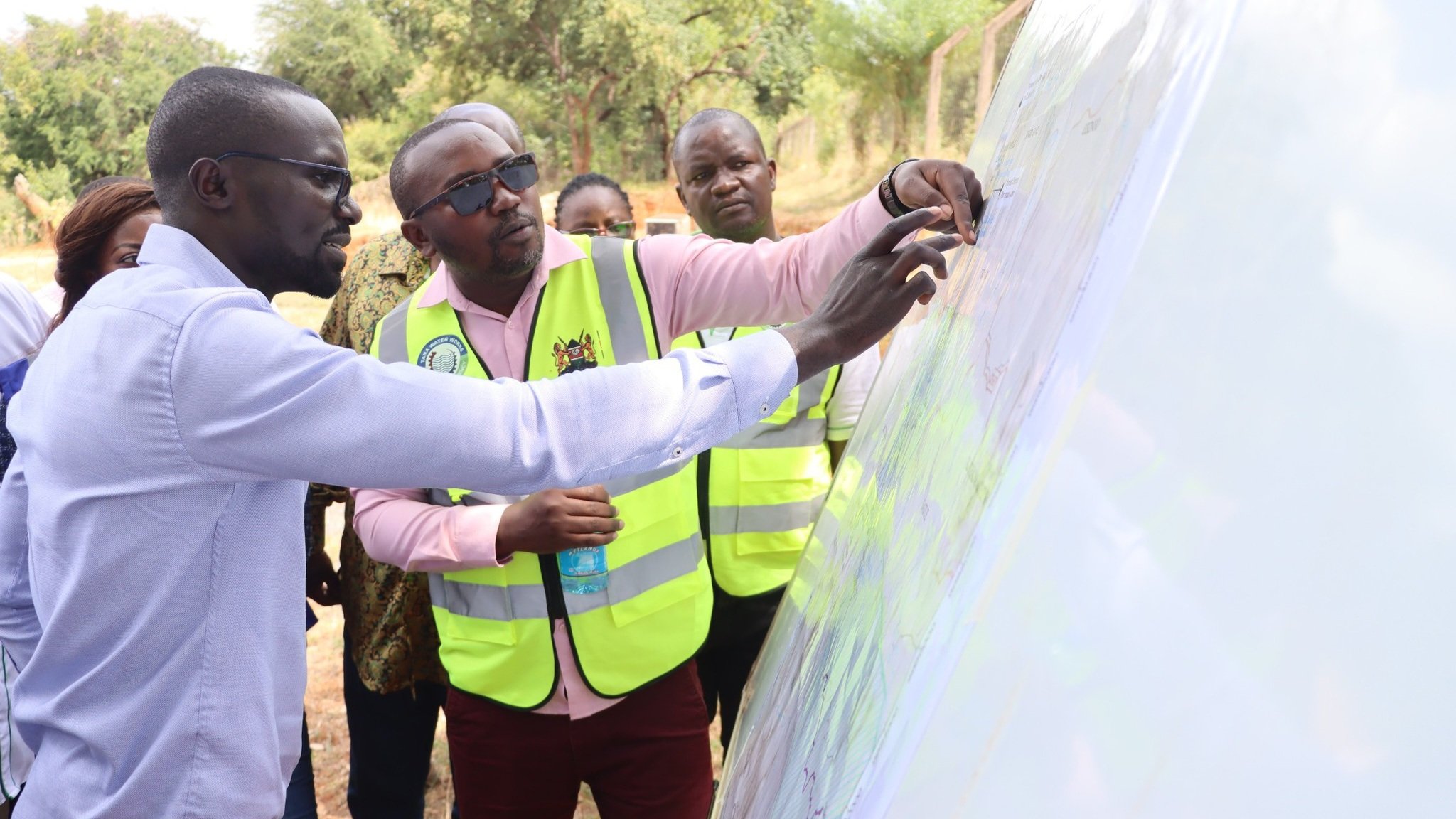

Water, Sanitation and Irrigation Cabinet Secretary (CS) Eng. Eric Mugaa conducted active field inspections across ongoing project sites in Trans Nzoia County. The ministry leader evaluated structural execution, on-site safety, and quality assurance protocols to guarantee public funds deliver value.
Engineers and site contractors received strict instructions during the inspection tour to enforce safety compliance across all trenching and pipe-laying works. Project teams were cautioned against sub-standard civil works, which compromise long-term utility performance and waste taxpayers' funds.
During the site visit, Ministry of Water, Sanitation and Irrigation (MWSI) officials inspected deep excavation trenches protected by safety barriers and high-visibility caution tape. Technical crews demonstrated active site safety measures, while supervisors briefed the visiting delegation on soil stability and engineering standards.
The infrastructure audit forms part of national programs spearheaded by President William Ruto to expand access to clean water, proper sanitation, and agricultural irrigation infrastructure. Government agencies are prioritizing the completion of stalled utility projects, while ensuring newly commissioned works adhere to rigid technical specifications.
Enforcing strict quality control during initial earthworks and pipe installation remains vital for preventing costly structural failures after commissioning. Senior officials warned that contractors who fail to meet contractual engineering standards face immediate administrative action or contract cancellation.
County authorities in Kenya continue collaborating with national water works development agencies to address persistent water supply deficits in urban and rural centers. Strategic investments in water harvesting, reticulation networks, and wastewater treatment are designed to build climate resilience.
Eng. Eric Mugaa stated that public infrastructure projects must serve citizens for decades without requiring premature and expensive repair work. Continuous on-site supervision will remain a mandatory requirement across all active utility contracts in the country.
Field officers were tasked with submitting regular progress reports to track timelines and maintain transparent operational oversight. Close monitoring ensures that heavy civil works proceed safely, while maintaining clear safety boundaries around surrounding communities.
Contractors working on Trans Nzoia water projects pledged to maintain proper safety barriers, personal protective equipment (PPE), and continuous risk assessments. Officials confirmed that unannounced inspections will expand to additional counties over the coming weeks.
Local community leaders and residents welcomed the direct field monitoring by top ministry leadership on essential public projects. Public oversight combined with rigid technical standards helps build trust, while ensuring completed water systems deliver reliable service.
Adhering to strict standards on material testing, trench depth, and joint alignment prevents frequent pipe bursts in municipal supply lines. Site engineers were instructed to perform thorough soil assessments, before laying heavy underground piping.
The government emphasizes that access to clean water and sanitation services drives public health and local economic development. Regular site visits ensure that money spent on county infrastructure projects delivers long-term durability and value.
Ministry supervisors will conduct follow-up inspections to verify that corrective recommendations noted during audits are fully implemented by contractor teams. Routine site evaluations ensure that safety protocols remain active throughout every phase of construction.
Proper safety management protects workers inside excavation trenches, while preventing accidental cave-ins and equipment accidents on high-risk job sites. Strict enforcement of safety rules remains a core priority for civil engineering projects across the sector.
By prioritizing active inspection over passive reporting, the ministry aims to establish a consistent benchmark for civil works nationwide. Infrastructure durability remains the cornerstone of long-term utility development across all forty-seven counties.
Comments (0)
Leave a Comment
No comments yet. Be the first to share your thoughts!