
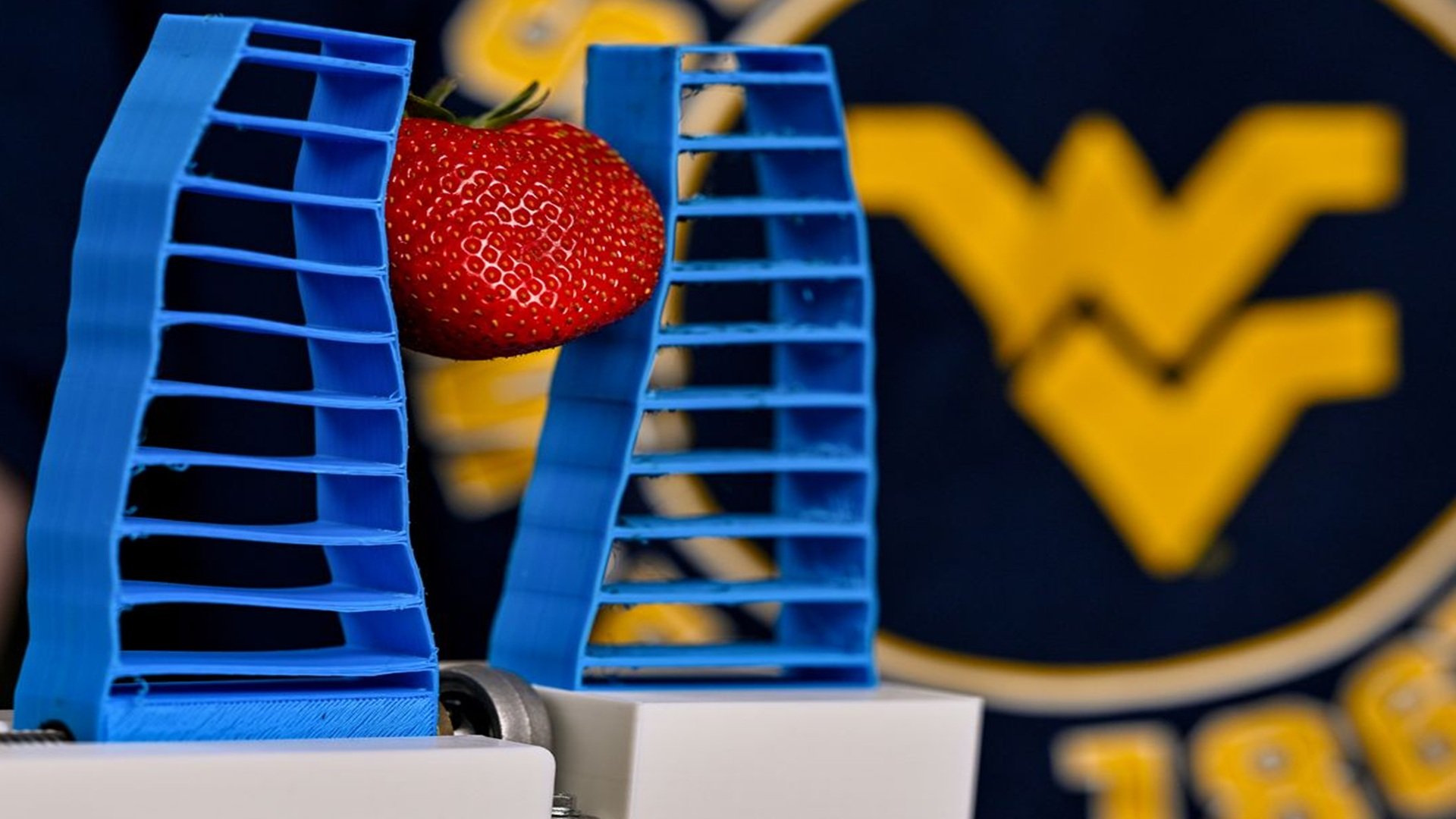

A team of roboticists has developed a soft robotic gripper capable of inspecting fruit for ripeness and harvesting it without causing structural damage. The technology aims to minimize post-harvest food waste and improve collection efficiency for delicate agricultural yields.
The system utilizes flexible fingers fabricated from silicone and polyurethane. These appendages are embedded with advanced sensors that measure the size, shape, color, and firmness of the fruit before initiating a pick.
Anand Mishra, an assistant professor in the Department of Mechanical, Materials and Aerospace Engineering at West Virginia University (WVU), contributed to the development. The work from the institution's Robiotics Lab focuses on machinery that closely mimics biological systems.
The physical configuration of the five-fingered gripper resembles both a human hand and a starfish. This flexible, squishy structure allows the machine to absorb mechanical forces and vibrations far more effectively than traditional hard-component robots.
Within each flexible finger, stretchable optical fibers function as tactile and curvature sensors to gauge pressure. Additionally, a miniaturized camera and a distance sensor are integrated into the palm to collect visual information.
Traditional rigid automated systems often struggle in open-field farming and frequently bruise fragile produce. Certain high-value crops, such as strawberries and raspberries, have narrow ripening windows of just a few days and are highly susceptible to skin tearing.
Strawberry farmers, for instance, routinely encounter post-harvest losses reaching up to 25%. Visual assessments alone are insufficient for crops like avocados, which require a physical squeeze to accurately determine internal maturity.
During operational testing on both commercial store fruit and living strawberry plants, the robotic hand exhibited notable performance metrics. The gripper opens and closes in less than two seconds.
It can lift loads up to one kilogram, representing more than 16 times its own physical weight. The device achieved nearly 100% accuracy in predicting object shape during trials.
The embedded programming also identifies slippage, allowing the system to recognize if a grasp is unstable. When harvesting strawberries, the robot removes the item by twisting the stem instead of using cutting tools.
The underlying technology holds potential applications well beyond commercial agriculture. The combination of flexible materials and multi-object manipulation could be applied to biomedical robotics, space exploration, underwater salvage, and healthcare equipment.
Comments (0)
Leave a Comment
No comments yet. Be the first to share your thoughts!