
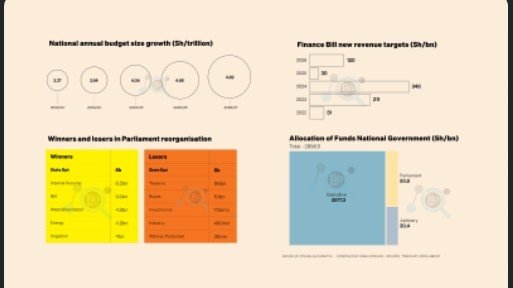

Kenya is facing a budget funding gap estimated at about Sh1.1 trillion, a challenge that is likely to influence government spending, borrowing plans, and economic activity in the coming financial year. The shortfall reflects the difference between expected revenue and the amount needed to finance government operations and development projects.
The funding hole comes at a time when the government is under pressure to balance public demands for services with concerns about rising debt levels. Revenue collection has improved in some areas, but it remains below the level required to fully finance planned expenditures.
To bridge the gap, the government is expected to rely on a combination of domestic borrowing, external loans, grants, and additional revenue measures. However, each option presents its own challenges. Increased borrowing can raise debt servicing costs, while higher taxes may face resistance from businesses and households already dealing with a high cost of living.
Debt repayment continues to consume a significant share of government revenue. Over the years, Kenya has borrowed heavily to fund infrastructure projects, social programs and recurrent expenditure. As loan obligations mature, the amount allocated to debt servicing has grown, leaving less room for other priorities.
The budget gap also raises concerns about the pace of development projects across the country. When resources are limited, governments often delay, scale down, or reprioritize projects. This can affect sectors such as roads, water, energy, education and healthcare, which depend on consistent public funding.
County governments are also watching the budget process closely. Delays in disbursements or adjustments to allocations could affect service delivery at the local level. Counties rely heavily on transfers from the national government to fund health services, infrastructure maintenance and other devolved functions.
Businesses are paying close attention to the government's financing plans. Heavy domestic borrowing can reduce the availability of credit to the private sector, making it more difficult and expensive for companies to access loans. This may slow investment and job creation, particularly among small and medium sized enterprises.
Economists argue that addressing the funding gap requires more than borrowing. They point to the need for stronger revenue administration, reduced wastage, and improved efficiency in public spending. Ensuring that collected taxes are used effectively can help build public confidence and improve fiscal sustainability.
The government has also been exploring ways to expand the tax base without placing excessive pressure on existing taxpayers. Efforts include digitizing tax administration, improving compliance, and bringing more economic activities into the formal tax system. These measures are expected to contribute to long term revenue growth.
Ordinary Kenyans may feel the effects of the budget gap in different ways. If taxes are increased, households could face higher costs. If spending is reduced, some public services and development projects may slow down. The government therefore faces the difficult task of balancing fiscal discipline with economic and social needs.
International lenders and development partners are also monitoring Kenya's fiscal position. Continued access to affordable financing often depends on demonstrating credible plans to manage debt and narrow budget deficits. Investors generally seek assurance that public finances remain on a sustainable path.
The Sh1.1 trillion funding hole highlights the broader challenge of managing a growing economy with competing demands for resources. Citizens expect quality public services, businesses seek a stable economic environment and policymakers must maintain fiscal responsibility while supporting growth.
As the budget takes shape, decisions made by the government will influence economic activity, investment and public services in the months ahead. How the funding gap is managed will play a key role in determining Kenya's fiscal stability and its ability to meet development goals while keeping debt levels under control.
Comments (0)
Leave a Comment
No comments yet. Be the first to share your thoughts!