
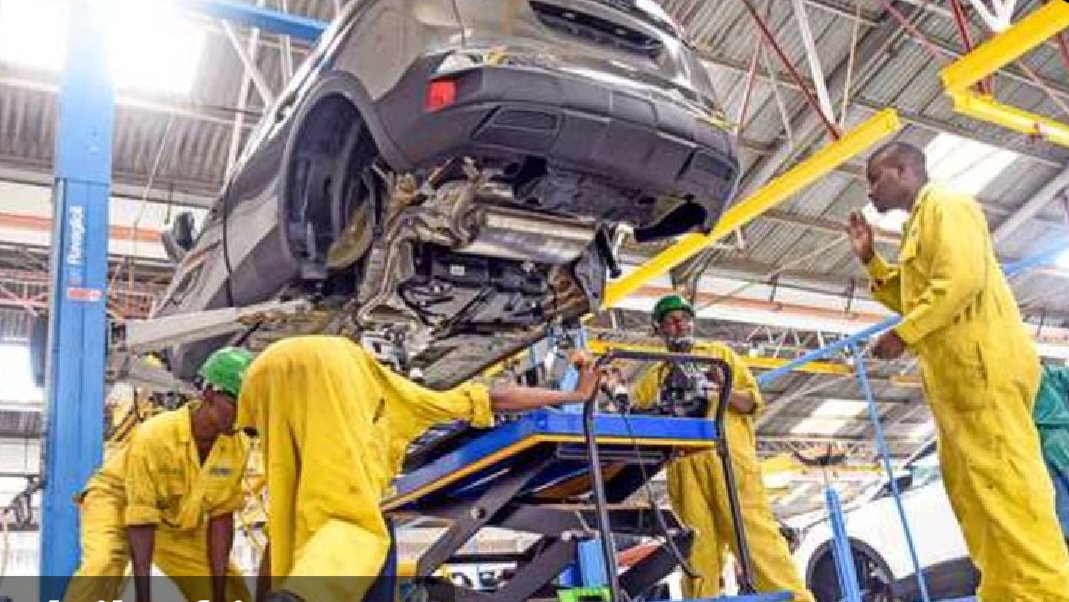

Data from the year ended December 2025 reveals a significant shift in Kenya's industrial landscape, with motor vehicle assembly hitting a record high of 13,692 units. This represents an 18.5 percent increase compared to the previous year, a trajectory largely attributed to the introduction of new models and the expansion of existing production facilities. The growth highlights a deepening commitment to local manufacturing, particularly within the industrial hubs of Nairobi and Mombasa.
The uptick in production follows a period of strategic investment by major players in the automotive sector. Facilities such as Associated Vehicle Assemblers in Mombasa and various plants in Nairobi have integrated new assembly lines to accommodate a broader range of vehicle types, moving beyond traditional commercial trucks to include passenger SUVs and pickups. This diversification has allowed local assemblers to capture a larger share of the domestic market, which has historically been dominated by second-hand imports.
Government policy has played a central role in sustaining this momentum. The National Automotive Policy, which encourages the transition to completely-knocked-down kits, has provided the necessary framework for manufacturers to scale operations. By offering duty exemptions on imported parts and implementing stricter age limits on imported used vehicles, the state has effectively tilted the scales in favor of local production. This environment has encouraged firms like Isuzu East Africa and CFAO Motors to deepen their local footprints, resulting in the increased numbers reported for the 2025 cycle.
Infrastructure developments at the coast and in the capital have further supported this industrial surge. The proximity of assembly plants to the Port of Mombasa remains a critical factor, reducing logistics costs for the arrival of components. In Nairobi, the concentration of skilled labor and established supply chains for parts such as batteries, leaf springs, and wiring harnesses has allowed plants to maintain a consistent output. These facilities are now operating at higher capacities than seen in the last decade, reflecting a broader recovery in the manufacturing sector.
The entry of new players, including those focused on electric vehicle assembly, contributed to the record-breaking figures. Companies have begun utilizing the existing third-party assembly infrastructure to roll out specialized models, catering to a growing demand for modern, fuel-efficient transportation. As these plants in Nairobi and Mombasa continue to modernize their equipment and processes, the industry is moving toward a more sustainable production model that relies less on finished vehicle imports.
Industry analysts suggest that the 18.5 percent growth is not merely a temporary spike but the result of long-term planning within the automotive value chain. With an installed annual capacity of approximately 46,000 units across the country, there remains significant headroom for further expansion. The focus now shifts to increasing the percentage of locally sourced components, which would further lower production costs and enhance the competitiveness of Kenyan-assembled vehicles in the regional East African market.
As 2026 begins, the momentum established in the previous year provides a strong foundation for the manufacturing sector. The continued collaboration between the government and private assemblers appears to be yielding tangible results in job creation and industrial output. If the current rate of expansion continues, the reliance on older, imported units may continue to wane as more Kenyans opt for locally assembled alternatives that offer better warranties and specialized engineering for local road
conditions.
Comments (0)
Leave a Comment
No comments yet. Be the first to share your thoughts!