Kenya Treasury Clarifies Commercial Focus of New Infrastructure Fund
Thursday, March 12, 2026 •
2 min read
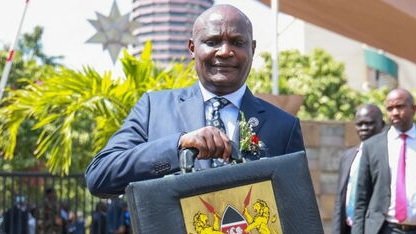
Treasury Cabinet Secretary John Mbadi arrives at Parliament to outline the government's fiscal strategy and the operational framework for the National Infrastructure Fund
|
Kenyans.co.ke
Treasury Cabinet Secretary John Mbadi has provided clarity on the operational scope of the National Infrastructure Fund, confirming that the vehicle will focus exclusively on projects with clear revenue streams. This strategic shift means that social amenities such as stadiums and public parks will be excluded from the fund, as the government moves toward an investment-led development model designed to reduce the national debt burden.
The clarification follows the recent passage of the National Infrastructure Fund Bill 2026. According to the Treasury, the fund is structured to operate as a limited liability company rather than a traditional public fund. This corporate structure is intended to attract private capital by de-risking large-scale projects and ensuring they are bankable for both local and international investors.
During recent briefings, Mbadi emphasized that the fund will target sectors capable of generating their own returns. These priority areas include energy plants, toll roads, piped water systems, and digital connectivity. By focusing on commercially viable assets, the government aims to create a revolving investment cycle where the proceeds from one project can be used to finance the next, a strategy Mbadi has compared to successful global development models.
The exclusion of stadiums and parks underscores the government's intent to separate social infrastructure, which often relies on direct taxpayer funding, from commercial infrastructure that can sustain itself through user fees or service charges. While stadiums and parks remain part of the broader national development agenda, they will be financed through different budgetary channels rather than the KSh 5 trillion infrastructure vehicle.
This new model is expected to tap into domestic resources, including pension funds and collective investment schemes, which require predictable returns on investment. Treasury officials maintain that the fund will be managed by an independent board and professional management to ensure transparency and accountability. The shift is part of a broader fiscal consolidation strategy aimed at moving Kenya away from a debt-heavy development approach toward sustainable, private-sector-led growth.
The government has already identified several high-priority projects for the fund, including the expansion of Jomo Kenyatta International Airport and the extension of the Standard Gauge Railway. These projects are seen as critical for enhancing regional connectivity and trade, aligning with the long-term goals of the Fourth Medium Term Plan and Vision 2030.
Treasury Cabinet Secretary John Mbadi has provided clarity on the operational scope of the National Infrastructure Fund, confirming that the vehicle will focus exclusively on projects with clear revenue streams. This strategic shift means that social amenities such as stadiums and public parks will be excluded from the fund, as the government moves toward an investment-led development model designed to reduce the national debt burden.
The clarification follows the recent passage of the National Infrastructure Fund Bill 2026. According to the Treasury, the fund is structured to operate as a limited liability company rather than a traditional public fund. This corporate structure is intended to attract private capital by de-risking large-scale projects and ensuring they are bankable for both local and international investors.
During recent briefings, Mbadi emphasized that the fund will target sectors capable of generating their own returns. These priority areas include energy plants, toll roads, piped water systems, and digital connectivity. By focusing on commercially viable assets, the government aims to create a revolving investment cycle where the proceeds from one project can be used to finance the next, a strategy Mbadi has compared to successful global development models.
The exclusion of stadiums and parks underscores the government’s intent to separate social infrastructure, which often relies on direct taxpayer funding, from commercial infrastructure that can sustain itself through user fees or service charges. While stadiums and parks remain part of the broader national development agenda, they will be financed through different budgetary channels rather than the KSh 5 trillion infrastructure vehicle.
This new model is expected to tap into domestic resources, including pension funds and collective investment schemes, which require predictable returns on investment. Treasury officials maintain that the fund will be managed by an independent board and professional management to ensure transparency and accountability. The shift is part of a broader fiscal consolidation strategy aimed at moving Kenya away from a debt-heavy development approach toward sustainable, private-sector-led growth.
The government has already identified several high-priority projects for the fund, including the expansion of Jomo Kenyatta International Airport and the extension of the Standard Gauge Railway. These projects are seen as critical for enhancing regional connectivity and trade, aligning with the long-term goals of the Fourth Medium Term Plan and Vision 2030.


Comments (0)
Leave a Comment
No comments yet. Be the first to share your thoughts!