
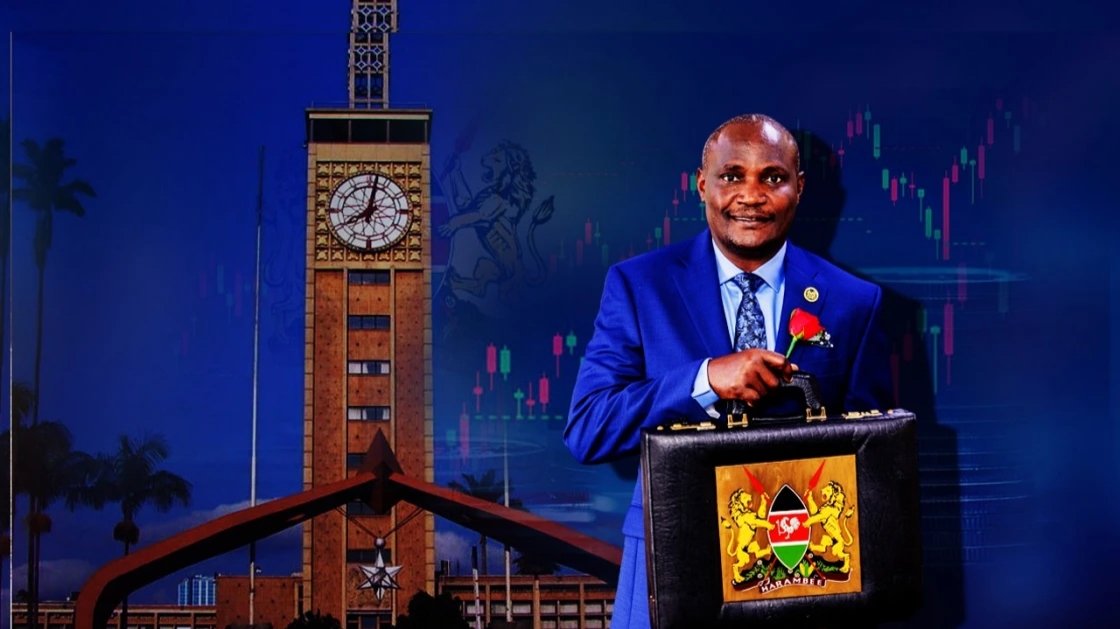

Treasury Cabinet Secretary John Mbadi has revealed the government's core spending priorities in the KSh 4.8 trillion national budget. The focus falls on education, agricultural transformation, infrastructure, security and targeted interventions to stimulate economic growth.
While reading out the Budget Statement for the Financial Year 2026/27 at the National Assembly on Thursday, June 11, CS Mbadi explained that the budget funding aims at realising the government's Bottom-Up Economic Transformation Agenda.
Education secured the largest allocation at KSh 784.5 billion. This covers KSh 424.3 billion for the Teachers Service Commission, KSh 136.6 billion for basic education, KSh 163.9 billion for higher education and KSh 58.5 billion for technical and vocational training.
Energy and ICT received KSh 531.3 billion. The funds target improved energy security, expanded electricity access through grid and off-grid solutions, renewable energy projects and stronger ICT infrastructure.
Public administration and internal relations got KSh 373.7 billion. Priorities include devolution support, better public service delivery, institutional reforms and diplomatic engagements abroad.
Governance, justice, law and order took KSh 363.9 billion. Spending focuses on capacity building, justice delivery, legal reforms and public administration improvements.
Security obtained KSh 316.2 billion. The allocation spans the Ministry of Defence, National Police Service and intelligence services to modernise operations and support regional stability.
Transport networks will benefit from KSh 220.4 billion. The money aims to reduce travel times, cut logistics costs and enhance market access for goods and people.
Health received KSh 177.2 billion to improve quality and affordable care. Key items include KSh 19.1 billion for the Primary Healthcare Fund, KSh 6.4 billion for vaccines and KSh 45.3 billion for referral hospitals.
Additional health provisions cover research at the Kenya Medical Research Institute, family planning commodities, medical interns, training colleges and stipends for community health promoters.
Environmental protection, water and natural resources secured KSh 121.2 billion. This supports climate resilience, sustainable water access and local environmental management.
Agriculture, rural and urban development got KSh 111.7 billion. The emphasis lies on crop and livestock transformation, disease control, genetic improvement and lowering basic food costs.
For the construction industry, the transport and energy allocations stand out. Infrastructure projects often cut across these votes, from road and transport networks to power grid expansions and related developments.
Contractors will monitor how these headline figures convert into actual tenders and on-ground activity in the new financial year. Persistent concerns around payment delays remain relevant given the broader borrowing picture.
The priorities reflect a balancing act between social services and economic infrastructure in a challenging fiscal environment. Details on implementation will shape the impact on Kenya's built environment.
Comments (0)
Leave a Comment
No comments yet. Be the first to share your thoughts!