
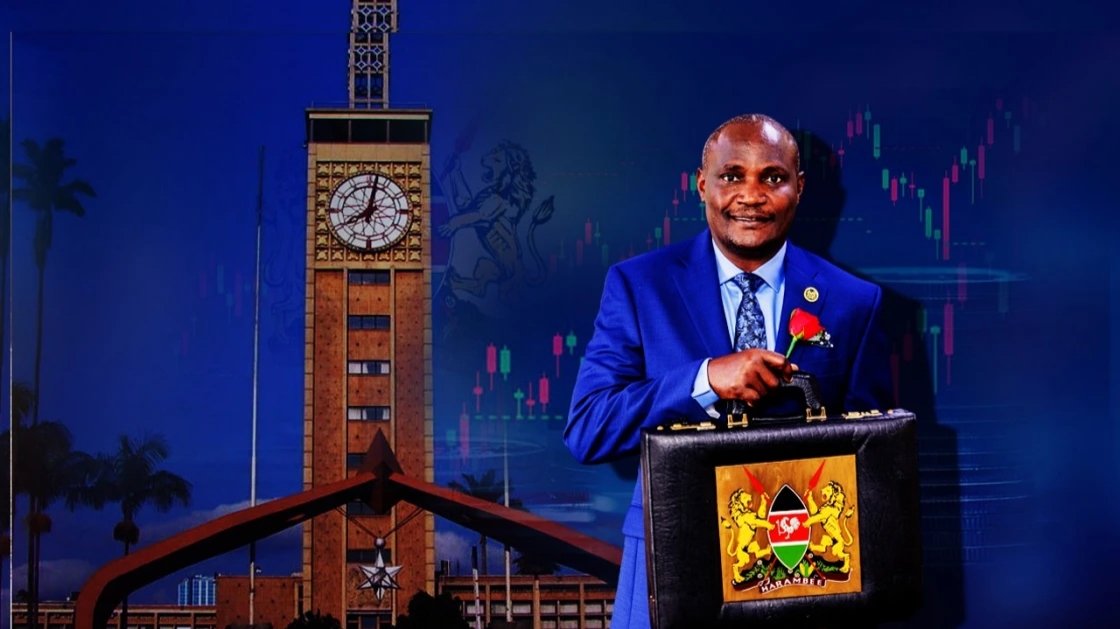

The National Treasury has unveiled a KSh 4.8 trillion national budget for the 2026/27 Financial Year. In Parliament, Treasury Cabinet Secretary John Mbadi detailed plans to finance the spending through revenue collection, tax reforms, and borrowing.
The government expects total revenue of KSh 3.631 trillion, inclusive of Appropriations-in-Aid. Grants will add another KSh 44 billion.
A deficit of KSh 1.146 trillion remains. Officials plan to bridge most of it through net domestic financing of KSh 1.030 trillion, with net foreign financing at KSh 0.116 trillion.
Tax measures will play a central role in expanding the revenue base. Reforms touch Value Added Tax, income tax, excise duty, and customs duty.
For VAT, mitumba will attract tax only at importation while local sales stay exempt. Travellers’ duty-free baggage threshold rises from USD 300 to USD 2,000. Exemptions include large commercial aircraft and spares, dialyzers for kidney treatment, public-private partnership projects, and scrap metal.
Income tax adjustments exempt Capital Gains Tax and Stamp Duty on property transfers into approved Real Estate Investment Trusts. The change aims to spur property market investment.
Corporate tax for non-resident petroleum contractors falls from 37.5 percent to 30 percent. Rules for non-resident landlords simplify, while new withholding taxes apply to certain winnings and scrap metal transactions.
Excise duty tweaks balance revenue and health objectives. Bottled water gains exemption for better affordability. Sugar-sweetened beverages rise to KSh 20 per litre from KSh 14.14. Mobile phones now face a flat 25 percent rate at activation.
Plastic articles, imported or local, attract a new 10 percent excise duty for environmental reasons. Extra Neutral Alcohol duty drops while small brewers lose earlier relief.
Customs duty moves support local manufacturing and farming. Inputs for smart telecom devices and motorcycle parts enter duty-free in several categories. Completely Knocked Down motorcycle kits receive 10 percent duty remission.
Finished textile imports face 35 percent duty. Selected processed agricultural goods get the same rate to protect local producers. Wheat imports drop to 10 percent under remission; rice holds at 35 percent.
Public-private partnership projects secure import duty exemptions. The relief could lower costs for infrastructure developers using this model.
Together, tax reforms, improved compliance, and borrowing are expected to fund the deficit. Government priorities cover health, agriculture, manufacturing, and infrastructure.
In construction, PPP exemptions and REIT incentives could prove useful. Heavy domestic borrowing highlights continued strain on local credit markets, an issue contractors know well when chasing delayed payments.
Observers will monitor how these plans turn into actual project allocations. The budget reflects ongoing attempts to square large spending ambitions with available financing options.
Comments (0)
Leave a Comment
No comments yet. Be the first to share your thoughts!