

The Kenya National Highways Authority (KeNHA), supported by a heavy contingent of security officers, conducted an overnight demolition of structures along the Kamiti Road exit and the Roysambu roundabout on Wednesday night.
Bulldozers moved into the area at approximately 1:00 a.m. on March 5, targeting kiosks and business stalls that had encroached onto the designated road reserve. The operation left a trail of debris, including twisted metal and wooden planks, as traders arrived on Thursday morning to find their places of work flattened.
The exercise focused on the stretch near the Shell petrol station and the Kenya Power perimeter wall. These areas have long been occupied by informal traders selling clothing, foodstuffs, and various household wares right at the edge of the busy Thika Superhighway corridor.
KeNHA defended the move, stating that the structures posed a significant safety risk to both motorists and pedestrians. The authority noted that the encroachment has contributed to numerous road accidents over time in what is one of the most congested transit points in Nairobi.
According to official statements, the clearance is a prerequisite for the construction of modern bus bays. These facilities are designed to provide designated points for public service vehicles to pick up and drop off passengers, which is expected to ease the chronic traffic snarl-ups at the Roysambu intersection.
The agency confirmed that the demolitions followed the expiration of a seven-day vacation notice issued on February 9, 2026. While some traders claimed the action was sudden, the authority maintained that adequate time had been provided for voluntary relocation from the public land.
This enforcement action in Roysambu follows a similar operation carried out in the Githurai area last month. In both instances, the government has prioritized the restoration of the road corridor to facilitate infrastructure upgrades and improve the overall functionality of the highway.
The primary objectives of the ongoing clearance project include:
* Restoration of the road reserve integrity to prevent illegal commercial activities.
* Provision of adequate space for the construction of modern transport facilities.
* Reduction of pedestrian-vehicle conflicts by removing obstructions from walkways.
* Enhancement of sightlines for motorists entering and exiting the superhighway.
Despite the stated infrastructure benefits, the exercise has drawn sharp criticism from local leadership and affected business owners. Many traders expressed frustration over the lack of alternative trading sites, arguing that the loss of their stalls has crippled their primary source of income.
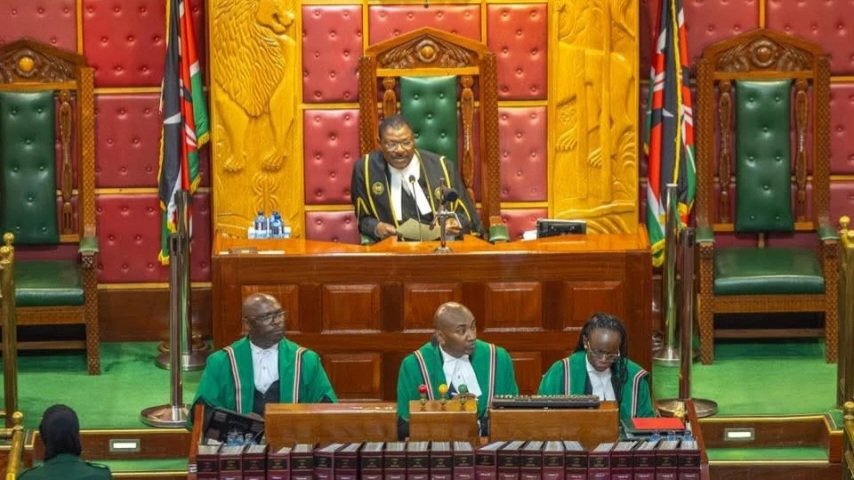
Security remained tight throughout the morning as some residents attempted to salvage building materials from the wreckage. KeNHA officials indicated that the site will be secured to prevent any immediate re-occupation, allowing contractors to move in for the planned civil works. The National Assembly has passed the National Infrastructure Fund Bill, 2026, clearing the way for a Sh5 trillion investment vehicle intended to overhaul how Kenya finances its largest development projects. The legislation, which now moves to President William Ruto for assent, seeks to transition the country from a debt-heavy financing model toward an investment-led strategy.
Under the provisions of the Bill, the National Infrastructure Fund (NIF) will operate as a body corporate with the mandate to mobilize resources for critical sectors. These include national highways, railway networks, air and sea ports, and electricity generation and transmission. The Fund is also expected to support water reservoirs, irrigation, and agribusiness infrastructure.
Legislators introduced several significant amendments before the final vote to address concerns regarding governance and executive influence. One of the most notable changes involved the removal of the Treasury Cabinet Secretary from the primary board responsible for running the fund. This move followed public and parliamentary debate over the potential for excessive political control.
Instead, the revised Bill establishes a Governing Council to provide strategic direction and oversight. This council will include the Cabinet Secretary for the National Treasury, the Governor of the Central Bank of Kenya, and the Attorney General. They will be joined by six members who are not public officers, ensuring a layer of professional and independent counsel.
The Governing Council is tasked with overseeing the development of the investment policy and recruiting the board of directors. To ensure accountability, the Treasury Cabinet Secretary must submit the investment policy to the National Assembly for approval. Lawmakers will have a 90-day window to approve, amend, or reject the proposed policy framework.
Financially, the NIF is designed to attract a blend of public and private capital. Revenue streams will include proceeds from the privatization of state corporations and the sale of shares in government-linked entities. These funds are intended to act as a catalyst, with officials aiming to attract ten shillings of private investment for every shilling committed by the state.
The Bill explicitly focuses on commercially viable projects, allowing the Fund to recycle returns from its investments to compound capital over time. This approach is intended to reduce the fiscal pressure on the national exchequer and lower the reliance on external borrowing, which has historically funded the majority of Kenya's infrastructure buildup.
Further amendments added to the Bill include strict punitive measures to prevent the misappropriation of funds. The role of the Chief Executive Officer was also expanded to include the responsibilities of the Fund Administrator, a change aimed at creating a more cost-effective and streamlined reporting structure for the organization.
The passage of the Bill follows a period of legal and constitutional scrutiny. The Auditor General had previously raised concerns regarding the alignment of the Fund with existing public finance statutes. However, the House moved to clarify the definition of national infrastructure and strengthen the legal guardrails surrounding the Fund's operations.
With the legislative process in the National Assembly complete, the establishment of the Sh5 trillion fund now rests on the President’s signature. Once enacted, the NIF will serve as the primary vehicle for the administration’s long-term infrastructure agenda, targeting projects such as the dualization of 2,500km of highway and extension of the Standard Gauge Railway.
Comments (0)
Leave a Comment
No comments yet. Be the first to share your thoughts!