
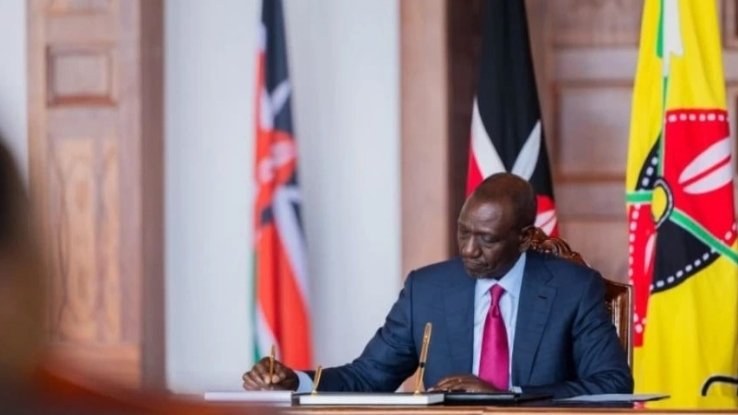

The Sovereign Wealth Fund (SWF) Bill, 2026 has been signed into law, establishing a framework to manage and invest revenues on behalf of current and future generations of Kenyans. The fund draws on mineral and petroleum revenues, dividends from public investments and a portion of privatisation proceeds.
A sovereign wealth fund's core purpose is to shield a country's economy from unforeseen shocks. These include pandemics or conflicts that disrupt global supply chains, such as the war between Russia and Ukraine.
The law establishes three distinct components under the SWF. The Standardisation Fund is designed to cushion Kenyans from macro and micro-economic instabilities, including natural disasters and conflicts such as the recent Middle East fuel crisis.
The second component, the Strategic Infrastructure Investment Fund, is built to draw resources from the private sector specifically for installing infrastructure. This gives the SWF a direct role in financing roads, energy and other capital projects rather than acting purely as a savings vehicle.
The Future Generations Fund carries the strictest protections of the three. Investment prohibitions apply against it, and it cannot be borrowed against or used as collateral, a structure meant to keep those resources secure for Kenyans not yet born.
Governance sits with a board whose chairman is appointed by the President. The Cabinet Secretaries for Treasury, Mining, and Petroleum sit on the board alongside four other members recruited competitively based on their qualifications.
The board's mandate includes managing investments, determining which avenues the fund can invest in, and prohibiting exposure to private equities, speculative derivatives and other high-risk commercial instruments. This is intended to keep the fund's holdings conservative relative to more volatile asset classes.
The SWF is expected to operate alongside the National Infrastructure Fund (NIF), forming what officials describe as the key engine for aligning government financial resources with national development priorities. Both funds will need to coordinate on which infrastructure projects receive backing and through which financing arm.
The government plans to use resources from the fund to support a Ksh5 trillion development programme over the next ten years. That figure gives an indication of the scale officials are targeting, though the fund's actual revenue inflows will depend on mineral and petroleum output, which remain at an early stage in Kenya.
For the construction and infrastructure sector specifically, the Strategic Infrastructure Investment Fund is the component most directly relevant. By channelling private capital into infrastructure installation, it creates a potential new financing route for projects that might otherwise depend solely on public borrowing or bilateral loans.
The law comes as Kenya continues to develop financial institutions intended to generate and preserve long-term value from its natural resource base. Implementation details, including the board's composition and the fund's initial capitalisation, are expected to follow as the law takes effect.
Comments (0)
Leave a Comment
No comments yet. Be the first to share your thoughts!