

Dangote Industries has confirmed Lamu as the site for its planned 700,000 barrels-per-day oil refinery, ending months of speculation over where the East African project would land. The decision settles a contest that at various points included Tanzania's port city of Tanga and Kenya's own Mombasa.
Understanding why Lamu won requires looking at what the site offers that its rivals could not match. According to Dangote Industries' Vice President for Oil and Gas, Edwin Devakumar, the choice came down to commercial and technical considerations rather than any single dramatic factor.
Reuters reported that infrastructure, logistics and market considerations tipped the decision toward Kenya. Bloomberg's reporting echoed this, citing the same commercial and technical reasoning behind the shift away from Tanzania.
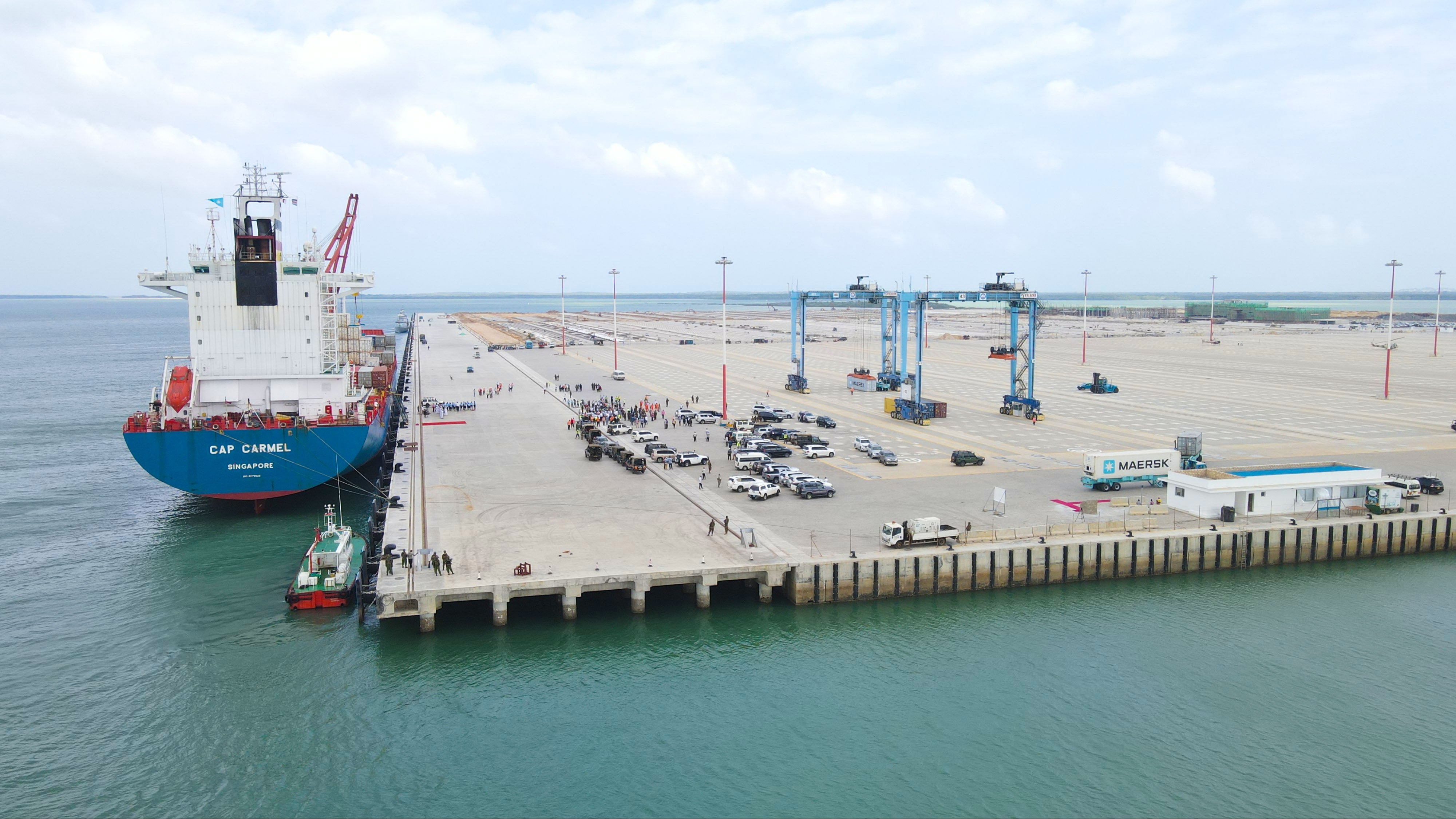
Maritime practicality appears central to the decision. A deep-water port capable of handling large crude carriers and refined product exports is essential for a refinery of this scale, and Lamu's port infrastructure, developed as part of Kenya's wider transport corridor plans, offered advantages over Tanga's more limited facilities.
Market demand also favoured Kenya. The refinery is designed to supply not just the domestic market but Uganda, Tanzania, South Sudan and other neighbouring countries, and Kenya's existing trade links across the region give the project a wider catchment for its output than a Tanzanian site would have offered.
There is also a symbolic dimension. Kenya's own refining capacity effectively ended when the Kenya Petroleum Refineries Ltd facility in Mombasa stopped processing crude and was converted into a storage terminal more than a decade ago. Lamu positions the country to re-enter refining at a scale far beyond what that older plant ever achieved.
Preliminary work has already begun on the ground. Soil testing is underway, and design and engineering work has commenced at the Lamu site, according to Devakumar. Construction itself is expected to take between 30 months and three years once it starts in earnest.
Cost estimates for the project vary depending on the source, ranging from about Sh2.2 trillion to Sh2.59 trillion, equivalent to roughly $17 billion to $20 billion. Dangote Industries has said the final figure will depend on engineering outcomes still being finalised.
Financing will draw on a mix of internally generated cash, bond issuances and proceeds from a planned initial public offering, according to the company, reducing its reliance on external borrowing for a project of this scale.
The Lamu refinery is expected to mirror the design of Dangote's flagship facility outside Lagos, Nigeria, currently Africa's largest single-train refinery at 650,000 barrels per day. That Lagos plant is itself being expanded toward 1.4 million barrels per day by 2028.
Despite settling on Kenya, Dangote has said Tanzania remains welcome to participate in the Lamu project as an investor, even though the refinery itself will not be built on Tanzanian soil. Kenya has also committed seed capital toward the project as part of the government's push to secure the investment.
Once operational, the Lamu refinery is expected to reduce East Africa's dependence on imported refined fuel and give the region a domestic source of petroleum products for the first time at this scale.
Comments (0)
Leave a Comment
No comments yet. Be the first to share your thoughts!