
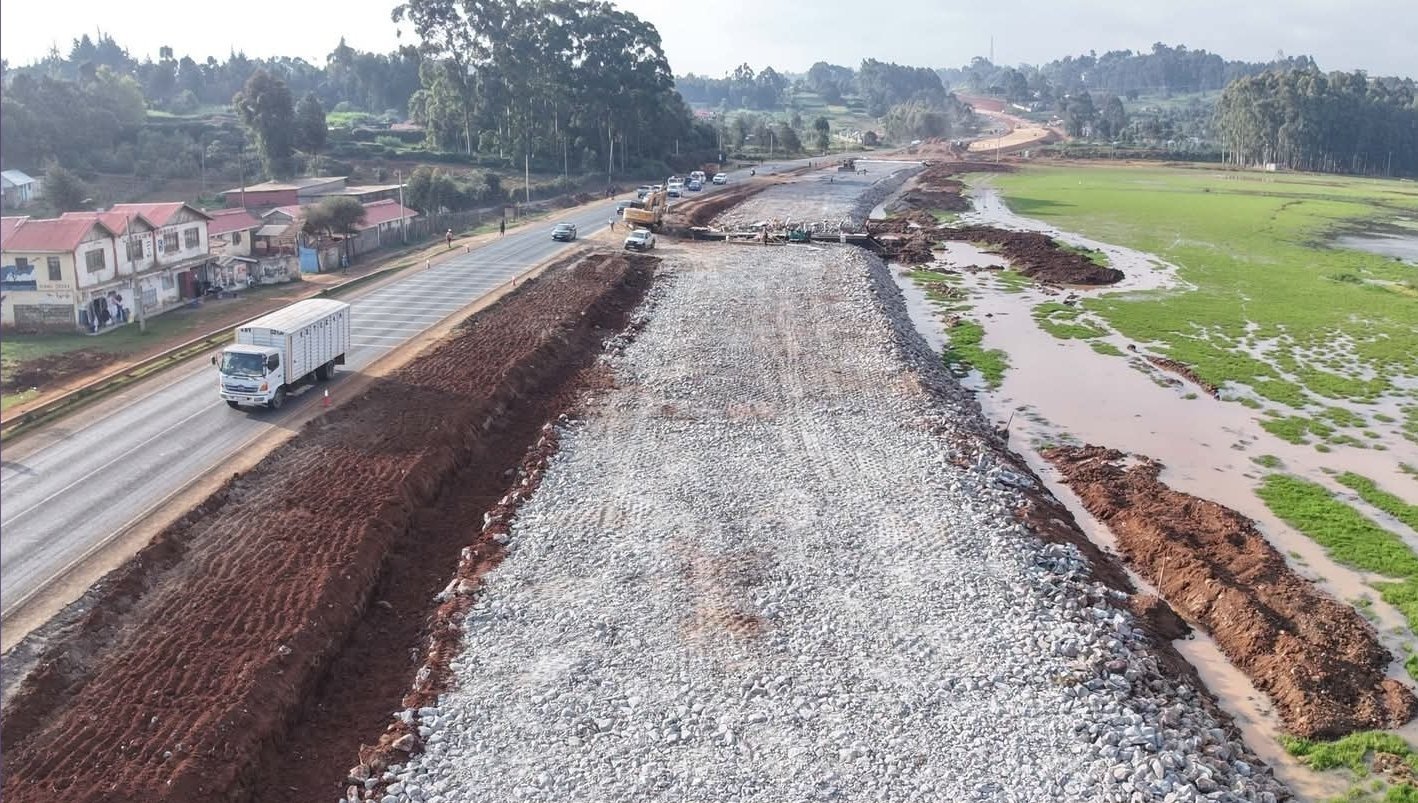

Kenya cancelled a highway concession with a French consortium after Treasury officials discovered the deal would have required paying the group 299 billion shillings (approximately $2.3 billion) in service fees over just 13 years.
Fresh Treasury disclosures show the payment, structured at 23 billion shillings annually, was to be financed through debt while the French firms simultaneously collected toll charges from motorists on the 175 kilometre Rironi to Mau Summit corridor.
The consortium, made up of Vinci Highways SAS, Meridian Infrastructure Africa Fund and Vinci Concessions SAS, signed the original public private partnership agreement in September 2020 under then President Uhuru Kenyatta.
Under that arrangement, Kenya agreed to pay the French firms the bulk of their investment recovery within the first 13 years of a 30 year concession, rather than spreading returns across the full contract term.
From year 14 onward, the government also carried the risk of covering any toll revenue shortfall, a structure Treasury officials say tilted the deal heavily in the consortium's favour.
Treasury Cabinet Secretary John Mbadi said sustained global inflation, shilling depreciation and tightening fiscal space between 2020 and 2022 undermined the assumptions behind the original agreement, forcing a reassessment of its long term viability.
Mbadi said the review found the deal no longer aligned with the fiscal consolidation goals the government needed to meet, prompting the eventual termination of the contract before construction had even begun.
Kenya paid the Vinci led consortium 7.3 billion shillings ($56.6 million) to exit the agreement, a settlement negotiated to avoid a costly arbitration case at the London Court of International Arbitration.
The government had initially hoped Chinese contractors brought in to replace the French firms would absorb the exit payment along with feasibility work already completed, but that plan was dropped during President William Ruto's April 2025 visit to Beijing, leaving the bill with Kenyan taxpayers.
Toll pricing under the original French deal also drew concern, with small car drivers facing charges of six dollars (Sh780) and truck operators nearly fifty dollars (Sh6,500) to travel the full 175 kilometre stretch.
The road is now being built by a consortium of China Road and Bridge Corporation and the National Social Security Fund, covering the sections from Nairobi to Gilgil through Naivasha and Maai Mahiu, while Shandong Hi Speed Road and Bridge International Engineering handles the Gilgil to Mau Summit stretch.
Construction on both sections began on November 28, 2025. The National Social Security Fund holds a 9.59 billion shilling stake in the consortium with the Chinese contractor, split 40 to 60 percent.
The new agreement removed a minimum revenue guarantee that would have obligated the state to compensate operators for weak toll collections, shifting demand and revenue risk onto the private partners instead.
Under the revised terms, the government will collect 60 percent of any returns exceeding a 16 percent internal rate of return on equity, a profit sharing structure Treasury says limits the potential for excessive earnings over the 30 year concession.
President Ruto has said he wants the highway finished before the 2027 General Election, framing it as a solution to chronic traffic congestion along a route linking Nairobi to the Rift Valley, western Kenya and Nyanza.
The corridor forms part of the Northern Corridor and Trans African Highway network, carrying a significant share of the region's commercial freight destined for the Port of Mombasa.
Comments (0)
Leave a Comment
No comments yet. Be the first to share your thoughts!