

This article was adopted from Explore With Matei/YouTube.
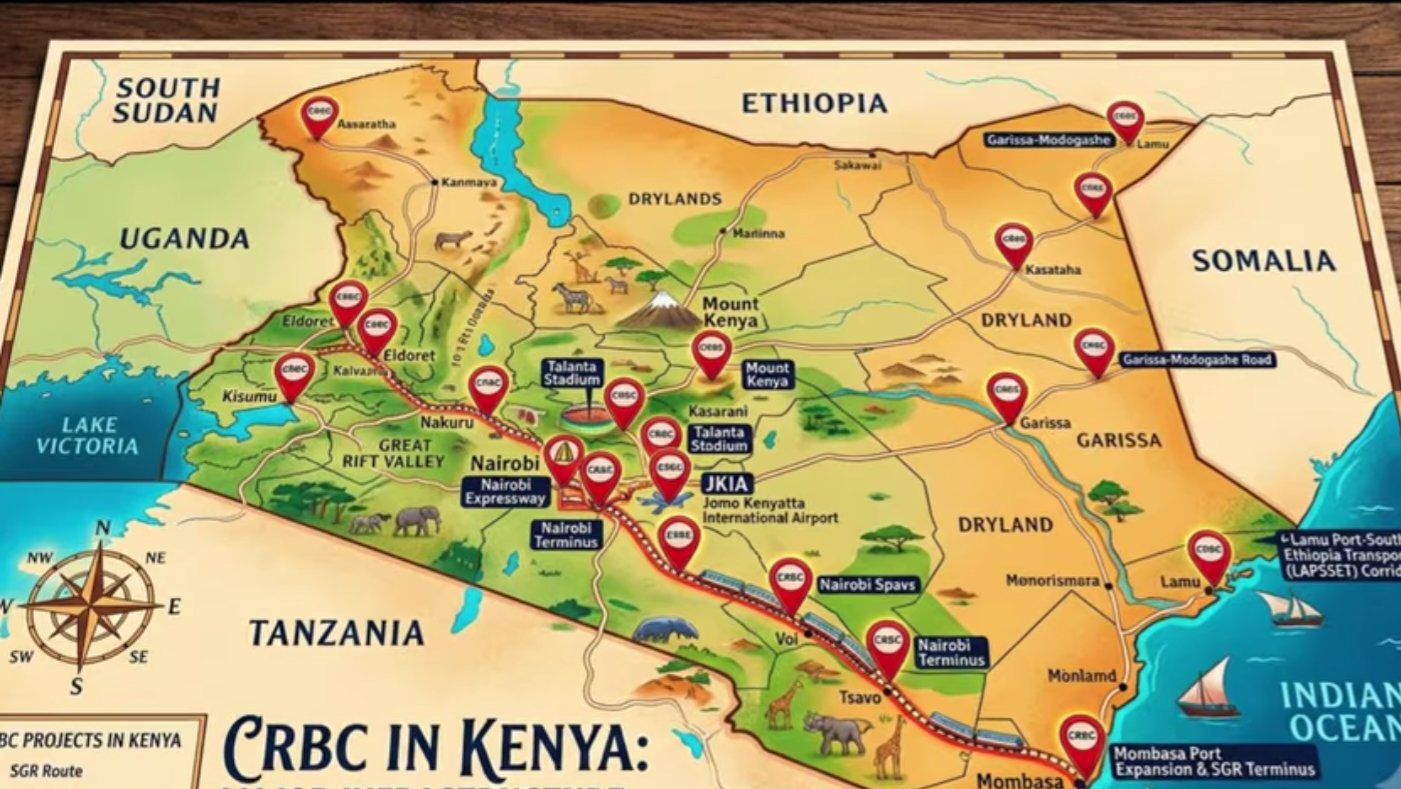
China Road and Bridge Corporation (CRBC) has consolidated its position as the dominant force in Kenya's construction sector, amassing a portfolio of contracts valued at more than 1.2 trillion shillings. Since expanding beyond basic road contracting after its 1984 arrival, the company has secured over 23 roads, two railways, and two ports.
Its parent firm, China Communications Construction Company (CCCC), which retains a 99 percent stake in CRBC, operates across nearly 60 countries. CRBC maintains a competitive edge by bundling engineering, construction, and financing into single proposals, alongside utilizing its deep pool of equipment and personnel already stationed on Kenyan soil.
The contractor's early footprint includes nearly 100 kilometers of ring roads around the capital, consisting of the southern, eastern, and northern bypasses built between 2012 and 2022.
The relationship accelerated with the 480-kilometer Mombasa-Nairobi Standard Gauge Railway (SGR), a 3.6 billion US dollar asset funded 90 percent by Chinese loans. CRBC finished the track in two and a half years, ahead of the original five-year schedule, allowing the Madaraka Express passenger service to commence in June 2017. A subsequent extension cut through the Ngong Hills to reach Naivasha.
In 2022, the company introduced the 27-kilometer Nairobi Expressway, an elevated toll road stretching over Mombasa Road. Under a public-private partnership, CRBC financed and constructed the highway, and will operate it for 27 years through its subsidiary, Moja Expressway, to collect toll fees before transferring ownership back to the state. By 2024, daily traffic surpassed 50,000 vehicles.
Not all installations have endured. In 2020, CRBC erected a 660-meter floating pedestrian bridge across the Likoni Channel in Mombasa for 17 million dollars. Intended as a temporary solution while the Mombasa Gate Bridge awaited construction, the floating structure is currently undergoing demolition by the Kenya Ports Authority (KPA) because it obstructs maritime transit.
In Nairobi, CRBC is constructing the 60,000-seat Talanta Sports City at Jamhuri Grounds, which was renamed the Raila Odinga International Stadium in December 2025. Designed around the national emblem, the venue is scheduled to host the opening and closing matches of the 2027 Africa Cup of Nations (AFCON). By April 2026, construction reached 88 percent completion after missing two initial completion targets.
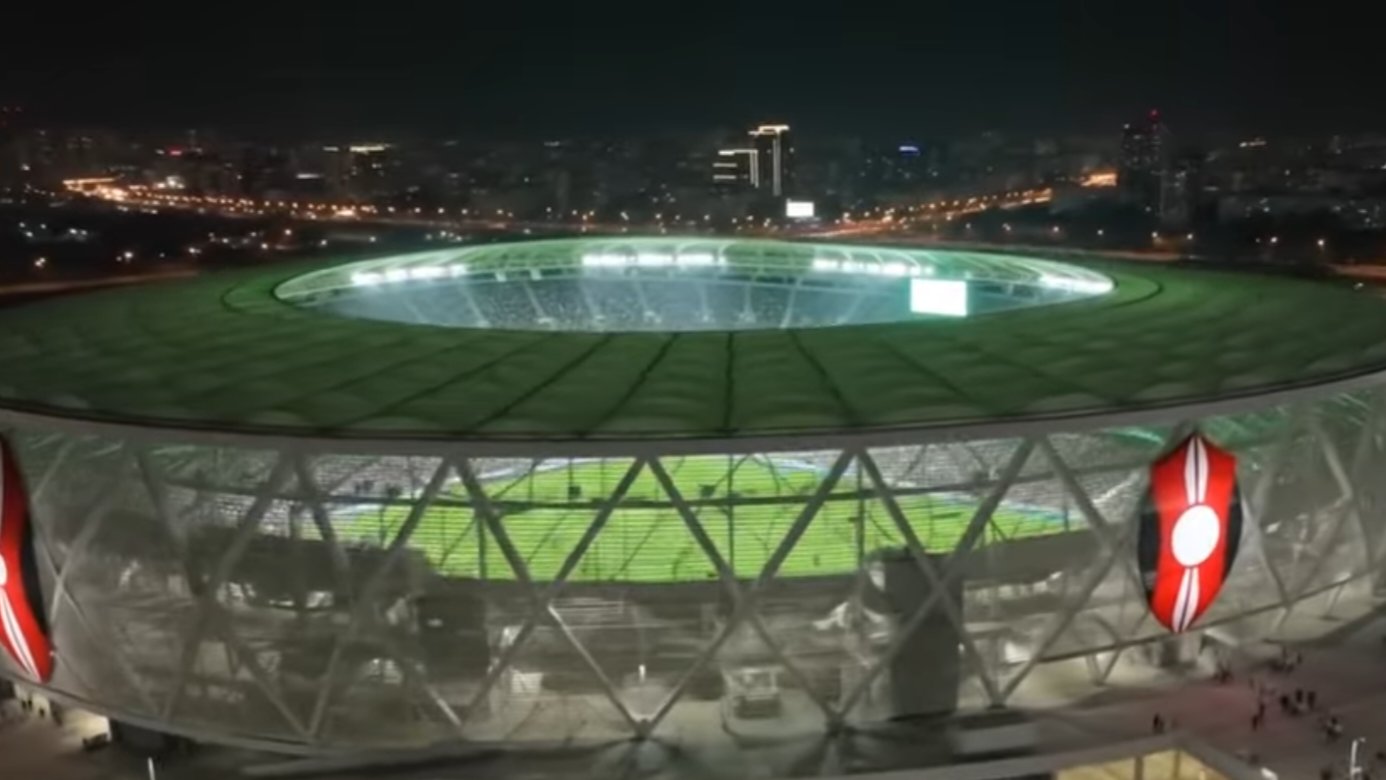
The Talanta Sports Stadium constructed by CRBC. Photo: Explore With Matei/YouTube.
Work has also commenced on the 233-kilometer Nairobi-Nakuru-Mau Summit Highway, an international trade corridor connecting Kenya to Uganda, Rwanda, and the Democratic Republic of Congo (DRC). Following the cancellation of a costlier French contract, CRBC won the rebid for the Rironi-to-Giga stretch by offering lower toll rates and absorbing traffic revenue risks.
To bypass prolonged regulatory reviews in Beijing for investments exceeding one billion dollars, the state split the highway, awarding the remaining Nakuru-to-Mai Summit section to Shandong Highspeed. President Ruto inaugurated the works in November 2025, anticipating a mid-2027 opening.
The builder's most contentious contract is the 154 billion shilling rebuild of Jomo Kenyatta International Airport (JKIA), signed in June 2026. The airport handled nine million passengers in 2025, exceeding its design capacity of seven and a half million. CRBC replaced India's Adani Group, whose 230 million shilling proposal collapsed amid public protests.
The new deal faces an active court challenge regarding procurement integrity, alongside scrutiny from watchdog groups over a local partner allegedly linked to a past Zimbabwean fraud case. The state defends the competitive tendering process, noting the project is 20 percent cheaper than regional alternatives and will expand annual capacity to 22 million passengers.
CRBC has also entered the private sector, securing a deal in June 2026 to build the Ballet Towers within Tatu City, a complex featuring three residential towers, offices, and a hotel. Concurrently, President Ruto and Ugandan President Yoweri Museveni broke ground at Suswa in March 2026 for the 700 billion shilling SGR extension toward Kisumu and Malaba, signaling further regional infrastructure consolidation.
Comments (0)
Leave a Comment
No comments yet. Be the first to share your thoughts!