

Fifty million people travel between Los Angeles and Las Vegas every year. Eighty-five percent of them drive. The journey takes over four hours on a good day and considerably longer on a bad Sunday. America has never had a genuine high-speed rail answer to that problem.
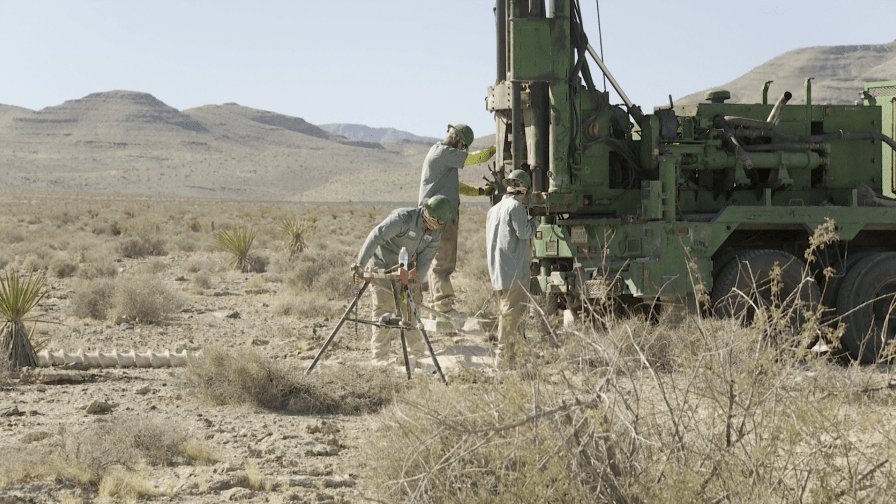
Brightline West is building one right now, in the median of Interstate 15, through the Mojave Desert.
The $12 billion, 218-mile line runs from a new station at the south end of the Las Vegas Strip to Rancho Cucamonga in Southern California, where passengers connect to the existing Metrolink commuter rail network into Los Angeles.
Trains, built by Siemens Mobility, will run at up to 200 miles per hour, cutting the journey to two hours and ten minutes. The line is fully electric and grade-separated, meaning no road crossings anywhere along the route.
Construction is divided into four civil segments. The Las Vegas station parking garage is already taking shape in 2026. Heavy civil works, including embankment grading, drainage and bridge pier construction, are accelerating through the year. The project employs up to 18,000 workers at peak construction.
What makes Brightline West genuinely unusual is its funding model. Most major rail infrastructure in the United States depends heavily on federal and state grants.
Brightline West has secured $3 billion from the federal government through the Infrastructure Investment and Jobs Act, but the rest, roughly $8.5 billion, comes from private capital, including $3.5 billion in private activity bonds. No state money. No public subsidy beyond the federal grant.
The original target was to open in time for the 2028 Los Angeles Summer Olympics. That deadline has since been revised to late 2029, with the company citing construction sequencing and financing timelines. When it does open, Brightline West will become the first privately operated intercity high-speed rail service in American history.
Comments (0)
Leave a Comment
No comments yet. Be the first to share your thoughts!