
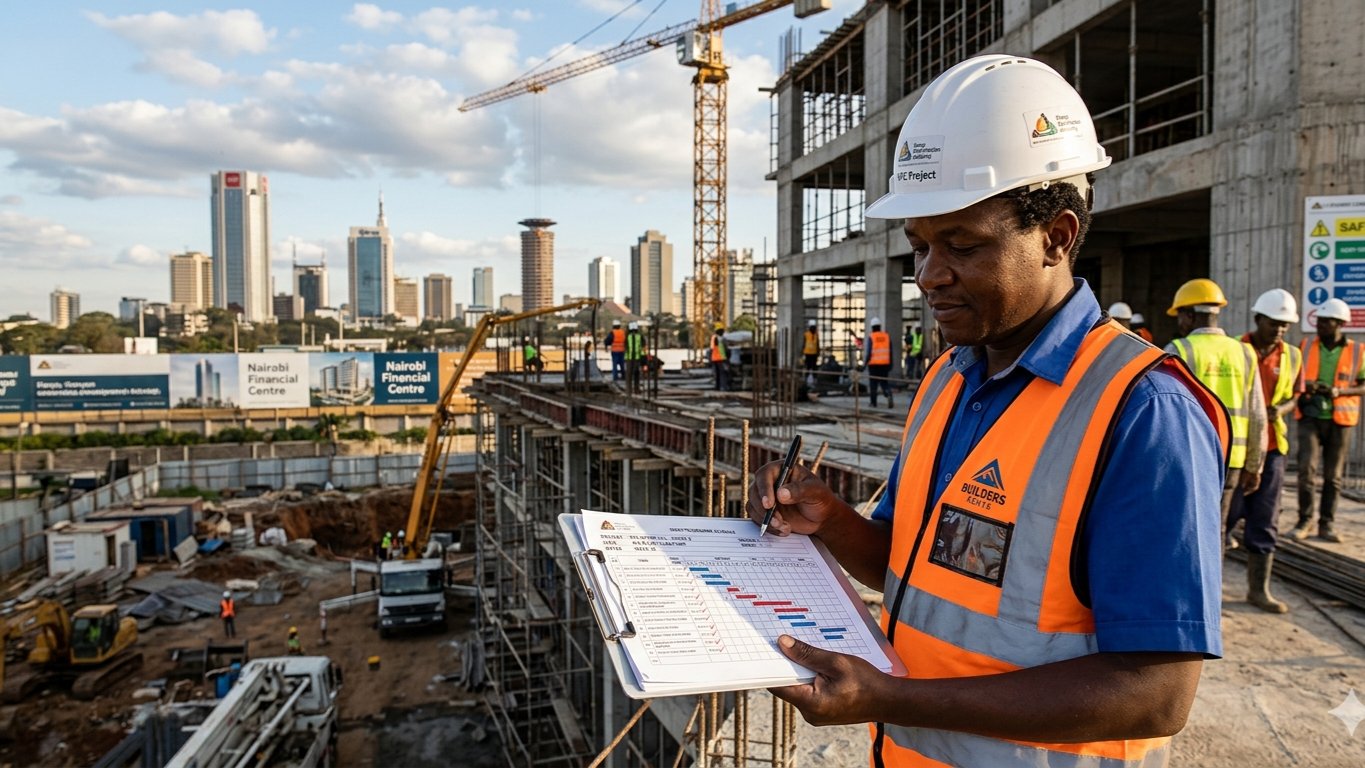

There is a document on almost every construction site in Kenya that nobody fully believes. It was produced to satisfy the contract. It was reviewed once at the start of the project. It now lives in a file, consulted mainly when someone needs to explain why things are running late.
African construction projects record cost overrun rates approximately 10 percent higher than the global average and more than twice the European average, according to research published in ScienceDirect in 2025. The Project Management Institute estimates that 10 percent of all global project investment is lost annually due to poor performance, a figure that translates into billions of dollars across Africa's infrastructure pipeline alone.
Sub-Saharan Africa loses an estimated 21 percent of its annual Gross Domestic Product (GDP) to infrastructure underperformance. These are not abstract statistics. They are the accumulated cost of projects that started with a work programme and were later ignored.
In most Kenyan construction contracts, the work programme is submitted as a condition of the contract award. The contractor produces it, the architect or project manager reviews it, and both parties proceed as if the document is a formality rather than a management tool. On-site, the foreman is running the project on instinct and experience. The programme is not displayed, not updated, not used to make daily decisions, and not referenced when the client asks why the second-floor slab is three weeks behind schedule.
A well-built work programme is not a Gantt chart produced in Microsoft Project and emailed to a consultant. It is a living schedule that sequences every activity on site, identifies the dependencies between them, allocates resources against each task, and flags the critical path, the chain of activities where any delay directly extends the overall project duration.
When a programme is built properly and followed actively, it tells a site team exactly what needs to happen today for the project to finish on time. It tells the project manager where the float is and where there is none. It tells the quantity surveyor when to expect valuations and what work should be certified. It is a communication tool as much as a planning tool.
Most programmes produced in Kenya do neither of these things, because they were never intended to. They were produced to get off the architect's checklist.
The fix is not complicated, but it requires a shift in how the profession treats the document. A work programme should be produced before mobilisation, not after. It should be built with input from the site foreman and the subcontractors, not drafted by a head office scheduler who has never visited the site. It should be reviewed weekly at a minimum, updated when conditions change, and used as the basis for every progress meeting.
When an activity slips, the programme should be the first document opened, not to assign blame, but to understand the downstream effect and adjust what comes next.
The Kenyan construction industry is operating in a market projected to grow at 8.9 percent annually through 2031, the fastest rate of any African construction market. That pipeline of work will not deliver its potential if the profession continues to treat the work programme as a bureaucratic obligation rather than a management instrument.
The projects that finish on time and within budget in this market are almost always the ones where somebody on site is actually following the programme. That should be the standard, not the exception.
Comments (0)
Leave a Comment
No comments yet. Be the first to share your thoughts!