

Global industrial power is frequently evaluated through bulk outputs of structural metals like steel, aluminium, and industrial chemicals.
Advanced manufacturing, however, relies on producing small volumes of high-purity materials engineered to withstand extreme stress in critical applications.
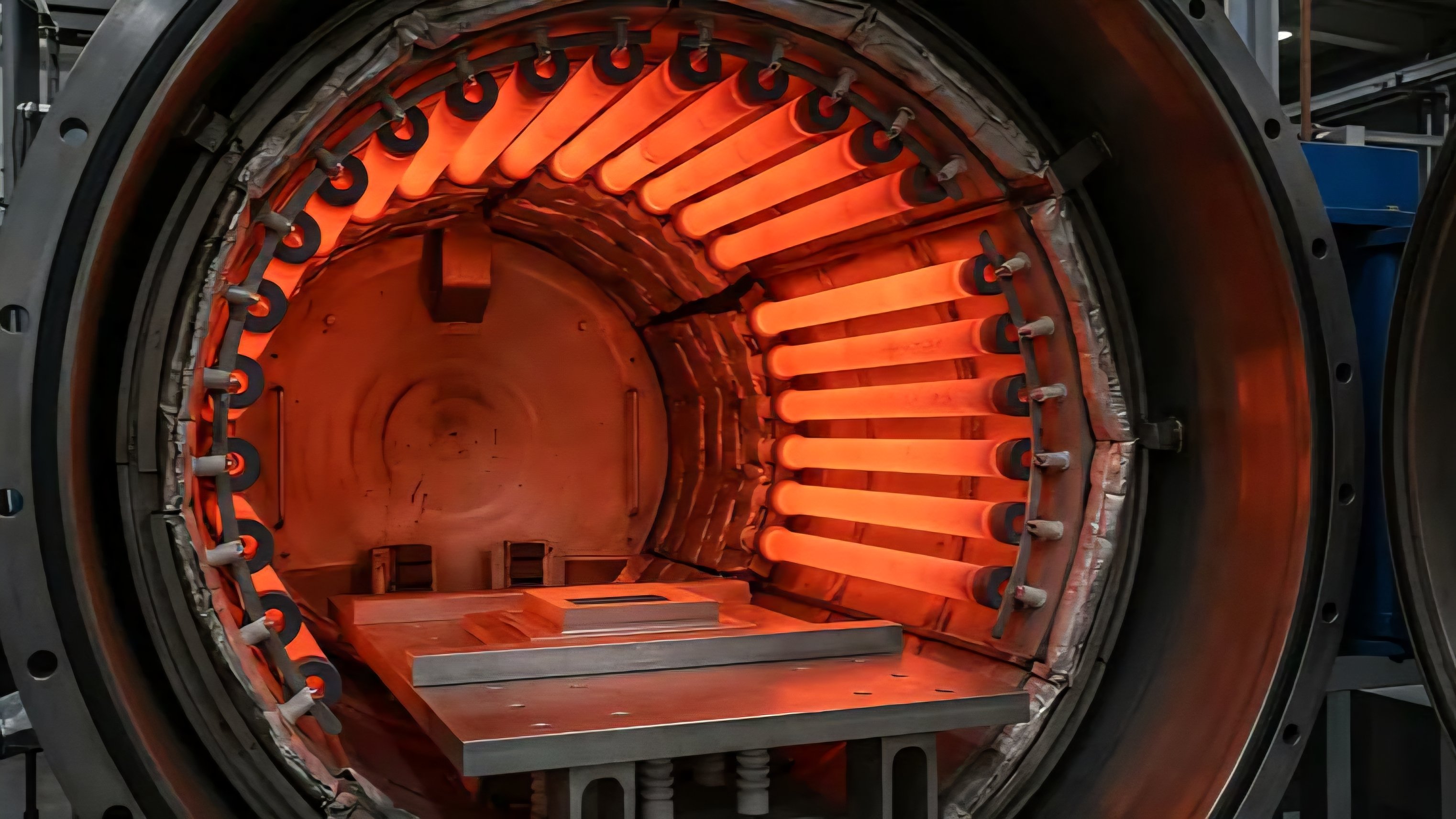
Vacuum metallurgy replaces standard atmospheric processing with low-pressure environments. Removing oxygen, nitrogen, and ambient moisture prevents chemical contamination when treating metals at high temperatures.
High-end systems utilize specialized infrastructure, including ultra-high vacuum pumps, water-cooled pressure vessels, molybdenum heating elements, and inert gas quenching using helium, argon, or nitrogen.
A large Vacuum Chamber (VC) system for aerospace production can cost over $15 million. Beyond the machinery itself, successful processing depends on precise control over thermal cycles and cooling rates to reach strict material certifications.
Nickel-based superalloys containing tantalum, rhenium, and hafnium are processed in vacuum chambers for jet engine turbine components. These alloys maintain structural integrity near combustion temperatures exceeding 1,500°C.
Titanium alloys used in spacecraft, medical implants, and aircraft also require controlled environments to avoid absorbing atmospheric gases that cause brittleness.
Tungsten and tantalum are similarly processed under vacuum conditions for semiconductor manufacturing equipment where micro-structural purity is mandatory.
While ordinary steel sells for approximately $1,000 per tonne, vacuum-processed aerospace alloys reach values exceeding $100,000 per tonne.
Production capability remains concentrated in industrial markets such as Germany, Japan, France, and the United States, where technical expertise has developed over decades.
Maintaining strict precision at extreme thermal limits remains the primary barrier in high-spec alloy manufacturing.
Comments (0)
Leave a Comment
No comments yet. Be the first to share your thoughts!