
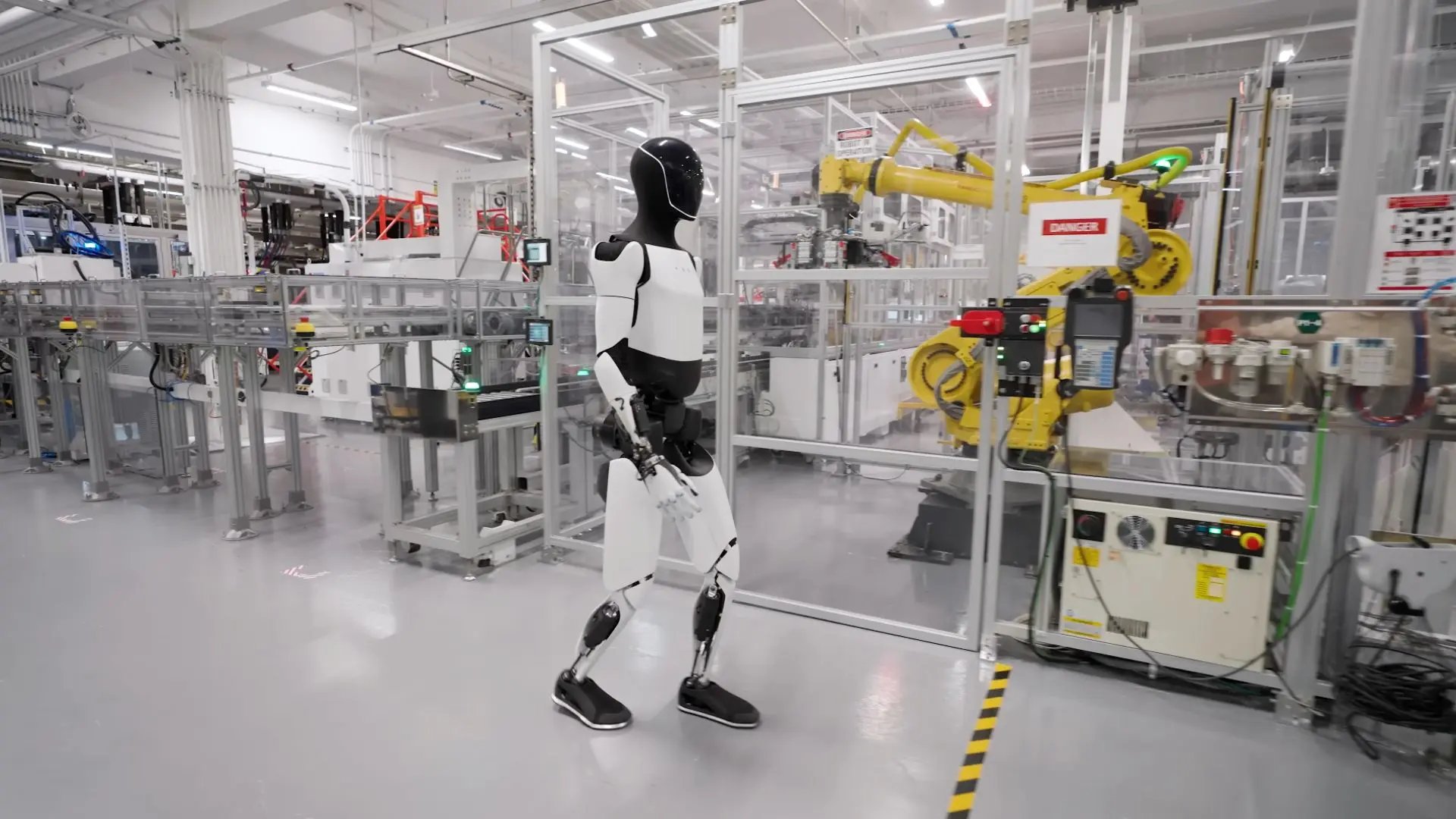

An industry report from the ROBO Global Robotics and Automation Index (ROBO Global) outlines the foundational architecture necessary for humanoid robots to operate alongside humans.
The publication groups these essential components into three primary operational categories covering intelligence, physical structure, and power management.
Developers are prioritizing advanced artificial intelligence (AI) chips to handle real-time perception and decision-making on complex job sites. These specialized processors evaluate environment data continuously, which allows machines to navigate dynamic workspaces safely.
High-resolution camera arrays work directly with central processing units to replicate human visual awareness. This integration provides constant spatial tracking, but it also requires heavy computational throughput during routine operations.
Mechanical movement relies on high-precision actuators embedded throughout the structural frame. These mechanical joints allow controlled limb manipulation, which enables machines to handle standard industrial tools effectively.
Structural design focuses on replicating human proportions so machinery fits existing facilities without modifications. Operating within human-designed environments eliminates the need for expensive infrastructure retrofits, which simplifies site deployments significantly.
Energy storage remains a major technical obstacle for long-duration field assignments. Standard battery systems struggle to provide extended operating windows, although recent mechanical innovations are offering practical alternatives.
Engineers are integrating solid-state batteries to improve both operational range and workplace safety. Replacing volatile liquid electrolytes with solid material reduces thermal risks, while it simultaneously increases overall energy density.
Self-swapping battery packs allow machines to exchange depleted energy cells automatically without manual intervention. Continuous power replacement keeps equipment active on assembly lines, which prevents costly downtime during shift changes.
The report notes rapid expansion across the supporting global component supply chain. Independent manufacturers supplying gearing, sensors, and power units are seeing increased demand, because main developers scale up production schedules.
Commercial interest is driving capital into specialized component production worldwide. Financial analysts observe that supply chain vendors stand to gain substantial market share, even as final robot designs continue to evolve.
Integration of advanced sensing hardware ensures safer interaction between autonomous units and human workers. Multi-modal sensor suites monitor proximity constantly, which helps prevent accidental collisions in crowded industrial corridors.
Contractors and facility managers are monitoring these technical developments closely to assess site readiness. While early testing continues in controlled settings, broader deployment depends heavily on component availability and unit reliability.
Robotics developers continue refining control algorithms to improve motor coordination during delicate handling tasks. Smooth force feedback prevents accidental damage, which is essential when manipulating fragile materials or precise instruments.
Modern manufacturing facilities are beginning to trial these machines for repetitive logistics and inventory movement. Automated transfer of heavy subassemblies reduces strain on human workers, although operational supervision remains necessary.
Widespread adoption will ultimately depend on lowering production costs across key hardware systems. As component suppliers achieve economies of scale, commercial availability across construction and manufacturing sectors will accelerate naturally.
Industry experts emphasize that technical standardization across hardware components will streamline future repairs. Standardized interfaces simplify maintenance, which allows technicians to swap failing parts quickly during routine servicing.
Future operational guidelines will likely require rigorous testing protocols before field placement. Industry groups continue to refine safety benchmarks, because reliable performance in shared spaces remains paramount for all commercial operators.
Comments (0)
Leave a Comment
No comments yet. Be the first to share your thoughts!