
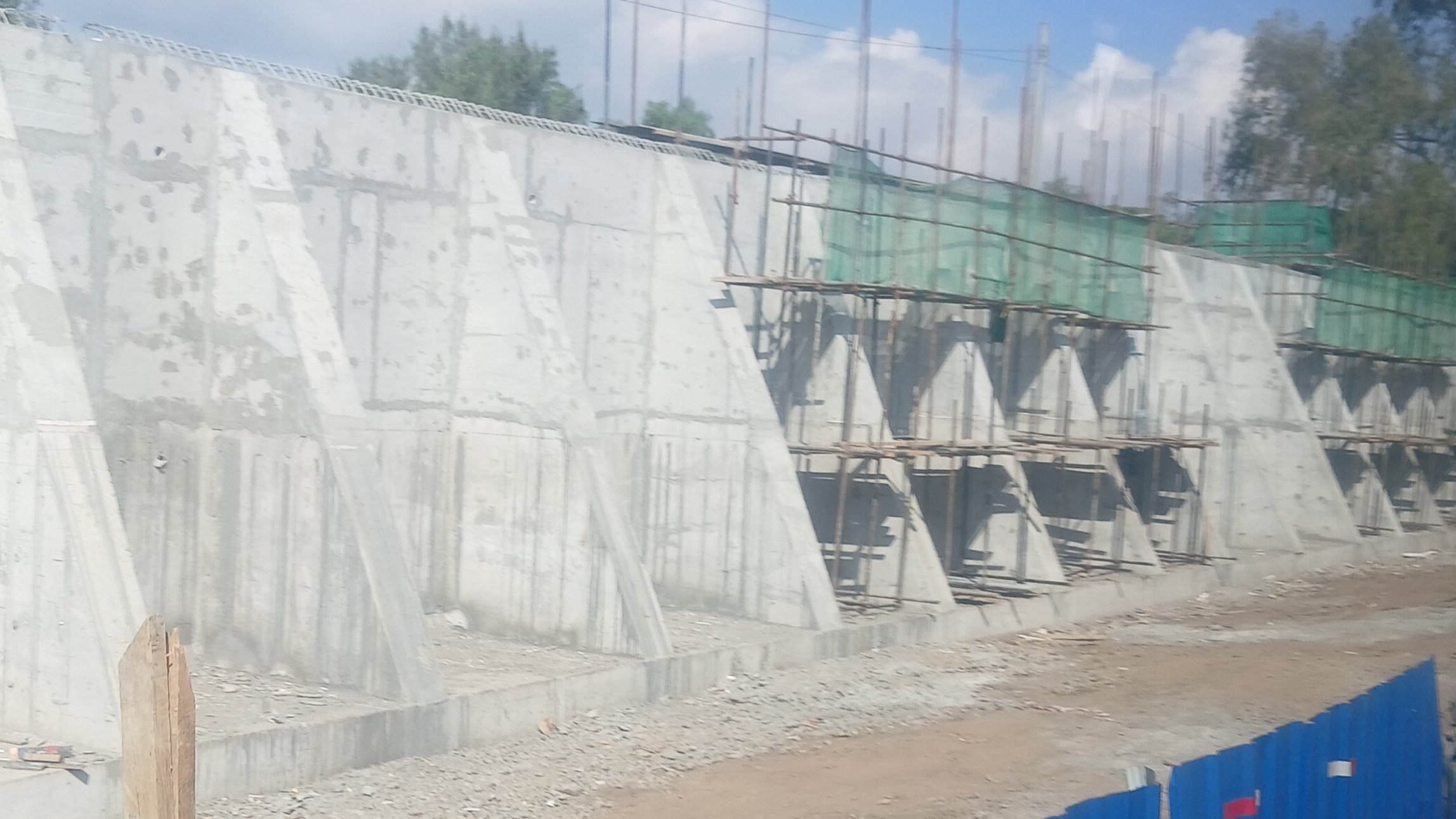

Construction of a new bridge at the entrance to Naivasha is gathering pace, with the structure now rising as major civil works expand along the Rironi-Mau Summit Highway.
The bridge is among the structures being delivered as the highway is upgraded to increase capacity along one of Kenya's busiest transport corridors.
The progress is particularly notable because activity on the project was initially much more limited than the November 2025 launch suggested.
After the official launch, contractors carried out preliminary and spot works at selected locations while the project agreements were still being finalised. These included activities such as site clearance, drainage, culverts and other preparatory works.
KeNHA later signed a preliminary works agreement with the China Road and Bridge Corporation (CRBC) and the National Social Security Fund (NSSF) consortium before executing the main project agreement.
The project agreement was subsequently made public in June 2026, providing the contractual framework for the 139-kilometre Rironi-Naivasha-Gilgil and Rironi-Mai Mahiu-Naivasha sections.
That development marked an important transition from preliminary activity to wider mobilisation. The project agreement provides for the design, financing, construction, operation and maintenance of the road under a 30-year concession.
Since then, activity has expanded across the corridor, with additional equipment, workers and construction fronts becoming visible.
In Naivasha, the bridge works show this change particularly clearly. Reinforcement steel is being installed around the structural elements while concrete sections and supporting walls are taking shape.
The latest progress also provides some hope for a project that has faced questions over whether it can achieve its ambitious completion timeline.
Mjengo Hub previously examined the possibility that the Rironi-Mau Summit Highway could struggle to be substantially completed before the 2027 General Election, particularly given the time lost between the November launch and full contractual mobilisation.
The concern remains relevant because the project involves hundreds of kilometres of major highway works, bridges, interchanges, drainage systems and other infrastructure.
However, the acceleration now visible on individual structures suggests that the project is entering a more productive construction phase.
The government has been targeting completion of the major works by 2027, with officials repeatedly pushing contractors to increase the number of active work fronts along the corridor.
The first phase involving CRBC and NSSF covers approximately 139 kilometres, including the Rironi-Naivasha-Gilgil A8 section and the Rironi-Mai Mahiu-Naivasha A8 South section. A separate 94-kilometre section from Gilgil to Mau Summit is being handled by Shandong Hi-Speed.
The wider highway programme is intended to transform the existing route into a higher-capacity dual carriageway, including new bridges, interchanges and other structures designed to improve traffic flow and safety.
For Naivasha, the transformation is particularly significant. The town is a major junction between the main A8 corridor and the Mai Mahiu route, making its approach roads important for both long-distance freight and local traffic.
The bridge now taking shape is therefore more than an isolated structure. It is part of the permanent infrastructure that will eventually define the new highway alignment through the area.
The project's earlier slow start means there is still considerable ground to cover. But the shift from isolated preliminary works to substantial structural construction changes the picture.
If contractors can maintain the current pace and continue opening multiple work fronts, there is now greater reason to believe that significant portions of the Rironi-Mau Summit Highway could be delivered within the government's accelerated timeline.
Comments (0)
Leave a Comment
No comments yet. Be the first to share your thoughts!