
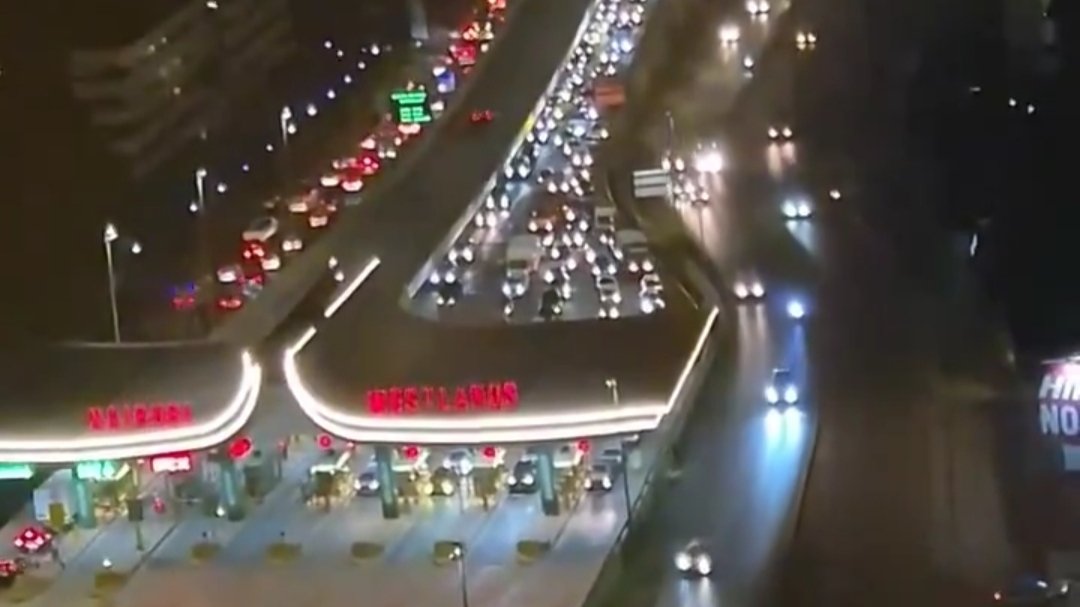

A video showing severe congestion at a Nairobi Expressway toll point has been widely shared on X, drawing renewed criticism of the Manual Toll Collection (MTC) lane. The clip was posted by user Ja Loka.
He captioned it as an ironic contrast between the paid expressway and the free Mombasa Road, the older route that runs alongside it and remains the main option for drivers avoiding tolls.
The post was quoted by user Eric Njiru, who argued that pay points should be removed from the expressway entirely. He proposed adapting the National Transport and Safety Authority (NTSA) system to detect vehicle number plates automatically and bill drivers through their eCitizen wallet.
He illustrated the point with a specific example. A drive from The Mall in Westlands to the Bunyala Road exit took only four minutes on the expressway itself, followed by roughly fifteen additional minutes waiting to pay at the booth.
Calling that imbalance between drive time and payment time senseless, he attached his own video of daytime traffic backing up near a toll gantry to make the point.
Other replies focused on how tolling is structured. One user proposed that Electronic Toll Collection (ETC) checks should happen at entry points rather than exits, since drivers already know which gate they intend to leave through.
Under that model, queues would build at entrances instead of exits, where reversing or blocking traffic is harder. Others suggested linking payment directly to vehicle registration numbers through scannable QR codes, removing the need for a dedicated ETC gadget.
One proposal floated a minimum deposit matched to the highest toll charge, with usage capped at ten trips a year for occasional users. Regular commuters would still need a standard ETC account for daily travel under that idea.
Complaints about ETC balances also featured in the thread. Several users said top up services were unavailable on the Thursday and Friday before the video was posted, forcing drivers with low balances into the manual lane.
One commenter said funds loaded years earlier had since expired unused. Some replies pointed to Safaricom's Tap and Go contactless payment service, launched in 2017, as evidence that cashless infrastructure has existed in Kenya for close to a decade.
Slow adoption of such tools was cited as a contributing factor to the bottlenecks shown in the video. Allegations of queue jumping also surfaced, with one user describing drivers entering with tickets meant for other lanes.
Those drivers were accused of cutting into ETC queues and allegedly paying security staff to pass through at the booth ahead of others waiting in line.
The Nairobi Expressway runs approximately 27 kilometres (16.8 miles) between Mlolongo and Westlands and opened to traffic in 2022. It was built by China Road and Bridge Corporation.
The road is operated under a public-private partnership between Moja Expressway and the Kenya National Highways Authority (KeNHA), which oversees the country's national road network.
Neither Moja Expressway, KeNHA nor the NTSA had issued a public response to the video or the calls to eliminate manual tolling at the time of writing. The exchange remains an active discussion among road users rather than a confirmed policy shift.
Comments (0)
Leave a Comment
No comments yet. Be the first to share your thoughts!