
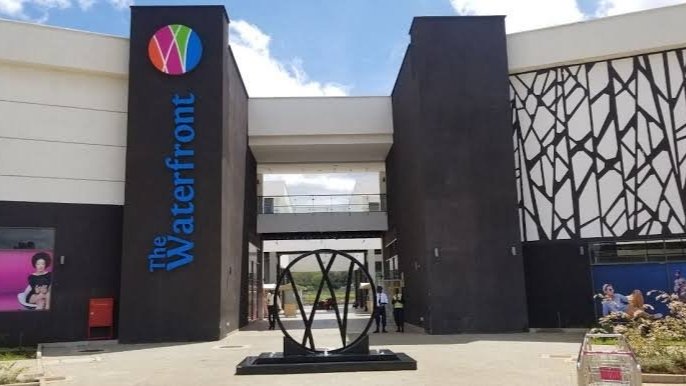

The reported Sh9 billion sale of Waterfront Mall in Karen has revived an investment debate surrounding the Muguku family: whether reducing its Equity Bank stake and shifting capital into real estate was ultimately the right decision.
Nelson Muguku held 6.08 percent of Equity Bank when he died in 2010. His family subsequently sold down most of the holding, retaining about 0.9 percent. The strategy helped finance a broader diversification into property and other investments.
The debate has intensified because the original Equity stake, if it had remained intact, would now be worth about Sh22.1 billion. That figure, however, represents the value of the original 6.08 percent holding today, rather than the amount the family actually sold its shares for.
The Waterfront Mall opened in Karen in December 2018 after an investment of about Sh3 billion. The family is now reportedly in advanced talks to sell the property for up to Sh9 billion.
That comparison has prompted some observers to argue that the family would have been better off simply holding Equity shares and allowing them to compound over time.
Others have pointed out that such a comparison ignores the money received from the share sales, dividends that may have been collected before the sales, the mall's rental income and the family's other investments.
It also assumes that the family could have predicted Equity Bank's subsequent performance. The decision to diversify was made in a different market environment, when concentrating a large family fortune in one listed company also carried its own risks.
The property strategy was not limited to Waterfront Mall. The family also owns Crossroads Mall across the road, while its wider interests have included commercial property, education, poultry and other investments.
The mall's performance has nevertheless become central to the current debate. One online commentator estimated that typical real estate returns could be around 8 to 9 percent annually but argued that Waterfront's reportedly low occupancy had reduced its effective return to roughly 3 to 4 percent.
Those figures are not independently verified and should not be treated as the mall's official returns. Waterfront's actual investment performance would require information on rental income, operating costs, financing, taxes, capital expenditure, occupancy over time and the value of the underlying land.
The value of the land is particularly important when assessing the reported Sh9 billion sale. Waterfront sits within a much larger property holding in Karen, meaning a comparison between the mall's construction cost and its potential sale price does not by itself measure the family's return.
The same applies to the Sh22.1 billion Equity comparison. Shares generate dividends as well as capital gains, while property can generate rental income and appreciate in value.
For the Muguku family, the decision was therefore more complicated than simply choosing between shares and a shopping mall.
The family's wealth was built long before Waterfront, with Muguku Poultry Farm forming the foundation of Nelson Muguku's business empire. His investments later expanded into listed companies, commercial property and other ventures.
The current debate is consequently less about whether the family made an obvious mistake and more about the opportunity cost of moving capital from one asset class into another.
With Equity shares having compounded strongly and Waterfront now reportedly being offered for Sh9 billion, the transaction provides a useful case study in the difficulty of judging long-term investment decisions using today's prices.
Comments (0)
Leave a Comment
No comments yet. Be the first to share your thoughts!