

A version of this article appeared on LinkedIn by Unayat Ullah.
Concrete remains a baseline material for global infrastructure, regarded widely for its strength and durability. Beneath the surface, however, a slow chemical degradation often compromises this stability.
This process is known as concrete carbonation. It acts as a quiet driver of long-term structural deterioration. The phenomenon occurs when carbon dioxide, which is denoted as CO2, penetrates the material.
Atmospheric carbon dioxide enters through the microscopic pores of the concrete matrix. Once inside, the gas reacts directly with calcium hydroxide, or $Ca(OH)_2$, found in the hydrated cement.
This reaction produces calcium carbonate, known chemically as $CaCO_3$. The reaction also creates water, or $H_2O$. The exact chemical equation is expressed as $$CO_2 + Ca(OH)_2 \rightarrow CaCO_3 + H_2O$$
This chemical alteration has serious consequences for structural safety.
Under normal conditions, freshly cured concrete maintains a highly alkaline environment. The typical potential of hydrogen (pH) level ranges between 12.5 and 13.5.
This high alkalinity is vital for embedded steel reinforcement. It creates a passive protective layer around the steel rebar, preventing rust.
Carbonation disrupts this entire alkaline state. As calcium carbonate forms, the internal pH of the concrete drops significantly.
The pH level routinely plummets from its original high state to below 9. When the pH falls below this threshold, the passive protective layer around the steel rebar is completely destroyed.
Without this protection, the internal steel becomes highly vulnerable to moisture and oxygen. This vulnerability leads directly to severe rebar corrosion.
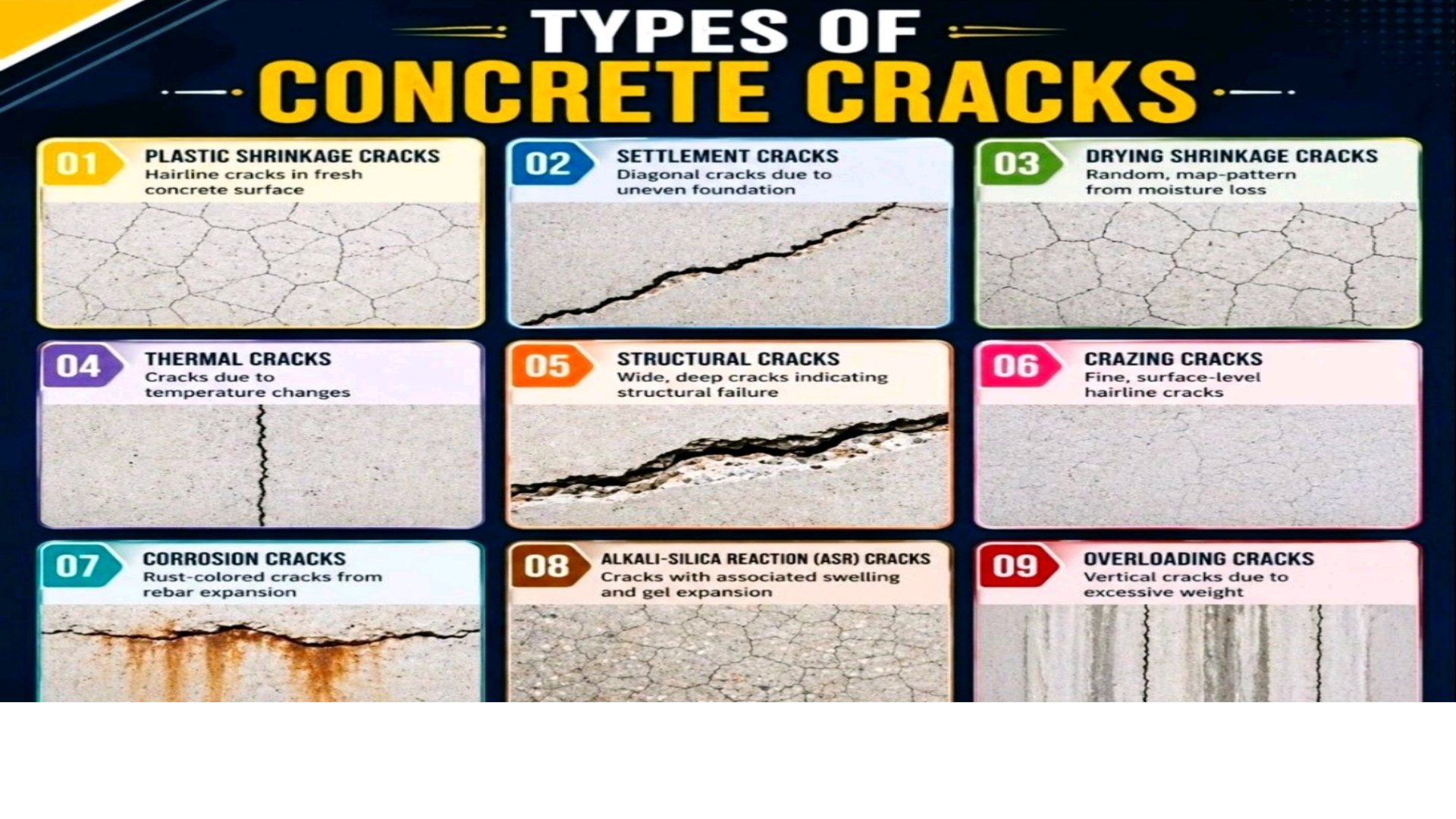
As the steel reinforcement corrodes, it expands in volume. This expansion exerts immense internal pressure on the surrounding concrete matrix. The results are visible structural defects, including internal cracking and external spalling.
Spalling causes large pieces of concrete to break away, exposing the rusted rebar beneath. Engineers must adopt specific mitigation strategies during design and mixing to counter this asset risk.
The following prevention tips are critical to stopping carbonation:
* Increase concrete cover, ensuring a minimum of 40 to 50 millimeters in exposed zones.
* Use a low water-cement ratio, specifically keeping it less than or equal to 0.45.
* Apply specialized anti-carbonation surface coatings to block atmospheric gas penetration.
* Use dense, well-compacted concrete mixes to minimize porosity.
* Establish a regular inspection and maintenance schedule to catch early signs of decay.
In urban centers like Nairobi, where vehicular emissions increase atmospheric carbon dioxide levels, these steps are increasingly important.
Thicker concrete cover acts as a physical barrier, delaying the time it takes for gases to reach internal steel.
Lowering the water-cement ratio reduces the total volume of capillary pores within the mix. Fewer pores mean carbon dioxide has fewer pathways to migrate deep into the structure.
Proper compaction during the pouring phase further eliminates air voids. Surface coatings provide an additional line of defense for existing structures already showing early carbonation depth.
Without these interventions, the service life of critical infrastructure can be cut short unexpectedly. Understanding this hidden threat allows project managers to protect investments and ensure public safety.
Comments (0)
Leave a Comment
No comments yet. Be the first to share your thoughts!