

A version of this article appeared on LinkedIn by Zulfiqar Ali.
Evaluating mining ventures requires strict definitions, yet industry observers frequently confuse basic terminology. The distinction between a mineral resource and a mineral reserve is fundamental to determining project viability. Misunderstanding these concepts routinely skews assessments of underground assets.
Zulfiqar Ali, an Assistant Professor of Rock Engineering, recently highlighted this persistent issue on the social media platform LinkedIn. He noted that while the terms are used interchangeably by outsiders, they represent vastly different operational realities.
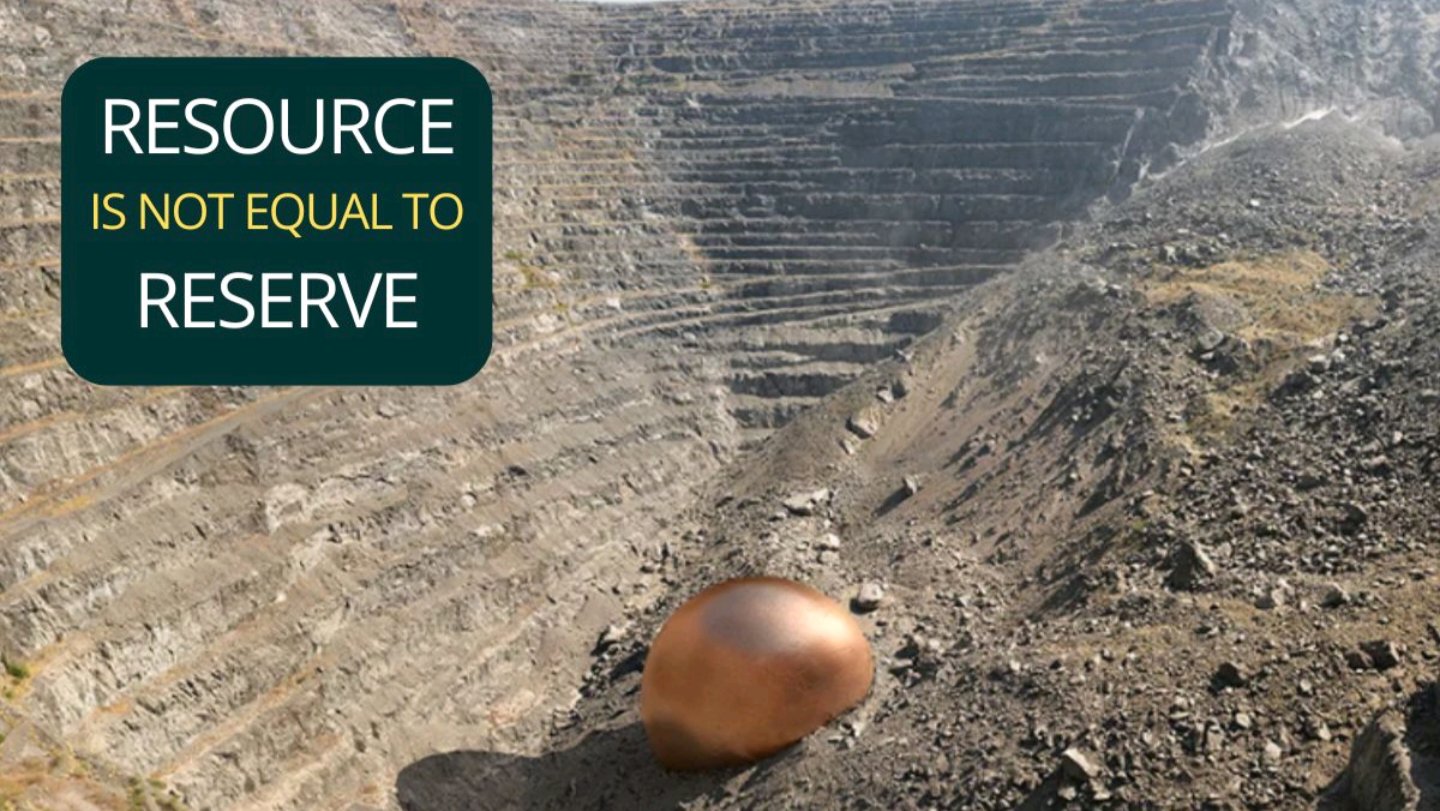
To illustrate the stark physical contrast, Ali highlighted an artistic project by photographer Dillon Marsh. Marsh utilized Computer Generated Imagery (CGI) to superimpose solid copper spheres into actual South African mining landscapes, matching the precise volume extracted.
The resulting visual models demonstrate the actual scale of mineral extraction. These spheres sit inside massive open pits or beside deep underground excavations. This contrast reveals how little refined metal is actually recovered compared to the earth removed.
A mineral resource encompasses the total estimated volume of a specific mineral present in the ground. This measurement relies on geological evidence, mapping, and sample testing. However, a resource does not guarantee that extraction is financially or technically practical.
Global classification frameworks, including the Committee for Mineral Reserves International Reporting Standards (CRIRSCO), divide resources into distinct tiers. These include inferred, indicated, and measured resources, which reflect the level of geological confidence based on available data.
An ore reserve represents a much smaller, carefully evaluated fraction of that resource. It constitutes the economically recoverable portion of the deposit. Transitioning a resource to a reserve requires a comprehensive evaluation of technical feasibility and commercial profitability.
To declare a formal reserve, mining engineers must apply specific modifying factors. These factors encompass metallurgical processing costs, environmental regulations, legal constraints, and prevailing market prices. Infrastructure requirements and local community impacts also dictate whether a deposit is mineable.
The Joint Ore Reserves Committee (JORC) code and similar international standards require rigorous pre-feasibility studies before upgrading a resource. Without these detailed financial evaluations, a vast underground deposit remains a simple geological resource rather than a commercial reserve.
Marsh's CGI installations provide a tangible representation of this legal and economic reality. The copper spheres represent the total historical yield, a fraction of the surrounding excavated terrain. They remind evaluators that total mineral presence rarely equals final yield.
Geological certainty increases as exploration teams conduct more extensive exploratory drilling and geochemical analysis. Initial discoveries begin as inferred resources, where data is sparse, before moving to indicated or measured status through continuous technical investigation.
Only measured and indicated resources can ever legally advance to the reserve stage. These are classified as either probable or proved reserves, depending on the final degree of confidence in both the underlying geology and the commercial modifying factors.
The visual presentation referenced by Ali clarifies these dry technical guidelines for a broader audience. By anchoring abstract data to real landscapes, the artwork underscores why mining companies must exercise extreme caution during public reporting phases.
For financial analysts and engineering teams, conflating these categories introduces immense project risk. Overestimating the commercially viable volume can lead to catastrophic capital allocation errors, failed infrastructure investments, and unviable mining operations.
Accurate differentiation ensures that capital flows only toward projects with verified extraction pathways. Understanding the thin line between a vast resource and a strict reserve remains the baseline for any credible evaluation of mineral projects worldwide.
Comments (0)
Leave a Comment
No comments yet. Be the first to share your thoughts!