
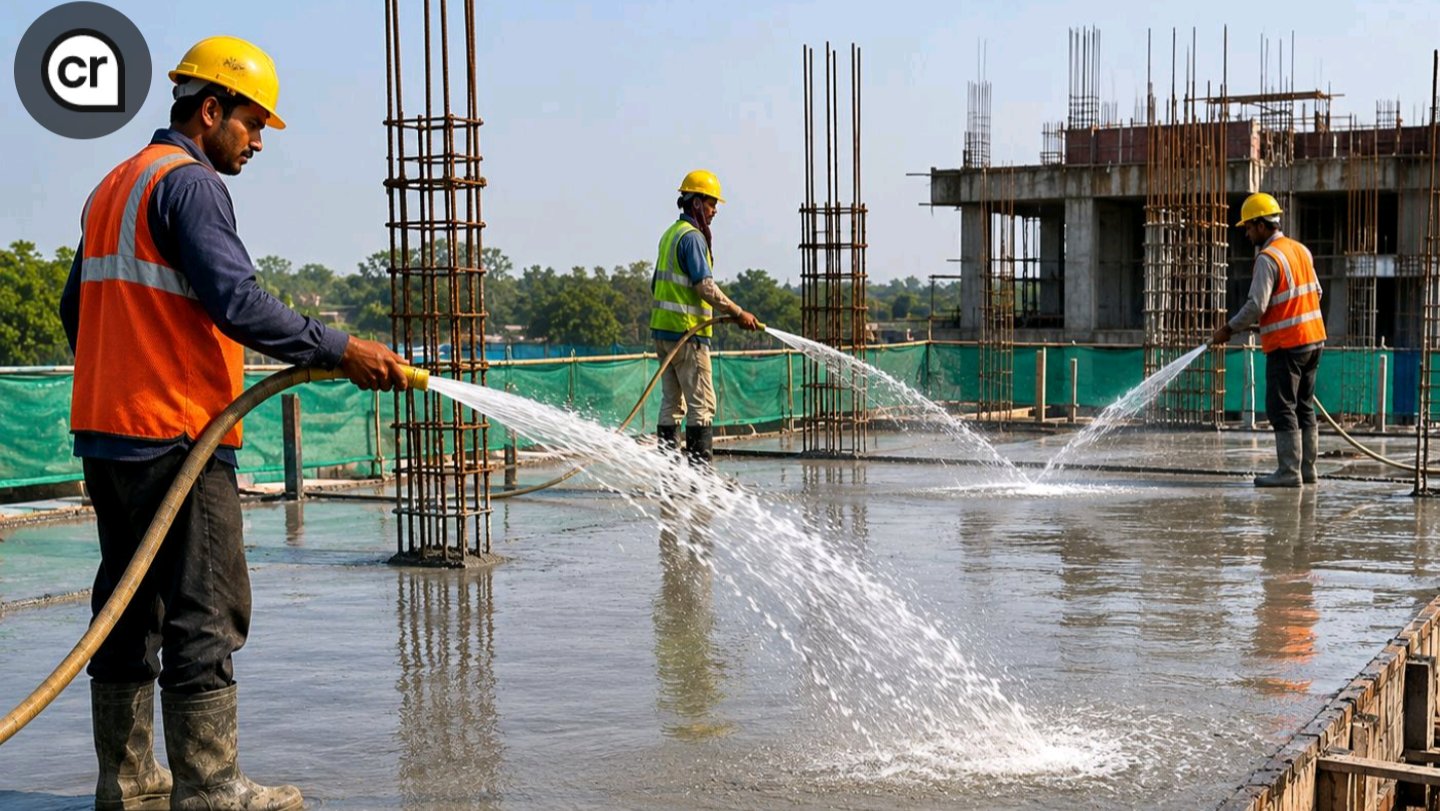

An opinion piece published by civil engineering professional Kamal Banerjee highlights a persistent misunderstanding on construction sites regarding when to begin curing freshly poured concrete.
The widespread practice of waiting exactly 10 hours before applying water often compromises the structural integrity of the material.
According to the analysis, there is no single fixed timeframe that safely applies to every structural pour or environmental condition.
The decision to initiate moisture retention depends entirely on a combination of material science and local weather conditions on the day of the pour.
A primary technical indicator is the initial setting time of cement, which governs the structural readiness of the mixture.
Curing must begin precisely when the concrete has achieved sufficient stiffness to ensure that the application of water does not wash away or pit the vulnerable surface.
Environmental exposure plays an equally critical role in determining the timeline.
In hot, dry, and windy conditions, moisture evaporates from the exposed upper layers at an accelerated rate.
These harsh conditions require a significantly earlier intervention to prevent plastic shrinkage cracking, which occurs when the surface dries out faster than the underlying bleed water can rise to replace it.
Conversely, cooler or highly humid environments slow down the evaporation rate, allowing site teams more time before water application becomes critical.
Failing to adapt to these variables often results in weak surface layers, high permeability, and reduced long-term durability.
Engineers are advised to assess the stiffness of the slab and monitor local atmospheric shifts rather than relying on arbitrary hourly rules of thumb.
Achieving maximum design strength requires precise moisture management tailored to the specific context of the project.
Comments (0)
Leave a Comment
No comments yet. Be the first to share your thoughts!