
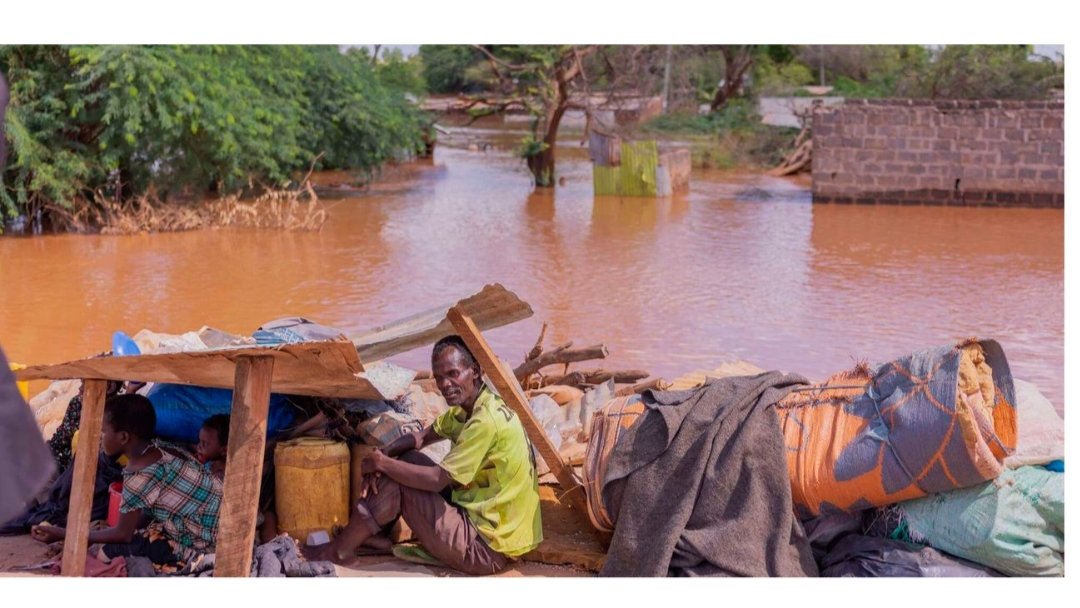

Kenya has recorded more than 2.7 million displacements linked to disasters over the past 17 years. The Internal Displacement Monitoring Centre’s 2025 Kenya Disaster Displacement Risk Profile shows floods caused the bulk at 2.4 million while droughts accounted for 316,000.
The year 2023 stood out with 641,000 people forced to move, the highest annual total since 2008. Experts warn the numbers could rise further by 2100 as climate patterns intensify.
Northern Kenya’s pastoralist communities feel the impact sharply. Traditional seasonal movements once followed predictable rains. Now prolonged droughts and sudden floods have broken that rhythm.
The 2020-2022 La Niña drought, described as the worst in 70 years, wiped out livestock and livelihoods. It was followed by El Niño floods that displaced hundreds of thousands more.
Floods triggered 335,000 displacements in 2020 and 336,000 in 2018. This cycle of extreme dry spells then heavy rains has become the new normal.
Many displaced people no longer return home. Destroyed livestock, homes and infrastructure leave little to go back to. What starts as temporary displacement often turns into permanent relocation to towns or cities.
Climate migration in Kenya is mostly internal, with people moving between counties. The United Nations sees it as one of the century’s major humanitarian challenges.
Farmers, pastoralists and coastal communities face the hardest choices. Failed harvests, lost pasture and flooded homes push families to move when staying becomes impossible.
The Intergovernmental Panel on Climate Change projects more intense droughts and floods in East Africa. Warmer air holds more moisture, leading to heavier rainfall while prolonged heat worsens dry conditions.
Some communities are trying to adapt. Drought-tolerant crops, farmer-managed natural regeneration, sand dams and diversified incomes help build resilience. Early warning systems and better land-use planning also play a role.
Yet structural challenges remain. Many settlements sit in high-risk zones with limited alternatives. Enforcement of planning rules and investment in drainage infrastructure lag behind the pace of change.
The data paints a clear picture. Climate change is no longer a distant threat but a daily force driving movement across Kenya.
Comments (0)
Leave a Comment
No comments yet. Be the first to share your thoughts!