
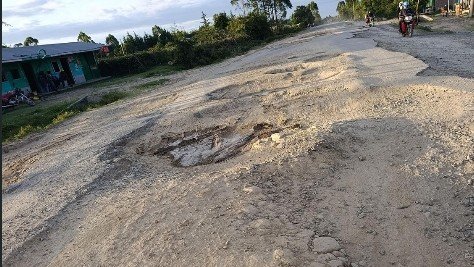

For decades, residents of Chepalungu Constituency in Bomet County have relied on the 32-kilometre Chebole-Siongiroi-Chebunyo road for transport, trade and access to essential services. Despite its importance, the road remains in poor condition, with many residents describing it as one of the region's most neglected infrastructure projects.
The road connects several farming communities and serves as a key route for transporting agricultural produce to markets. Farmers who grow tea, maize, vegetables and other crops use the road daily. However, poor road conditions often make transportation slow, costly and unpredictable, especially during the rainy season.
Many sections of the road are characterized by potholes, uneven surfaces, and inadequate drainage. During heavy rains, some stretches become muddy and difficult to navigate. Motorists frequently report vehicle breakdowns and increased maintenance costs resulting from the rough terrain.
Residents say successive governments have promised to improve the road, but little has changed over the years. During election periods, road upgrades are often included in campaign pledges. However, many locals argue that these promises rarely translate into meaningful construction work once elections are over.
Public transport operators face significant challenges while using the route. Drivers are often forced to reduce speed to avoid damaging their vehicles, leading to longer travel times for passengers. Some operators have reportedly avoided certain sections altogether when weather conditions worsen.
The condition of the road also affects local businesses. Traders transporting goods between villages and nearby towns incur additional expenses due to delays and vehicle repairs. These costs can eventually be passed on to consumers, affecting the prices of goods and services in the area.
Education is another sector impacted by the road's poor state. Students who travel to schools located along the route often encounter difficulties during rainy periods. In some cases, access becomes so challenging that attendance is disrupted, particularly for those who depend on public transport.
Healthcare access has also become a concern. Residents seeking medical attention in nearby health facilities may experience delays because of poor road conditions. Community members say emergency situations become even more difficult when vehicles struggle to reach affected areas.
Local leaders and residents have repeatedly appealed to both county and national government authorities to prioritize the road. They argue that improving the route would support economic activities, reduce transport costs, and improve access to schools, hospitals and markets.
Infrastructure experts note that road networks play a major role in regional development. Well-maintained roads encourage investment, facilitate trade, and improve the delivery of public services. Poor roads, on the other hand, can limit economic opportunities and slow development efforts.
Some residents believe the road's condition reflects a broader challenge affecting rural infrastructure projects across the country. While major highways often receive attention and funding, smaller but equally important roads sometimes remain neglected despite serving large populations.
Calls for rehabilitation have intensified in recent years as traffic along the route continues to increase. Residents say the road is no longer suitable for the growing number of vehicles using it. They believe upgrading it to a better standard would significantly improve movement within the constituency.
As Bomet County continues to develop, many residents hope authorities will finally address the long standing concerns surrounding the Chebole-Siongiroi-Chebunyo road. For those who use it every day, the road is more than a transport corridor. It is a critical link that supports livelihoods, connects communities and influences the area's economic future.
Comments (0)
Leave a Comment
No comments yet. Be the first to share your thoughts!