
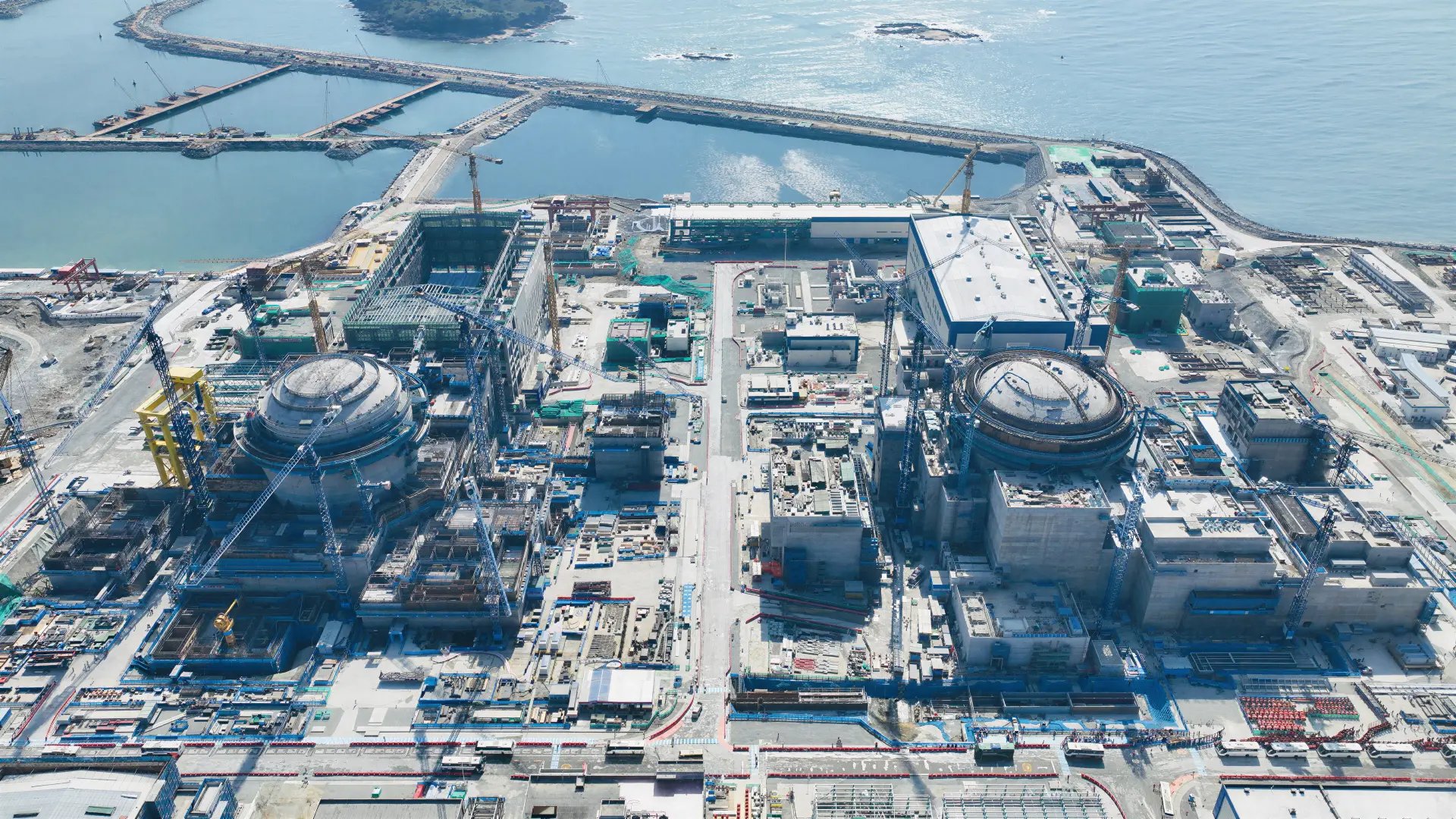

The State Council of the People's Republic of China has approved four new nuclear power projects involving eight generating units across four provinces. Total capital expenditure for the infrastructure expansion is expected to exceed 170 billion Chinese Yuan (RMB), which equals roughly 25 billion United States Dollars (USD).
Premier Li Qiang chaired the cabinet meeting where official clearance was granted for the energy facilities. Government leadership instructed project directors to maintain strict technical standards, while regulatory agencies maintain complete oversight throughout all construction phases.
The newly sanctioned projects include Phase II of the Jinqimen facility in Zhejiang province and Phase III of the Taipingling facility in Guangdong province. Both coastal sites will deploy upgraded Hualong One Version 2.0 technology, which represents China's latest domestically engineered nuclear reactor system.
Each upgraded reactor unit at Taipingling and Jinqimen will feature an individual capacity of 1,217 Megawatts (MW). Corporate statements indicate that the completed six-unit Taipingling facility will generate over 55 billion Kilowatt-hours (kWh) of electricity annually.
State-owned operator China General Nuclear Power Group (CGN) will manage the Guangdong expansion through its regional subsidiaries. Meanwhile, state developer China National Nuclear Corporation (CNNC) will oversee the Zhejiang development.
Two greenfield sites were also greenlit under the executive order. These locations are the Zhuanghe plant in Liaoning province and the Laiyang plant in Shandong province, both designed to strengthen energy security in northern coastal provinces.
The Zhuanghe facility will feature two standard Hualong One units constructed by CNNC subsidiaries. Engineering teams have already initiated preliminary civil preparations, while equipment orders proceed according to project schedules.
At the Laiyang location, State Power Investment Corporation (SPIC) will build two Guohe One reactors. Each unit will deliver a capacity of 1,543 MW, which marks the first standardized batch construction project using that specific reactor design.
The Guohe One model was developed as an expanded derivative of passive pressure reactor technology. The high-capacity units are designed to supply heavy industrial hubs, where consistent electrical output is required to keep manufacturing networks running without interruption.
Construction supply chains for the reactor projects involve nearly 6,000 domestic equipment suppliers and industrial component contractors. Structural steel fabrication, heavy containment vessel casting, and specialized cooling system assembly will drive activity across regional manufacturing sectors.
The massive investment comes as national grid managers work to balance energy supplies amid rising industrial power demand. Heavy baseload generation remains critical, because regional distribution systems must maintain power stability alongside growing solar and wind capacity.
China currently operates 59 commercial reactor units with a combined capacity of 62.5 Gigawatts (GW). An additional 35 units totaling 41.9 GW were under active construction prior to this latest round of approvals.
Official national energy targets aim for 110 GW of operational nuclear capacity by 2030. State planners consider steady reactor construction essential for lowering carbon emissions, while reducing reliance on fossil fuels across key industrial provinces.
Private capital participation has also been introduced into select project ownership structures, including the Jinqimen facility. Regional authorities expect site preparation works and early foundations to commence immediately following environmental clearance procedures.
Comments (0)
Leave a Comment
No comments yet. Be the first to share your thoughts!