
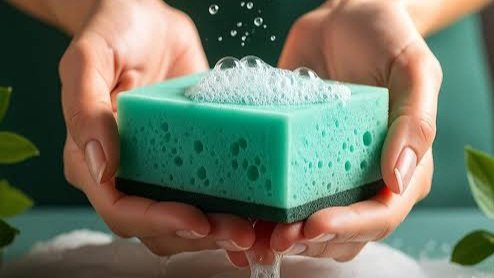

Researchers at the German Federal Institute for Risk Assessment (BfR) have uncovered alarming details about kitchen hygiene. Everyday cleaning sponges harbor disease-causing pathogens that persist far longer than previously thought.
Laboratory experiments examined Deoxyribonucleic Acid (DNA) profiles of bacteria living inside synthetic kitchen sponges. The investigation focused on three notorious strains, including Escherichia coli, Salmonella Enteritidis, and Staphylococcus aureus.
Scientists seeded small bacterial populations into damp sponge material to monitor microbial behavior over two weeks. The microorganisms established stable colonies that survived for at least fourteen days, even after complete surface drying.
Microbiologists confirmed that routine desiccation fails to sanitize the porous structure. Deep internal cavities retain micro-droplets of moisture, which allow harmful microbes to remain viable indefinitely.
Cross-contamination risks proved particularly severe during standard countertop wiping routines. A single swipe across a clean surface transferred up to 100,000 Colony-Forming Units (CFU) of infectious bacteria.
Physical appearance offers no reliable indicator of dangerous contamination. Visual inspections and smell tests routinely fail to reveal heavy bacterial loads hiding inside the material.
Discoloration or foul odors do not correlate directly with pathogen numbers, when households evaluate sponge cleanliness. A sponge can look perfectly usable while remaining saturated with dangerous microorganisms.
Food safety experts warn that vulnerable populations face significant health risks from contaminated cleaning tools. Children, elderly individuals, and immune-compromised family members remain susceptible to severe gastrointestinal infections, when cross-contamination occurs.
Raw meat juices, poultry remnants, and unwashed produce frequently deposit pathogens onto cleaning equipment. Wiping food prep zones with used sponges transfers those germs directly onto dining plates, cutlery, and food preparation boards.
Chemical disinfection methods like soaking in bleach or heating in microwaves offer incomplete protection. Deeply embedded bacterial colonies form protective bio-layers, which resist standard household cleaning routines.
Health authorities recommend replacing cleaning sponges at least once per week. Frequent replacements prevent bacterial populations from reaching dangerous concentrations in domestic kitchens.
Alternative cleaning tools provide safer options for maintaining household hygiene. Microfiber cloths and dishwashing brushes dry much faster, which prevents bacterial growth and reduces cross-contamination risks significantly.
Separating cleaning tasks prevents dangerous microbes from migrating across food preparation surfaces. Designated cloths should be used exclusively for raw meat spills, while general dishwashing requires isolated equipment.
Understanding microbial survival in home environments remains vital for public health. Small changes in daily kitchen sanitation significantly lower the incidence of foodborne illness in modern households.
Public health officials emphasize that visually clean items are not always microbiologically safe. Proper kitchen maintenance requires regular tool disposal rather than relying on subjective sensory assessments.
The study highlights how domestic cleaning tools often act as active bacterial reservoirs. Simple adjustments to daily dishwashing habits protect families from avoidable food poisoning outbreaks.
Maintaining high standards of hand hygiene further mitigates contamination risks during meal preparation. Thorough washing before handling cooked foods stops pathogen transmission chains across residential kitchens.
Future research continues to evaluate pathogen movement within domestic settings. For now, replacing porous sponges remains the single most effective defense against invisible kitchen contamination.
Comments (0)
Leave a Comment
No comments yet. Be the first to share your thoughts!