
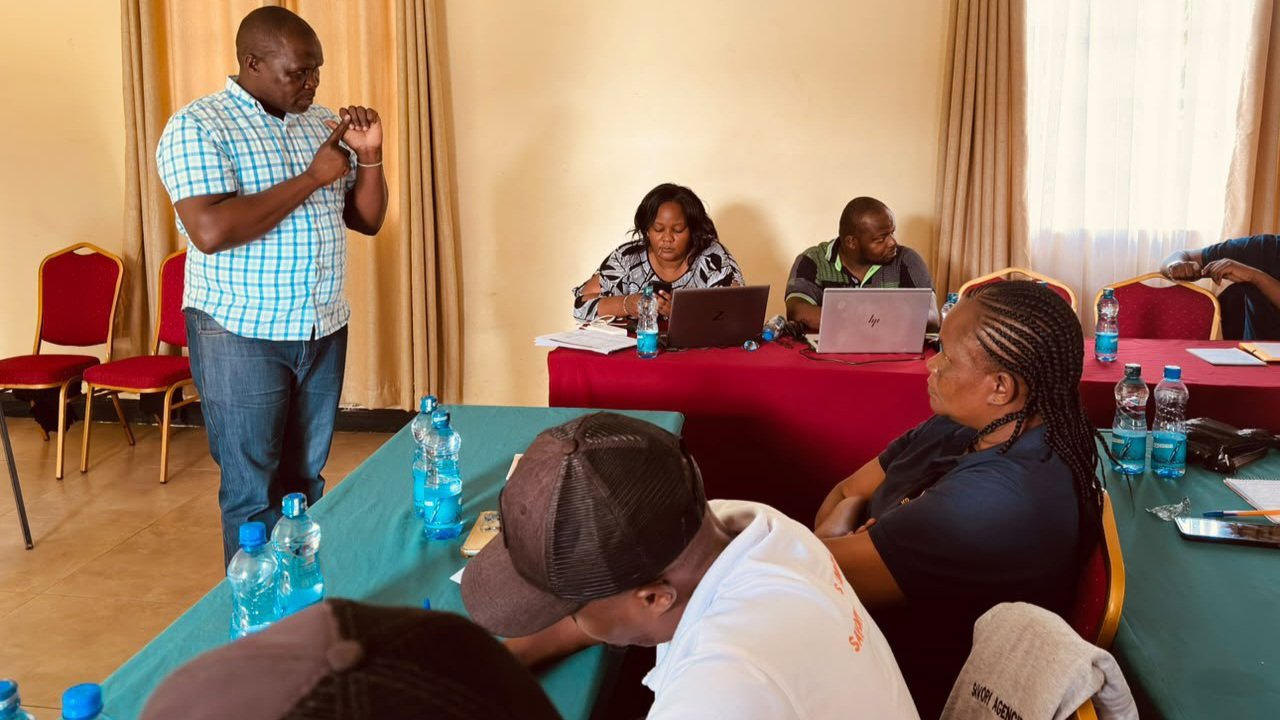

Officials from the Kenya National Highways Authority (KeNHA) gathered key operational personnel at Minata Hotel for a targeted sensitization program.
The session focused on alignment with international quality management framework requirements. Facilitators stressed adherence to operational protocols during the opening address.
Participants included personnel from Savory Agencies Limited and officers attached to the Axle Load Enforcement Unit (ALEHU).
Both entities play critical roles in managing commercial vehicle weight compliance across the national trunk road network. Representatives from both organizations engaged in joint discussions on field coordination.
The agency designed the workshop around International Organization for Standardization (ISO) guidelines and the Information Security Management System (ISMS) framework.
Training emphasized data protection, operational transparency, and systemic risk mitigation across all levels. Experts detailed regulatory requirements governing data access control.
Axle load management relies heavily on automated weighbridge systems, digital sensors, and networked databases to record heavy vehicle weights.
Protecting these digital assets from unauthorized access or operational disruption remains a priority for state infrastructure managers. Uninterrupted digital connectivity ensures accurate reporting across remote regions.
Savory Agencies Limited operates contracted weighbridge locations under regulatory oversight from the state agency.
Maintaining strict compliance with standardized operating protocols ensures that enforcement measures remain consistent across all major transport corridors. Regular assessments help identify administrative gaps in weighbridge administration.
Meanwhile, officers serving within ALEHU execute field operations, enforce legal load limits, and issue citations to non-compliant haulers.
Integrating standardized quality controls strengthens legal evidentiary standards during court proceedings. Joint enforcement teams operate daily along busy transport routes.
During the interactive sessions, facilitators highlighted the practical application of information security policies within daily field routines.
Staff reviewed procedures covering password hygiene, hardware protection, incident reporting, and secure database management. Practical demonstrations illustrated effective responses to potential network disruptions.
KeNHA maintains that robust data management prevents administrative errors, reduces corruption vulnerabilities, and protects sensitive transport logistics data.
Cyber threats targeting critical public infrastructure have made data governance essential for state road agencies. Modernizing data infrastructure safeguards public records against systemic exploitation.
Overloaded heavy commercial vehicles cause accelerated pavement wear and structural damage to asphalt highways across the region.
Effective axle load enforcement extends road pavement lifespans and protects public financial investments in multi-billion-shilling infrastructure projects. Highway longevity remains vital for supporting economic activity nationwide.
Sensitizing private contractors and law enforcement officers creates a shared operational standard at static and mobile weighbridge stations.
Clear administrative oversight minimizes disputes between transporters and enforcement staff at weigh station checkpoints. Standardized communication protocols foster transparency between officers and commercial drivers.
The workshop also addressed quality management principles aimed at improving service delivery and operational efficiency.
Attendees examined continuous improvement metrics, internal audit procedures, and stakeholder engagement standards designed to enhance institutional performance. Systematic audits track operational compliance across all active weight stations.
State infrastructure bodies increasingly mandate ISO certification for private service providers operating within public transport corridors.
Compliance reviews ensure that contracted companies maintain technical capability and procedural compliance throughout contract durations. Rigorous standards maintain contractor accountability across all road contracts.
The training initiative reflects a broader administrative effort to modernize highway management through digital integration. KeNHA plans to continue routine capacity-building exercises across all regional offices and operational hubs nationwide.
Comments (0)
Leave a Comment
No comments yet. Be the first to share your thoughts!