
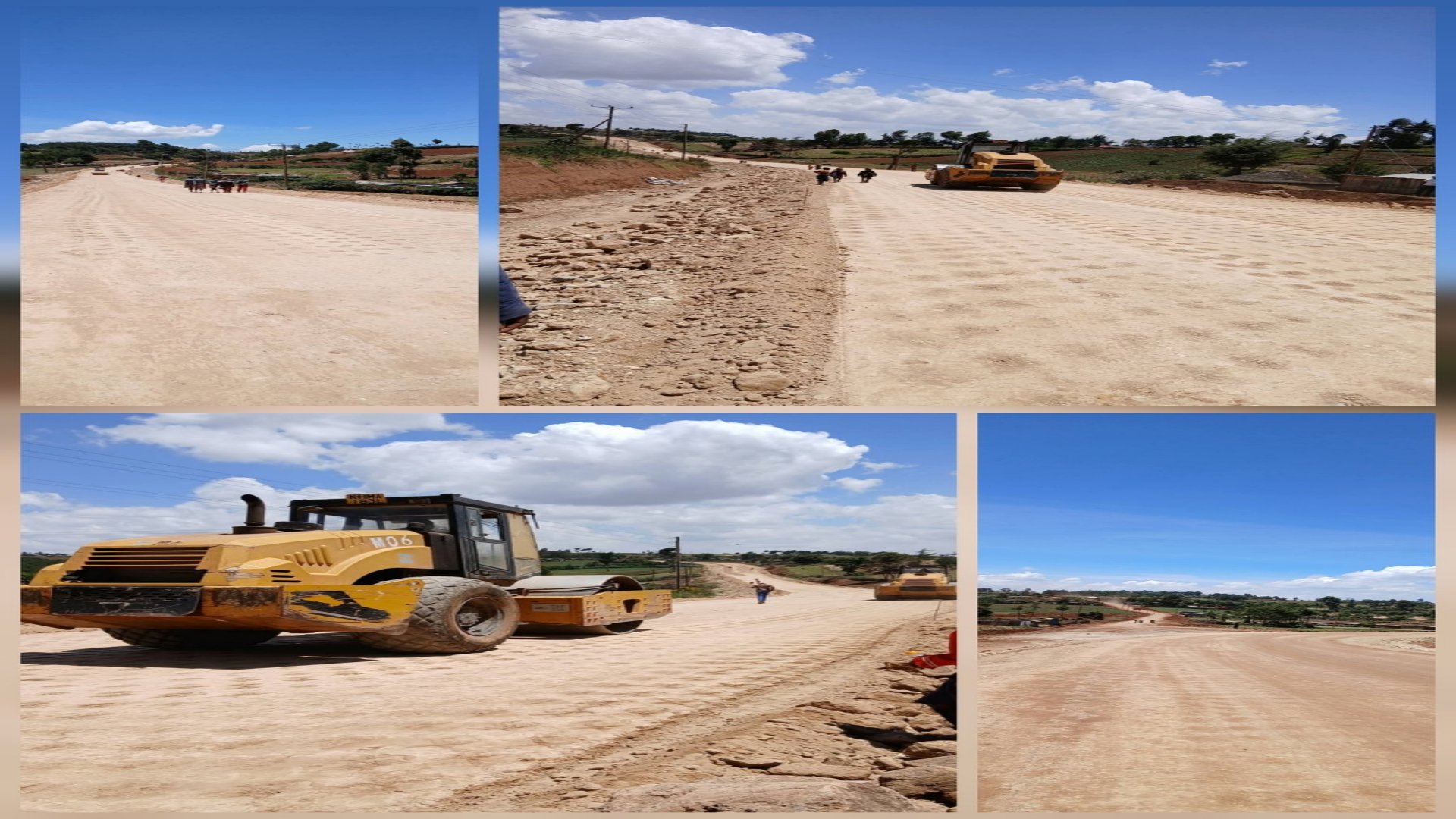

Heavy machinery has been deployed to rural road corridors across Kenya as the state ramps up its commitment to upgrading the national network to bitumen standards. Recent activity on the ground shows a focus on the stabilization and compaction of sub-grade layers, a critical phase that precedes the application of the final wearing course.
Construction crews are currently utilizing heavy-duty drum rollers to achieve the required density on recently graded surfaces. This specific stage of the project involves the methodical layering of materials to ensure the long-term durability of the road under increasing traffic loads. The work visible in the field aligns with the Kenya Rural Roads Authority (KeRRA) mandate to enhance connectivity between agricultural zones and primary transit hubs.
The technical requirements for these upgrades necessitate a rigorous earthworks schedule. Engineering teams are overseeing the removal of unsuitable materials and the introduction of graded aggregates. Following the initial grading by motor graders, the compaction process involves multiple passes by vibrating rollers to eliminate air voids and consolidate the base. This process is essential for preventing future pavement failure and ensuring the road can withstand the heavy rainfall common in these highland regions.
In the current fiscal year, the government has prioritized several hundred kilometers of rural roads for similar upgrades. These projects are part of a broader infrastructure strategy aimed at reducing transport costs for small-scale farmers and improving access to social amenities. By transitioning from gravel to bitumen standards, the authorities expect to significantly lower the annual maintenance burden caused by erosion and dust.
Site observations indicate that work is proceeding under a strict sequence of operations. This involves clearing the right of way and establishing drainage structures before the main carriageway is consolidated. The presence of multiple rollers on site suggests an accelerated timeline intended to take advantage of the current dry weather window.
While specific project names are often part of larger regional clusters, the scale of current operations reflects the significant budget allocations made for rural development. Engineers on site are focusing on the integrity of the road shoulders and the consistency of the road camber to facilitate effective water runoff. These technical measures are the standard for modern Kenyan road construction, ensuring that even remote networks meet the quality benchmarks set by the Ministry of Roads and Transport.
Comments (0)
Leave a Comment
No comments yet. Be the first to share your thoughts!