
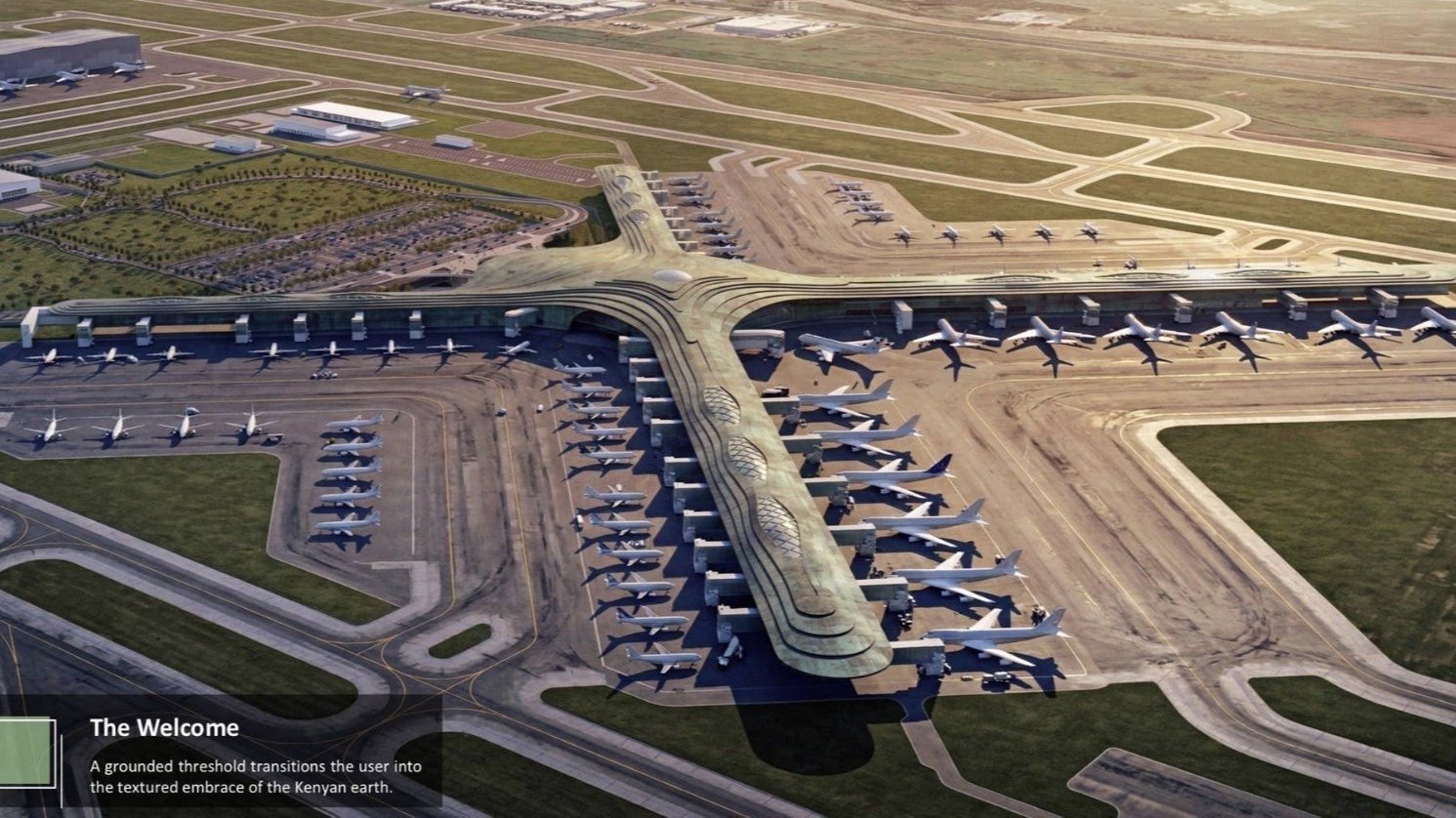

The government is finalizing contractual agreements to commit KSh 154.2 billion to overhaul Jomo Kenyatta International Airport (JKIA), ranking it among the largest infrastructure bets in Kenya’s recent history.
Despite the heavy financial expenditure, the project scope completely omits the construction of a new runway, an upgrade that many aviation experts have long argued remains critical for the regional hub.
Reports indicate that China Road and Bridge Corporation (CRBC) is on the verge of securing the massive contract after Stecol Corporation, as Sinohydro, failed to meet the required evaluation threshold.
The Ministry of Transport is currently in the final stages of preparing the contractual documents, with a formal announcement expected from government officials in the coming days.
The massive capital injection only covers the first phase of the airport's long-term master plan, leaving critical capacity issues to be addressed in future development cycles.
The actual scope of works includes an improvement of the existing airfield, extensive renovation of the current passenger terminals, and the construction of a brand-new passenger terminal building.
Operating with a single runway system, JKIA can handle a maximum of 25 arriving aircraft and about 40 departures per hour under favorable operational conditions.
Official traffic projections indicate that these exact operational limits will be reached as early as 2027 as passenger numbers and aircraft movements continue to grow across East Africa.
To buy time, phase one will introduce additional taxiways designed to enable landing planes to vacate the main runway much faster than they do currently.
The targeted tactical modifications are expected to marginally raise arrival capacity from 25 to 31 aircraft movements per hour.
Internal master plan data reveals this upgraded single runway system will remain viable only until 2029, after which it will fail to meet peak hour demand.
The state is structuring a financing model with the Trade and Development Bank (TDB) and the Africa Finance Corporation (AFC) onboarded as the lead financial arrangers.
The financing framework requires the government to borrow up to KSh 100 billion while directly injecting approximately KSh 50 billion in equity.
The underlying financial model is specifically designed to leverage future airport revenues to service the massive debt load over the coming years.
Upon completion, the phase one works are expected to expand the annual handling capacity of the facility to 22 million passengers.
Construction of the new terminal facilities and the simultaneous modernization of existing airport infrastructure will run concurrently over a strict 36 month timeline.
The rushed expansion comes amid intensifying regional competition for aviation traffic, with neighboring countries upgrading their own hubs to attract international carriers.
Aviation analysts warn that without a second runway, any unexpected incident on the single strip will continue to paralyze Kenya's entire air transport sector.
Taxpayers face the prospect of bankrolling yet another multi-billion expansion within three years if demand outpaces these temporary airfield adjustments.
Comments (0)
Leave a Comment
No comments yet. Be the first to share your thoughts!